

 Rifan Muazin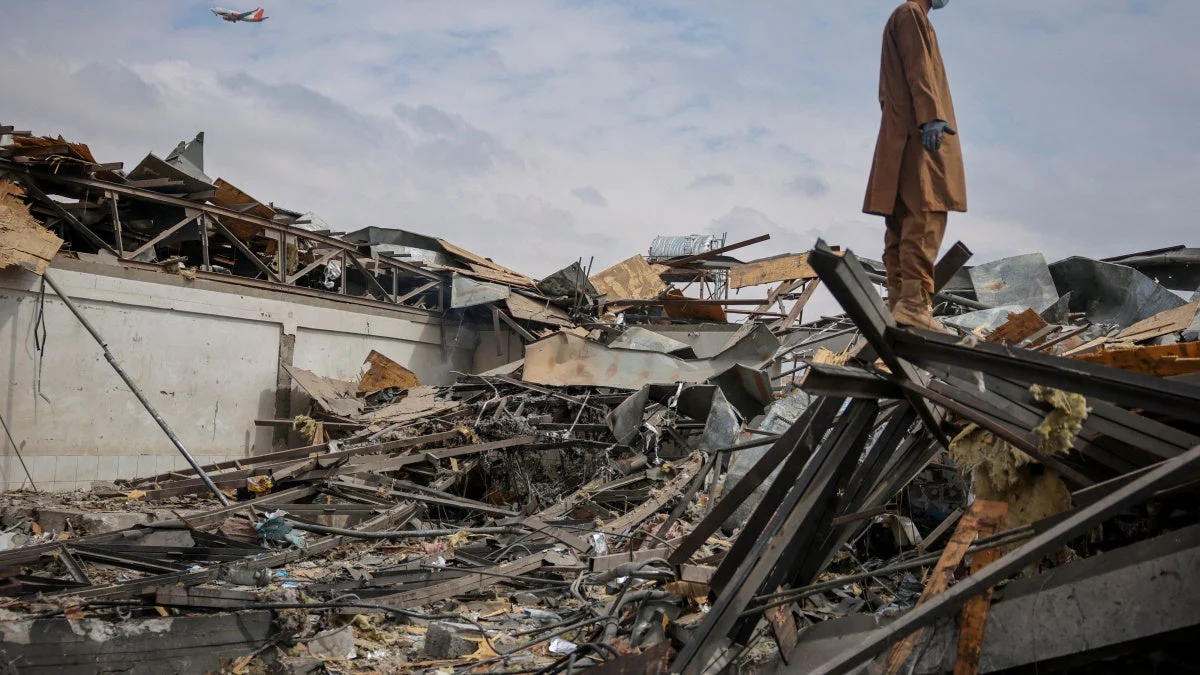
Executive Summary: The Crisis of Accountability
Ten years after the United Nations Security Council unanimously adopted Resolution 2286, the promise of protecting healthcare in conflict zones remains largely unfulfilled. Despite the legal clarity provided by the 2016 resolution, which mandates that member states "prevent and address" attacks on medical facilities, the reality on the ground has deteriorated into a state of chronic impunity. A new report by the Safeguarding Health in Conflict Coalition (SHCC), supported by Human Rights Watch (HRW) and other international organizations, reveals that medical workers and hospitals continue to be treated as legitimate targets in armed conflicts across the globe. As of 2026, the international community faces a reckoning: without meaningful consequences for those who violate these core tenets of international humanitarian law, the "protected status" of hospitals and ambulances is fast becoming a relic of the past.
A Chronology of Neglect: From Resolution 2286 to Present
On May 3, 2016, the United Nations Security Council passed Resolution 2286, a landmark document intended to provide a robust framework for the protection of the wounded, the sick, and the healthcare workers who attend to them. The resolution was designed to stop the systematic erosion of medical neutrality—a principle established in the Geneva Conventions that has served as a cornerstone of civilized warfare for decades.
- 2016: Resolution 2286 is adopted with unanimous support, signaling a rare moment of global consensus on the sanctity of medical care.
- 2017–2020: Early assessments indicate that despite the resolution, the frequency of attacks in conflicts such as Syria, Yemen, and South Sudan shows no significant decline.
- 2021–2024: Global monitoring reports suggest a "normalization" of attacks. Strategic targeting of healthcare infrastructure is increasingly used as a tactic of war to demoralize civilian populations and deny them access to life-saving treatment.
- May 2025: The SHCC publishes its annual report, documenting thousands of incidents and confirming that state actors are the primary perpetrators.
- May 2026: On the tenth anniversary of the resolution, the UN and civil society organizations gather in New York to acknowledge the failure of the international system to curb this violence.
Supporting Data: The Statistics of Suffering
The data provided by the Safeguarding Health in Conflict Coalition (SHCC) for the year 2025 paints a harrowing picture of modern warfare. The coalition documented 2,546 reported incidents of "attacks on health" across 33 countries. These are not merely collateral damage; they are systemic assaults on the ability of societies to survive the ravages of war.
Of the 2,546 incidents:
- 936 incidents involved the direct killing, kidnapping, or illegal arrest of healthcare or humanitarian aid workers.
- 790 incidents specifically targeted healthcare infrastructure, including hospitals, clinics, and mobile health units.
- Systemic Impacts: The SHCC noted that these attacks do not occur in a vacuum; they cause "interconnected system-wide impacts," meaning the destruction of a single hospital often results in the collapse of the local public health network, leading to secondary crises in sanitation, maternity care, and disease prevention.
Perhaps most damning is the finding by both the SHCC and UN Secretary-General António Guterres, who released a corresponding report on May 7, 2026. Both reports confirm that the "significant increase in violence against healthcare since 2016 has been driven by State actors." When governments—the very entities obligated to uphold international law—become the primary violators, the mechanisms of accountability are paralyzed.
Official Responses: Rhetoric vs. Reality
The gap between the diplomatic rhetoric heard in the halls of the UN and the realities on the battlefield has reached a breaking point. On May 19, 2026, representatives from UN member states and various civil society groups convened in New York to address this failure. While the meeting produced a "renewed commitment" to concrete action, critics remain skeptical.
Julia Bleckner, senior researcher in the Global Health Initiative at Human Rights Watch, has been a vocal critic of the current status quo. "Resolution 2286 sets out clear obligations to protect healthcare workers and facilities in armed conflict and to adhere to international law," Bleckner stated. "A decade later, member states have not only failed to meet these obligations but leaders are apparently comfortable flouting laws and norms. Accountability requires more than resolutions. It requires consequences."
The sentiment is clear: for many global leaders, the current system of international monitoring is toothless. Without the application of sanctions, legal prosecution at the International Criminal Court, or the suspension of arms sales to belligerent states, the "protection" promised by Resolution 2286 remains purely symbolic.
Legal Implications: The Right to Health in Wartime
International humanitarian law (IHL) grants special status to medical personnel, facilities, and transport. This status is absolute unless these facilities are used for acts "harmful to the enemy"—a threshold that is rarely met in cases of the widespread, indiscriminate bombing of hospitals witnessed in recent years.
Beyond IHL, there is the broader framework of international human rights law, which guarantees the "right to health." HRW has documented how the deprivation of healthcare—whether through direct attack or the siege of civilian infrastructure like water and energy grids—constitutes a violation of core human rights.
The legal threshold for "core minimum levels" of health is non-negotiable. Even in the chaos of conflict, states are required to ensure:
- Nondiscriminatory access to medical facilities and essential medicines.
- Protection of critical infrastructure, including sanitation and water installations.
- Humanitarian access, ensuring that aid workers can deliver life-saving supplies without the threat of kidnapping or arrest.
When states fail to adhere to these standards, they are not just violating a UN resolution; they are actively dismantling the foundational rights of the populations they occupy or attack.
Path Forward: Necessary Reforms
Human Rights Watch, in conjunction with the SHCC, has proposed a series of urgent actions that governments must take to reverse the trend of violence:
- Improved Data Collection: Standardized, transparent reporting on attacks is the first step toward building the evidence base required for prosecutions.
- Integration into Military Doctrine: International law must not be an afterthought. Governments should incorporate the protection of healthcare into their military training, rules of engagement, and internal disciplinary procedures.
- Domestic Legislative Reform: Countries must update their domestic legal codes to mirror international humanitarian law, ensuring that those responsible for attacks can be prosecuted in their home jurisdictions if the international system fails.
- Arms Embargoes: Perhaps the most radical, yet necessary, proposal is the restriction of arms sales to known violators. If a state is systematically attacking hospitals, the international community has an obligation to stop providing the weapons that make such attacks possible.
- Regular Accountability Reporting: Governments should be required to report on their compliance with Resolution 2286, with failure to report triggering an immediate review by the Security Council.
Conclusion: The Cost of Silence
The evidence of the last decade is overwhelming. We have moved from an era of protecting the vulnerable to an era where the vulnerable are targeted as a matter of strategy. The destruction of a hospital is not just the destruction of a building; it is the destruction of the community’s future.
As Julia Bleckner noted, "Even in war, the right to health endures. The only question is whether countries will act or remain silent and allow such attacks to continue with impunity." For millions living in conflict zones, the answer to that question is a matter of life and death. The next decade must be defined by accountability rather than resolution-drafting. The international community has the tools; what it currently lacks is the political will to use them. Unless that changes, the promise of 2016 will be remembered not as a shield for the innocent, but as a hollow testament to the failure of global leadership.

 Siti Muinah
 Sagoh
Sagoh