 Siti Muinah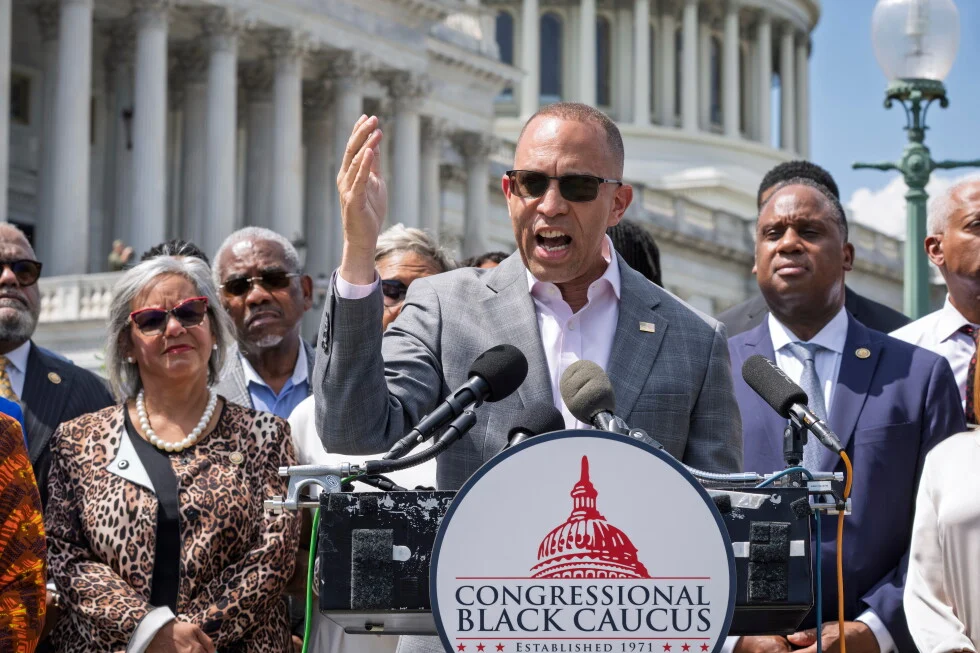
WASHINGTON — In a move signaling a major escalation in the struggle for voting rights, the Congressional Black Caucus (CBC) has issued a direct mandate to corporate America, demanding an unequivocal commitment to civil rights, equal opportunity, and the protection of democratic representation. The Leadership Conference on Civil and Human Rights, the nation’s oldest and largest civil rights coalition, has thrown its full institutional weight behind this demand, warning that the American multi-racial democracy is facing an existential threat.
This mobilization comes in the immediate aftermath of the Supreme Court’s controversial Callais decision, a ruling that civil rights leaders argue has effectively dismantled core protections of the Voting Rights Act (VRA). As the nation reflects on the anniversary of George Floyd’s murder—a day that serves as a sobering reminder of systemic inequities—the intersection of corporate social responsibility and political advocacy has become the new frontier in the fight for racial justice.
The Core Conflict: Dismantling the Voting Rights Act
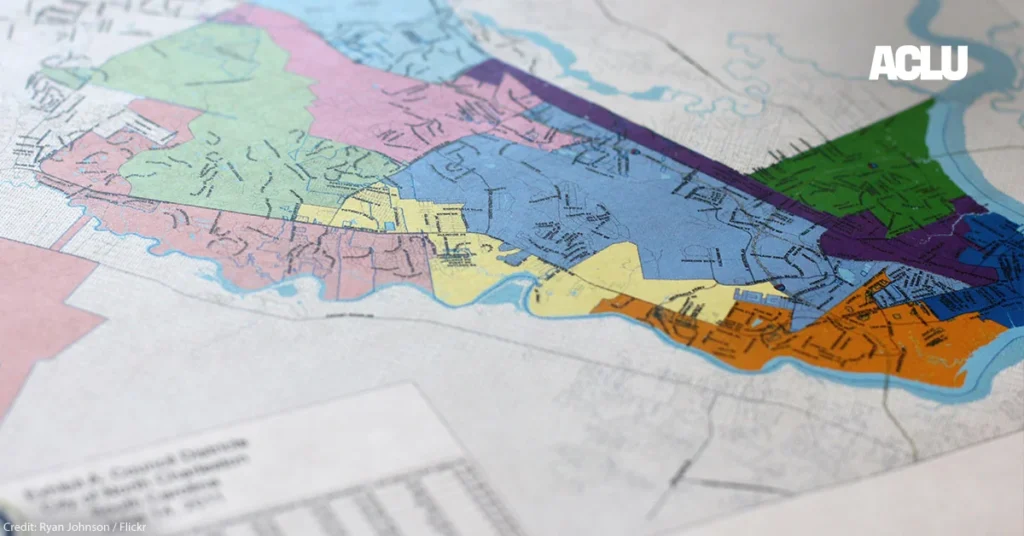
The central point of contention is the Supreme Court’s recent decision in Callais, a case that legal scholars and activists contend has fundamentally altered the landscape of American elections. By narrowing the scope of what constitutes racial discrimination in redistricting, the Court has, according to critics, provided states with a roadmap to dilute the voting power of Black citizens.
Maya Wiley, President and CEO of The Leadership Conference, did not mince words regarding the decision. “The Supreme Court’s Callais decision not only got the facts of racial discrimination wrong, it ripped the fabric of the Voting Rights Act that was knit in a bipartisan Congress,” Wiley stated. “It gave permission to deny Black voters—who represent one-third of the population in states like Alabama, Louisiana, Georgia, and South Carolina—the fair and meaningful opportunity to elect leaders who will be accountable to them.”
The VRA, once considered the crown jewel of civil rights legislation, was designed to prevent states from engaging in practices that disenfranchise minority voters. By weakening the enforcement mechanisms of the Act, the Callais ruling has emboldened state legislatures to pursue aggressive gerrymandering strategies that effectively decouple electoral outcomes from the demographic realities of the electorate.
Chronology of the Crisis
To understand the current volatility, one must look at the timeline of events leading to this standoff:
- 1965 – The Enactment of the Voting Rights Act: President Lyndon B. Johnson signs the VRA into law, prohibiting racial discrimination in voting. It serves as the bedrock for the modern civil rights movement.
- 2013 – Shelby County v. Holder: The Supreme Court strikes down the formula used to determine which jurisdictions are subject to federal pre-clearance, significantly weakening the VRA’s oversight capabilities.
- May 2020 – The Murder of George Floyd: The global protests following Floyd’s death prompt a massive wave of corporate pledges regarding Diversity, Equity, and Inclusion (DEI) and racial justice.
- 2025–2026 – The Rise of Redistricting Challenges: Following the most recent census cycles, states across the South face legal challenges regarding racial gerrymandering.
- May 2026 – The Callais Ruling: The Supreme Court issues a decision that further limits the ability of plaintiffs to challenge discriminatory redistricting maps.
- May 26, 2026 – The CBC Call to Action: The Congressional Black Caucus issues a letter to corporate leaders, demanding that their public commitments to equality translate into active support for voting rights legislation.
Supporting Data: The Disenfranchisement Gap
The urgency of the CBC and The Leadership Conference is rooted in stark demographic and electoral data. In the states highlighted by the coalition—Alabama, Louisiana, Georgia, and South Carolina—Black voters constitute a massive, yet often under-represented, portion of the electorate.
The Demographic Weight
In these states, Black populations represent between 25% and 35% of the total census count. Despite this, the current congressional maps often result in Black voters having the ability to elect their candidates of choice in a disproportionately low number of districts.
The Impact of Callais
Legal analysis suggests that the Callais ruling makes it significantly harder for civil rights organizations to meet the "evidentiary burden" required to prove racial intent in redistricting. By prioritizing neutral, partisan-based explanations for map drawing, the Court has created a legal "safe harbor" for state legislatures to enact maps that result in the packing and cracking of Black voting blocks.
The Leadership Conference notes that this is not merely a matter of electoral politics; it is a matter of economic and social policy. When minority communities are stripped of their ability to elect representatives who address their needs, the resulting policies often ignore issues of environmental justice, education funding, and public safety.
Official Responses and Corporate Accountability
The CBC’s letter is a test of corporate sincerity. In the summer of 2020, thousands of corporations issued statements affirming that "Black Lives Matter" and pledging to invest in systemic change. However, many of those same corporations have since remained silent as state legislatures introduced restrictive voting laws.
The Congressional Black Caucus (CBC) Position
The CBC, which serves as the "conscience of the Congress," argues that corporations cannot claim to be allies to Black employees and customers while funding political action committees (PACs) that support candidates and parties actively working to suppress the Black vote. The CBC is calling for:
- Public Advocacy: Corporations must publicly support federal voting rights legislation.
- PAC Reform: A freeze on donations to lawmakers who have sponsored or supported restrictive voting legislation.
- Lobbying Disclosure: Greater transparency regarding corporate lobbying efforts at the state level.
The Leadership Conference Stance
Maya Wiley emphasized that the current political climate is "under direct attack." By joining the CBC’s call, The Leadership Conference is providing the research and organizational infrastructure to ensure that the corporate sector cannot hide behind vague promises. The organization argues that corporations are "principled" only when they are willing to risk political capital for the sake of democratic integrity.
Implications for the Future of Democracy
The implications of this standoff extend far beyond the next election cycle. If the corporate sector fails to align its influence with the protection of democratic rights, the resulting erosion of the Voting Rights Act will likely lead to a permanent, structural imbalance in the American government.
1. The Multi-Racial Democracy at Risk
The Leadership Conference views the current moment as a turning point. If the coalition of Black voters and their allies cannot secure a fair playing field, the promise of a "more perfect union" will become increasingly unattainable. The organization notes that the struggle is not just about Black voters; it is about the health of the entire democratic system.
2. The Potential for Corporate Reputational Risk
Corporations that choose to ignore this call to action may face significant backlash from a younger, more socially conscious consumer base. Data indicates that Gen Z and Millennial employees are increasingly prioritizing corporate values in their career choices. A failure to act on voting rights could lead to talent retention issues and consumer boycotts.
3. Judicial Activism and Legislative Retaliation
The Callais decision has set a precedent that will likely govern American elections for the next decade. The only path forward, according to legal experts, is a legislative response—such as a new version of the John Lewis Voting Rights Advancement Act. The mobilization of corporations is seen as a key component in pressuring moderate lawmakers to cross the aisle and support such legislation.
Conclusion: A Clarion Call to Action
As the nation marks the anniversary of the murder of George Floyd, the words of Maya Wiley and the CBC echo a painful truth: the struggle for racial justice is not a singular event that can be resolved by donations or statements. It is a continuous process of safeguarding the mechanisms of power.
The Leadership Conference, backed by a diverse membership of over 240 national organizations, remains committed to its mission of creating an America as good as its ideals. The partnership between the CBC and the civil rights community represents a formidable force, but they are clear-eyed about the opposition. As they move forward, the message to corporate America is simple: neutrality is no longer an option. In a landscape where the right to vote is being systematically narrowed, those who remain silent are, by default, enabling the erosion of the very democracy that allows their businesses to thrive.
For more information on the ongoing mobilization and to view the official documentation, please visit www.civilrights.org. The fight for the ballot is not just a political contest—it is the defining challenge of our time.


 Sagoh
Sagoh