

 Layla Zulfa
By Elisa Epstein and Quinn Phillips, ACLU National Prison Project
May 4, 2026
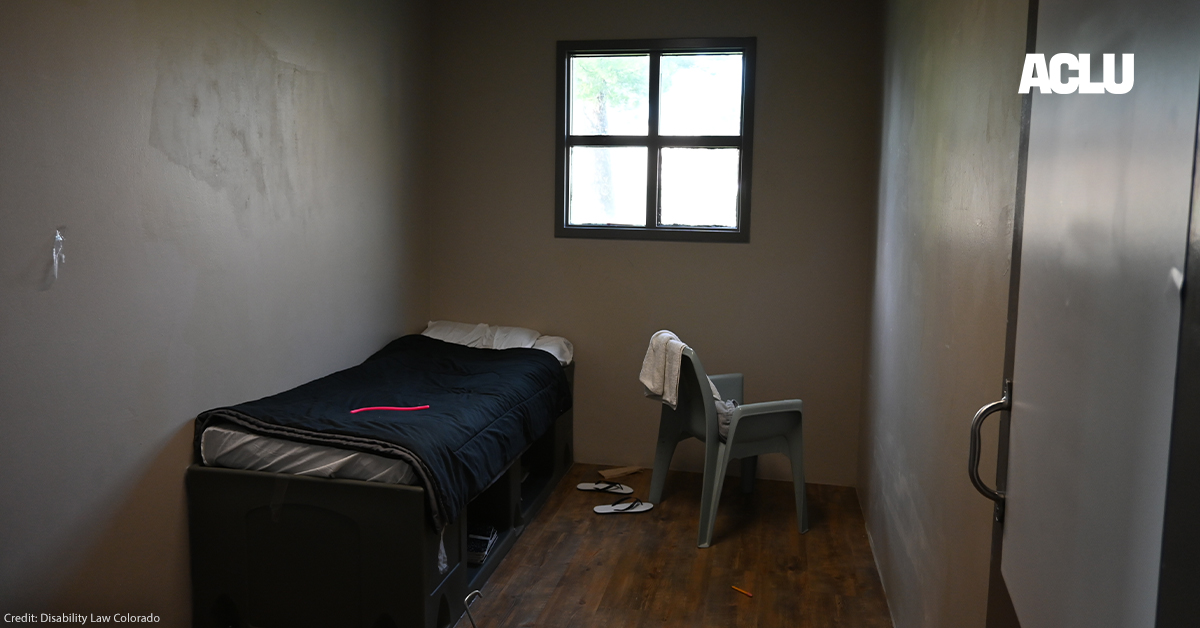
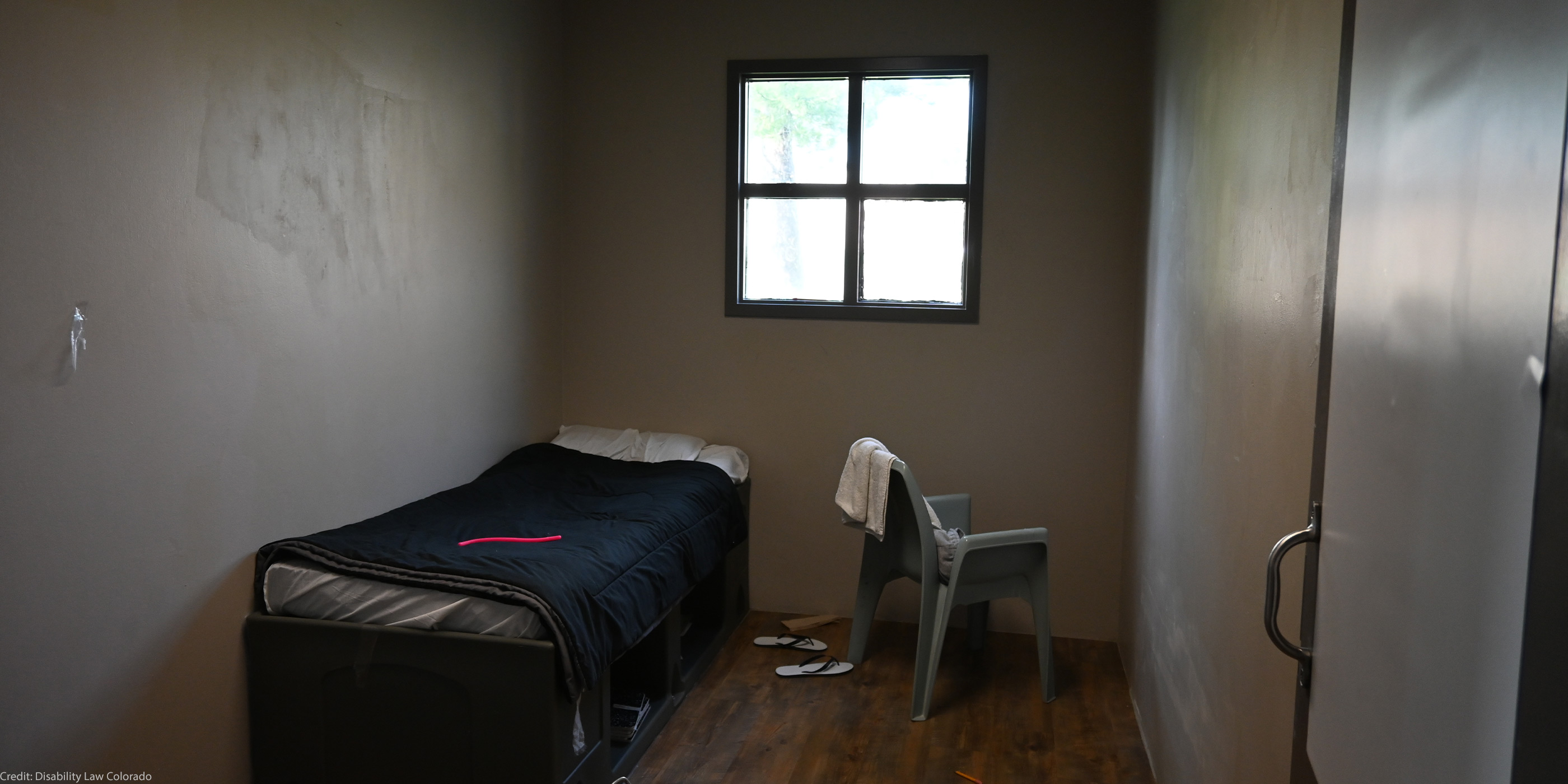
In a small, windowless room within a Colorado Division of Youth Services (DYS) facility, the fluorescent lights never fully dim. The space is sparse: a single bed, a plastic chair with a towel draped over it, and a pair of discarded flip-flops on the wooden floor. For 12-year-old "Tony S."—a pseudonym for a child whose life has been placed on hold—this room is not a temporary stop. It is his reality. Despite a judge’s order mandating his release, Tony has remained locked behind these walls for over six months.
Tony, who lives with autism spectrum disorder and significant cognitive and developmental impairments, is not alone. He is a named plaintiff in a landmark class-action lawsuit filed this past March, a legal challenge that seeks to hold the state of Colorado accountable for the systematic, unlawful detention of children who have been cleared for release.
The Core of the Crisis: Justice Delayed is Justice Denied
The lawsuit, brought by the ACLU National Prison Project, the ACLU of Colorado, Children’s Rights, Disability Law Colorado, and the law firm Ropes & Gray, strikes at a fundamental failure of the state’s juvenile justice infrastructure. For hundreds of children like Tony, the judicial process has already reached a conclusion: a judge has determined they should be released into foster care or back to their families with appropriate support services.
Yet, these children remain languishing in detention centers. They are not there because a judge ordered their incarceration; they are there because the state has failed to secure, fund, or coordinate alternative community-based placements. This administrative failure transforms a legal detention center into a de facto warehouse for vulnerable youth, particularly those with disabilities or those currently in the foster care system.
Chronology of a Systemic Failure
The crisis is not a sudden emergence but the culmination of years of administrative neglect.
- 2021–2025: Throughout this period, conditions within Colorado’s DYS facilities deteriorated, as documented in the March 2026 report Breaking Point, published by Disability Law Colorado. The report highlights a consistent pattern of children remaining in high-security detention despite court-ordered release dates.
- March 2026: The ACLU and its partners file the class-action lawsuit Isaac N. et al. v. Polis, alleging that the state’s inaction violates both federal disability law and the constitutional rights of minors.
- February 2026: A bipartisan Congressional report, authored by Senator Jon Ossoff and Representative Jen Kiggans, is released, shedding light on the national phenomenon of "warehousing" foster children in detention facilities due to a lack of state-provided community resources.
- April 2026: Legislative efforts in other states, such as Tennessee, mirror the desperation of the current situation, with proposals appearing that would explicitly authorize the detention of foster children simply because the state lacks housing capacity.
The Anatomy of Confinement
The conditions described in the lawsuit paint a picture of an environment antithetical to the developmental needs of children. A DYS Residential Youth Center is designed with the austerity of an adult prison. Perimeter fences are topped with barbed wire, and internal movement is strictly controlled.
For children like Tony, who are simply waiting for a bed in a foster home or a community therapy program, the daily experience is one of profound psychological attrition. When these children are moved—even to attend court hearings—they are frequently shackled. The educational environment is often inadequate, with children aged 12 to 17—who possess vastly different developmental and academic needs—forced into the same classroom.
Furthermore, the prevalence of "violent restraint tactics" and the routine use of strip searches create an environment of hyper-vigilance and trauma. For a child with autism or other developmental disabilities, these restrictive measures are not merely uncomfortable; they are deeply damaging, exacerbating behavioral issues that the state claims it is trying to manage.
Supporting Data: The Developmental Toll
The scientific consensus on youth incarceration is overwhelming and unequivocal. Research, including studies published in major medical journals, has demonstrated that detention acts as a catalyst for long-term neurological, physical, and psychological harm.
When a child is removed from the community and placed in a high-stress, institutional setting, their developmental trajectory is permanently altered. The disruption of education is immediate, but the long-term consequences are more insidious: the destruction of social relationships, the erosion of future career and academic opportunities, and a significantly increased statistical likelihood of re-involvement with the criminal legal system.
The state of Colorado is not blind to these facts. Statutory language within Title 19 of the Colorado Revised Statutes acknowledges the inherent harm of detention. Yet, there remains a persistent gap between the state’s legislative acknowledgment of these harms and its operational reality. By prioritizing detention over community-based, wraparound support services, the state is actively choosing a path that it knows—through its own research and data—causes lasting damage to the children in its custody.
Implications: A Violation of Federal Rights
The lawsuit posits that the state’s failure is not merely a policy error but a violation of federal law:
- The Americans with Disabilities Act (ADA): For children with disabilities, being confined in an institution when they could be served in a community setting—the most integrated setting appropriate to their needs—is a violation of the ADA’s "integration mandate."
- The Fourteenth Amendment: The constitutional right to due process is violated when a state continues to deprive a child of liberty even after a court has ordered their release. The heightened protection afforded to children under the law demands that the state act with urgency to facilitate that release.
National Context: A Pattern of Neglect
Colorado’s struggle is symptomatic of a broader national trend. Across the United States, there is a recurring tendency to utilize the "easiest" solution—detention—rather than investing in the complex, necessary infrastructure of community-based mental health and foster care services.
The bipartisan Congressional report released earlier this year serves as a stark warning. When states prioritize the convenience of locking children away over the difficult work of building support networks, they create a cycle of institutionalization that is expensive, inhumane, and legally indefensible. The proposed legislation in Tennessee, which would essentially legalize the detention of children solely due to a lack of foster care capacity, indicates that this crisis is at risk of becoming normalized under the guise of "administrative necessity."
The Call to Action
Jail is no place for a child. A 12-year-old should be learning to play board games, listening to music, attending sports practice, or simply spending time with their family. Instead, children in Colorado are learning to survive in a cell, teaching themselves how to shuffle cards to pass the hours of crushing boredom and loneliness.

The lawsuit filed against the state of Colorado is more than a legal action; it is a moral ultimatum. It demands that the state immediately invest in the processes, placements, and services necessary to support children in their homes and communities.
As the litigation proceeds, the message to Colorado—and to every state across the nation—is clear: The way a government treats its most vulnerable children is the true measure of its commitment to justice. The status quo of warehousing children in detention centers is a failure that the public, the courts, and the children themselves can no longer afford to tolerate. It is time for Colorado to move beyond rhetoric and fulfill its legal and ethical obligation to ensure that every child has a place to go that is not a cage.

 Lina Hope
 Neng Nana