



 Sagoh
For decades, Usman Hamid, the Executive Director of Amnesty International Indonesia, has stood at the vanguard of the nation’s human rights movement. His career, forged in the crucible of the 1998 student protests that toppled the Suharto dictatorship, has been marked by a singular commitment: holding power to account. Yet, in the twilight of the 2020s, Hamid finds himself navigating a terrain far more treacherous than the street protests of his youth. As the Indonesian state shifts toward an increasingly illiberal posture under the administration of President Prabowo Subianto, the tools of suppression have evolved. The rubber bullets and physical intimidation of the past have been supplemented by a sophisticated, state-sanctioned digital apparatus designed to brand dissenters as enemies of the state.
A Legacy Forged in Crisis
Hamid’s trajectory into human rights activism was not a choice, but a necessity born of tragedy. His political awakening occurred in the shadow of the 1998 Asian Financial Crisis, as public fury over state corruption, socio-economic collapse, and systemic repression reached a boiling point. The pivotal moment arrived on May 12, 1998, when security forces opened fire on students at Trisakti University. The death of four of his classmates transformed his nascent activism into a lifelong mission.
Following the fall of Suharto, Hamid became a student representative on the military police investigation team—a role that brought him into the orbit of Munir Said Thalib, the legendary Indonesian human rights defender. Under Munir’s mentorship at the Commission for Missing Persons and Victims of Violence (KontraS), Hamid began investigating the deep-state apparatus responsible for the disappearances and extrajudicial killings of the late 1990s. This work earned him the immediate and lasting ire of the military establishment.
Chronology of Coercion: From Pamphlets to Pixels
The campaign to neutralize Hamid has spanned a quarter-century, mirroring the changing technological landscape of political warfare.
- 1999–2001: The Era of Smear Campaigns. Early efforts to discredit Hamid involved the distribution of physical pamphlets in public spaces, labeling him a "communist" or a "Jewish secret agent"—labels intended to trigger conservative, nationalist, and religious hostility.
- 2002–2004: Direct Physical Threats. As Hamid and Munir exposed high-level military involvement in human rights violations, the intimidation escalated. A violent mob stormed the KontraS office in 2002, leading Munir to provide Hamid with a bulletproof vest and facilitate a temporary exile to the Netherlands. In 2004, the tragedy culminated in the assassination of Munir, who was poisoned with arsenic on a flight to Amsterdam.
- 2005–2016: Legal Warfare. Following his work on the Munir fact-finding team, Hamid faced repeated criminal defamation lawsuits filed by intelligence officials, a common tactic used to bleed activists dry through litigation.
- 2025–2026: The Digital Surveillance State. Under the current administration, harassment has moved into the digital realm. Disappearing voice notes, coordinated social media smear campaigns, and targeted "hit lists" have become the new norm.
The Weaponization of Disinformation
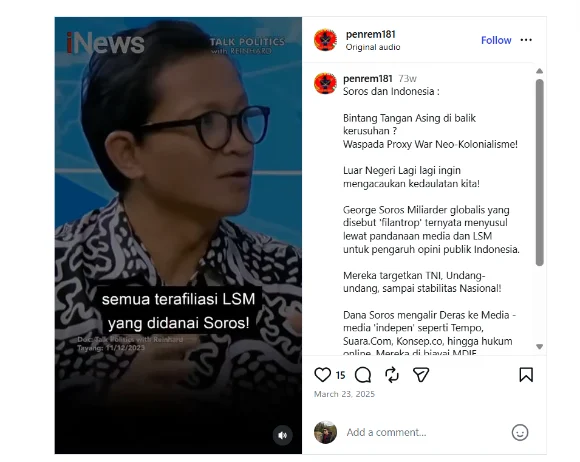
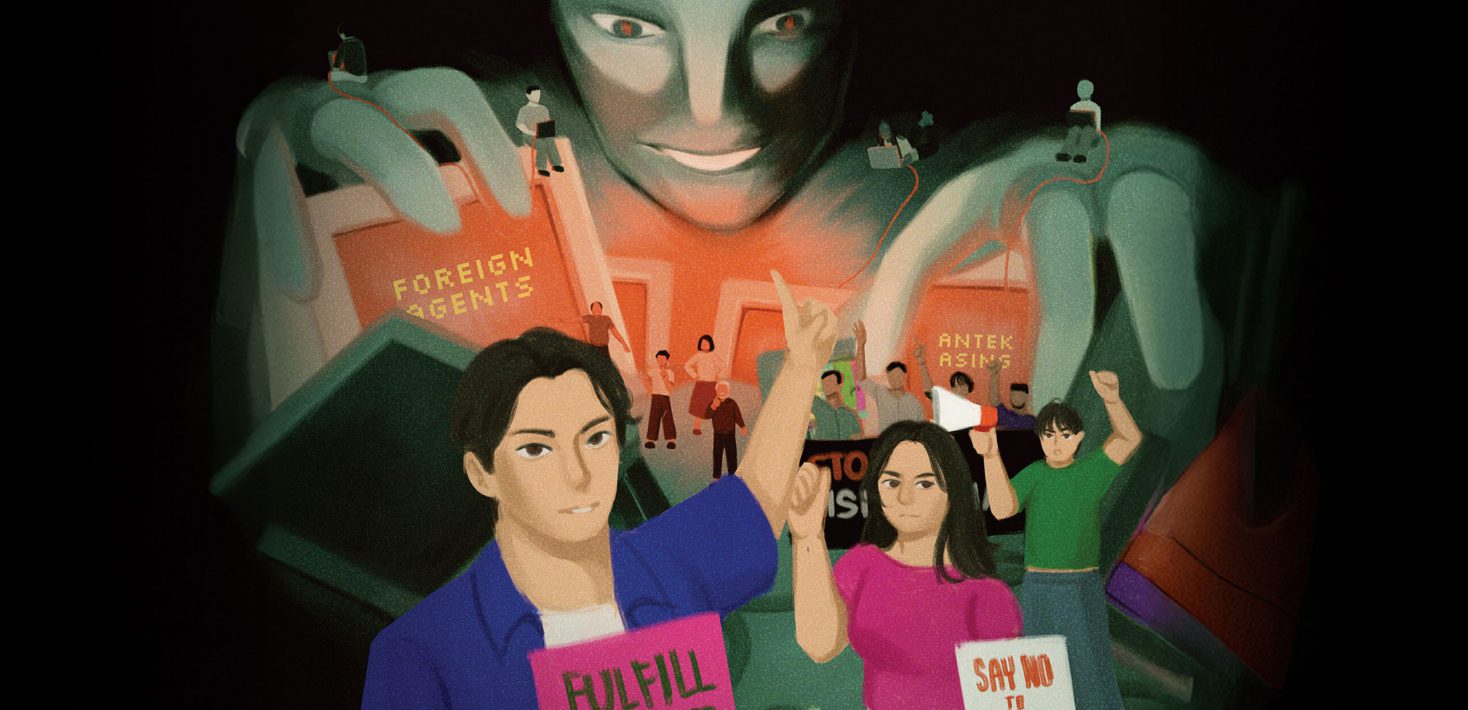
The current administration’s strategy centers on the branding of human rights defenders as "foreign agents" working to undermine Indonesia’s national sovereignty. This narrative, while archaic in its rhetoric, is surgically applied through modern social media algorithms.
On March 23, 2025, a disturbing pattern emerged: Instagram accounts linked to four separate military units disseminated videos characterizing human rights defenders—specifically naming Hamid—as agents of foreign powers. Despite Amnesty International providing Meta with extensive evidence regarding the human rights impact of these campaigns, the content remained accessible, highlighting a critical failure in the platform’s moderation of state-sponsored disinformation.
The psychological toll of this digital surveillance is immense. Hamid recounts instances where even childhood friends, swayed by the military’s slickly produced propaganda videos, reached out to question his loyalty to his country. This erosion of social capital is the intended outcome of the state’s strategy: to isolate activists, strip them of public sympathy, and leave them vulnerable to physical harm.
Escalating Danger: The Return of Targeted Violence
The threat level against Hamid reached a harrowing peak in March 2026. Following a brutal acid attack on Andrie Yunus, a prominent activist fighting against proposed revisions to the military law, investigators discovered that Yunus was not the only target. Hamid’s name was found on a "hit list" recovered during subsequent inquiries.
The proposed military law revisions—which would allow soldiers to occupy civilian roles—have become the primary flashpoint between the state and civil society. When KontraS activists protested these changes in March 2025, the retaliation was swift. Hamid received direct, violent threats via phone, with high-ranking officials calling him a "foreign lackey" and threatening his life. The intensity of these threats, delivered via encrypted, disappearing messages, forced Hamid to retreat into the privacy of his home, where he and his wife were forced to shelter their children from the reality of the terror directed at their father.
Implications for Indonesian Democracy
The systematic harassment of individuals like Usman Hamid serves as a bellwether for the health of Indonesian democracy. The implications are three-fold:
- Normalization of Authoritarianism: By labeling criticism as "foreign interference," the state effectively immunizes itself from domestic accountability. This narrative allows the military to operate outside the constraints of civilian oversight, a hallmark of the pre-1998 era.
- Chilling Effect on Civil Society: The use of targeted disinformation, combined with physical threats, is designed to silence the next generation of activists. If a figure as prominent as the head of Amnesty Indonesia can be threatened with impunity, the risks for grassroots organizers are exponentially higher.
- Corporate Complicity: The role of global tech giants like Meta cannot be overlooked. By failing to remove content that explicitly incites hatred and violence against individuals based on their human rights work, platforms become, whether intentionally or not, an extension of the state’s repressive apparatus.
A Resilience Born of Vision
Despite the encroaching darkness, Hamid remains steadfast. His resilience is anchored in the same motivation that fueled him as a teenager: a profound, unwavering belief in a "clear blue sky"—a metaphor for a transparent, just, and democratic Indonesia.
He draws strength from the support of his family and the camaraderie of fellow activists who refuse to be cowed. "We once fought and earned many victories," Hamid reflects. "Today, we see a painful return of authoritarian practices, but this only means our work is not finished."
The situation in Indonesia remains a critical test for the international human rights community. As the state refines its ability to blend traditional authoritarianism with modern digital warfare, the global community must decide whether to stand by as the hard-won gains of the post-1998 era are dismantled, or to demand accountability for those who seek to silence the truth. For now, Hamid continues his journey, driving forward, pushing against the encroaching shadows, in the hope that the sky over Indonesia will one day be clear again.

 Asro
 Lina Hope






