


 Azzam Bilal Chamdy
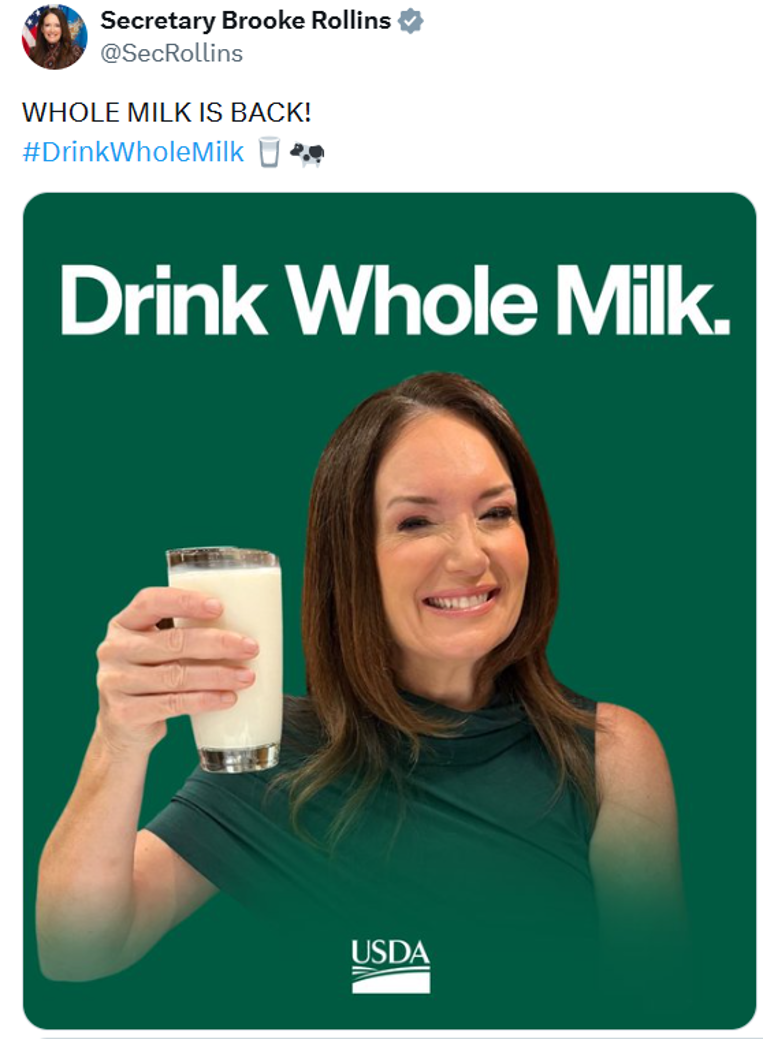
In a significant policy shift that has sparked debate between nutritional advocates and the dairy industry, the United States Department of Agriculture (USDA) has officially implemented the "Whole Milk for Healthy Kids Act." Signed into law and now codified through federal regulation, the act marks a reversal of long-standing nutritional standards in the National School Lunch Program (NSLP). By allowing schools to serve full-fat and flavored whole milk, the federal government has waded into a complex intersection of agricultural lobbying, childhood nutrition, and the politics of school meal reform.
Main Facts: What the New Rule Entails
The implementation of the "Whole Milk for Healthy Kids Act" fundamentally alters the regulatory framework governing milk served in American public schools. For years, federal guidelines—rooted in the Dietary Guidelines for Americans—had restricted schools to serving low-fat (1%) or fat-free milk, whether plain or flavored, to minimize the intake of saturated fats and calories among the youth population.
Under the new directive, schools are now authorized to offer students access to whole milk, including full-fat chocolate milk, as part of their federally subsidized meal programs. The USDA’s interim final rule provides the administrative mechanism to execute this mandate, effectively removing the fat-content barriers that have governed school cafeteria menus for over a decade. The legislation was pushed through Congress with the explicit backing of the current administration, aiming to provide what proponents describe as "consumer choice" and "nutritional density" to students.
A Chronology of Policy Shifts
The journey toward this legislative milestone was not sudden; it is the culmination of a decade-long campaign by dairy stakeholders.
- 2009-2012: The initial push to limit milk fat in schools gained traction as the Healthy, Hunger-Free Kids Act of 2010 established strict calorie and fat limits for school meals. This era saw a significant pivot toward low-fat milk options.
- 2015-2018: As national milk consumption trends showed a consistent decline, dairy industry groups began lobbying for a return to whole milk, citing student dissatisfaction with low-fat alternatives and the purported health benefits of dairy fats.
- 2022-2024: The legislative movement gained momentum in Congress, with bipartisan support framed as a matter of "milk freedom." Advocates argued that restrictive rules were leading to increased food waste, as students frequently discarded skim and 1% milk.
- 2026 (May): The USDA formally announced the implementation of the President’s "Whole Milk for Healthy Kids Act," transitioning the bill from political rhetoric to regulatory reality.
Supporting Data: The Nutritional Breakdown
To understand the scope of this change, one must look at the nutritional differences between milk variants. According to data maintained by the USDA’s FoodData Central, the nutritional profile of a one-cup serving of milk changes significantly when shifting from fat-free to whole-fat varieties.
While supporters argue that whole milk provides essential vitamins and minerals—such as calcium, Vitamin D, and potassium—critics point to the caloric density and saturated fat content. A standard cup of whole milk contains approximately 150 calories and 8 grams of fat, compared to the roughly 80-90 calories and 0 grams of fat found in skim milk. When factoring in the added sugars found in chocolate-flavored variants, the caloric intake increases further.
For many pediatric nutritionists, the concern is not necessarily the occasional consumption of full-fat dairy, but the cumulative effect of increasing saturated fat intake in a demographic already facing rising rates of childhood obesity and related metabolic issues. The debate centers on whether the nutrient density of milk justifies the additional caloric and fat intake, especially when compared to other potential sources of nutrients like legumes, nuts, or whole produce.
Official Responses and Industry Advocacy
The response to the implementation has been polarized. The International Dairy Foods Association (IDFA) has been the most vocal proponent of the legislation. In an official statement following the USDA announcement, the IDFA applauded the department for moving with "urgency," noting that the new rule provides school nutrition directors and processors with the regulatory certainty required to meet student demand.
The industry’s position is clear: they argue that federal regulations had "over-reached" by limiting options that students actually prefer. By increasing the palatability of milk through higher fat and sugar content, the industry posits that schools can reduce the volume of milk poured down the drain, thereby increasing overall calcium and protein consumption among students.
Conversely, public health advocates and organizations focused on child nutrition have expressed skepticism. Many argue that the push for whole milk is a strategic move by the dairy industry to reverse failing sales figures rather than a response to a genuine nutritional need. The industry’s declining market share in the face of plant-based milk alternatives has been well-documented by the USDA Economic Research Service, and analysts suggest that securing a captive audience in the public school system is a vital financial strategy for dairy processors.
Implications: A Broader Context of School Meal Reform
The implementation of this act raises significant questions about the priorities of federal oversight in education. When analyzing the current state of the National School Lunch Program, it is evident that the school meal system is facing systemic challenges far more pressing than the fat content of milk.
Structural Barriers to Nutrition
Across the United States, school districts struggle with a lack of adequate funding, outdated or non-existent kitchen facilities, and a reliance on "commodities" that are often highly processed. In many regions, schools lack the infrastructure to prepare fresh meals, forcing them to rely on pre-packaged, reheated food. Critics of the "Whole Milk for Healthy Kids Act" argue that the time and political capital spent on this legislation could have been better directed toward solving the "kitchen crisis" or improving the quality of fresh produce available in cafeterias.
The Influence of Industry Lobbying
The legislative process surrounding this act serves as a case study in how industry-specific interests can successfully influence public health policy. By framing the issue as one of "student choice," the dairy industry effectively neutralized much of the opposition from those who might have focused on the scientific consensus regarding saturated fats. It highlights the reality that in the American political system, school food is not merely a nutritional issue—it is an economic one.
The Future of School Meals
As schools begin to integrate whole milk back into their standard offerings, the long-term implications will be monitored by both nutritionists and economists. If the dairy industry’s hypothesis is correct, we may see a temporary uptick in milk consumption and a decrease in school food waste. However, if the impact on student health follows the path suggested by critics, the legislation may eventually be viewed as a regressive step in the broader effort to combat childhood obesity.
Conclusion: The Politics of the Lunch Tray
The "Whole Milk for Healthy Kids Act" is a reminder that the cafeteria is a primary battlefield for competing ideologies. While the act is presented as a victory for student preference and dairy farmers, it underscores a disconnect between federal legislative priorities and the foundational needs of the American school system.
Ultimately, whether this change results in better nutrition for children remains to be seen. What is clear, however, is that the move was never purely about health. It was a strategic effort to protect an industry, utilizing the vehicle of school lunch to ensure the consumption of a staple product. As we look forward, the discourse surrounding school meals will likely continue to be shaped by this tension: the struggle to provide children with the healthiest possible fuel, versus the economic imperatives of the agricultural giants that supply the nation’s lunchrooms.
For observers of food policy, this episode serves as a vital lesson: in the world of federal nutrition policy, the "bottom line" is rarely just about calories—it is about the power, the lobby, and the enduring influence of the dairy industry on the American diet.


 Dwi Wanna
 Asep Darmawan