



 Nana Muazin
Mother’s Day is traditionally a time for bouquets, brunch, and cards, but for many mothers across the United States, the holiday arrives with a backdrop of systemic instability and profound health insecurity. While the nation celebrates motherhood, a quiet, persistent crisis continues to threaten the lives of Black women, who remain significantly more vulnerable during pregnancy and childbirth than any other demographic.
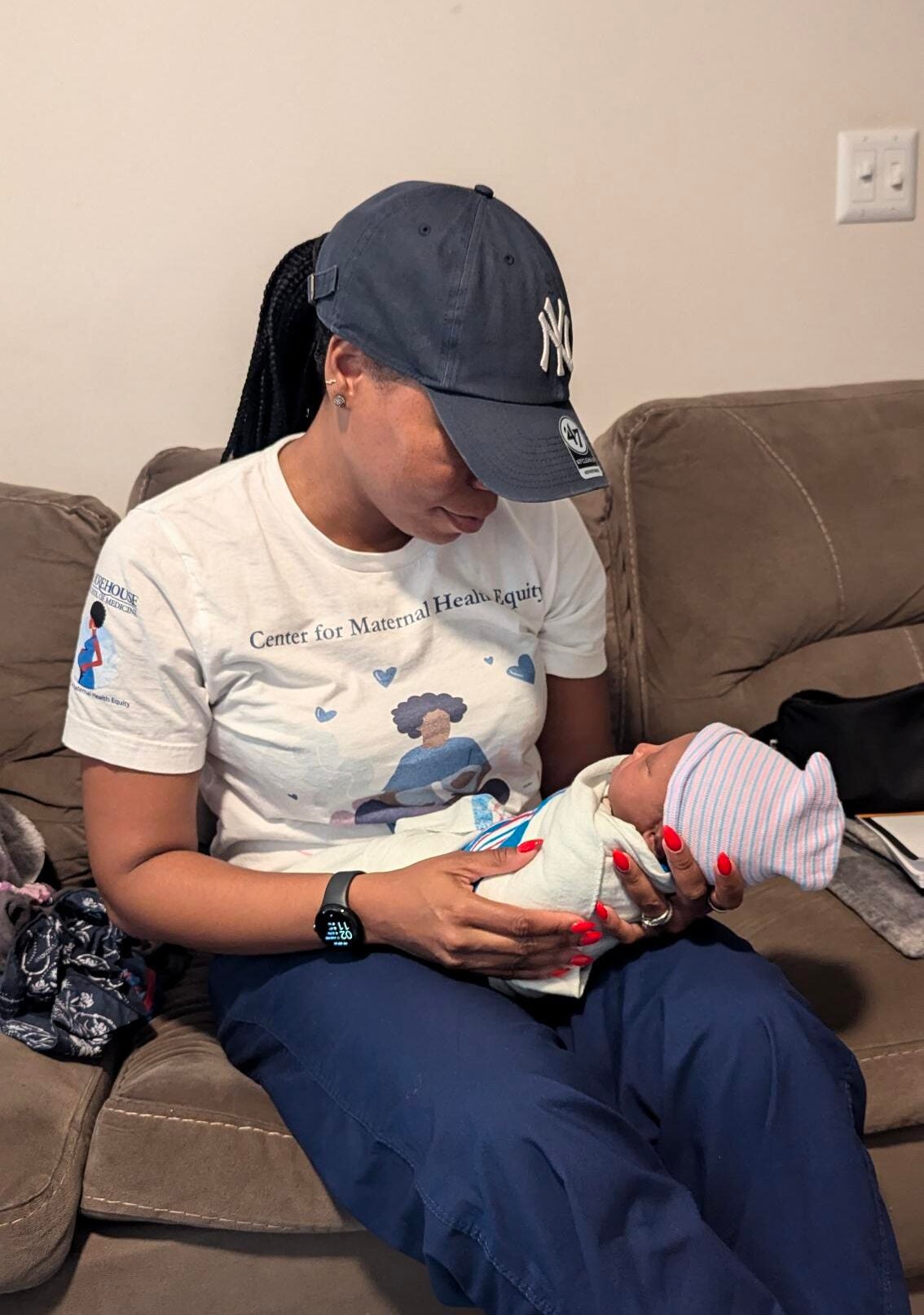
For childbirth educators and doulas like Bashellia Williams and Danielle Mauzy, the most meaningful gift a mother can receive is not a physical token, but the guarantee of life-saving, equitable access to care. Operating through the Center for Maternal Health Equity at the Morehouse School of Medicine, these advocates are at the forefront of a movement to bridge the gap between systemic neglect and holistic maternal well-being.
The Crisis: A Statistical Reality
The disparity in maternal mortality rates in the United States is not just a trend; it is a public health emergency. According to the Centers for Disease Control and Prevention (CDC), Black women are three times more likely to die from pregnancy-related complications than their white counterparts. Even more sobering is the realization that this is not an unavoidable tragedy: approximately 80% of these maternal deaths are deemed preventable.
"It’s not even a stagnant number," says Bashellia Williams, a doula and perinatal patient navigator. "We’re finding now that the number is trying to creep up."
This upward trajectory in maternal mortality is fueled by a complex web of factors, including systemic bias in clinical settings, limited access to prenatal care, and the social determinants of health—such as housing instability, food insecurity, and a lack of reliable transportation—that can make a routine pregnancy feel like a high-stakes ordeal.
Chronology of a Calling: From Personal Experience to Professional Advocacy
For Williams, the commitment to maternal health is "woven into her bones." Her journey began at 17, when she navigated her first pregnancy with little more than the resources she could find at the local library.
"My resource was the library. I didn’t have it in the palm of my hand. We had to read and learn and figure things out," Williams reflects. "That inner-knowing got me through it."
Years later, as a mother of six, Williams experienced the "most intimate, personal way" the system can fail a mother. When her daughter was pregnant three years ago, they visited a hospital in the throes of labor, only to be turned away by staff who insisted the birth was not imminent.
"I got her somewhere where she was comfortable, I think on the couch, and I went to my room and I just cried," Williams recalls. "They sent us home about three in the morning. The baby was born in my bathroom at 7:55 a.m. the next morning."
This harrowing experience served as a catalyst, transforming her from a concerned mother into a fierce, professional advocate. It cemented her resolve to ensure that no other woman has to navigate the vulnerability of childbirth without informed support and an unwavering ally.
The Ecosystem of Support: A Coordinated Approach
The maternal health program at the Morehouse School of Medicine, supported by partners like CARE, the AbbVie Foundation, the Atlanta Community Food Bank, and Lyft, is designed to be a "coordinated ecosystem of support." This initiative recognizes that a healthy birth requires more than just a physician; it requires an infrastructure of social and physical stability.
The Role of the Doula
Danielle Mauzy, a doula and perinatal patient navigator, emphasizes that the primary role of a doula is to serve as a bridge. "We hold safe spaces for mothers during pregnancy and their postpartum period," Mauzy explains. "We are a bridge between a mom and her medical provider."
While doulas do not provide medical care, they act as an essential buffer in the medical environment. They educate mothers on their options, advocate for them during labor and delivery, and provide critical support during the postpartum period—a time often overlooked by traditional medical follow-ups. In this program, that support can span from the first trimester through the baby’s first birthday, providing continuity of care for mothers facing high-risk conditions like gestational diabetes or hypertension.
Addressing Social Determinants
The program addresses the "last mile" of healthcare accessibility. In many underserved communities, simply getting to an appointment or a grocery store is a barrier to health.
"When a mom must take long bus or metro rides with multiple transfers just to get to a grocery store that carries fresh lettuce and strawberries, it impacts their health," notes Williams. By providing Lyft vouchers for transportation and healthy food deliveries from the Atlanta Community Food Bank, the program removes the logistical hurdles that prevent mothers from prioritizing their own nutrition and medical schedules.
With recent funding from the UPS Foundation, the program is expanding to include psychosocial well-being services, offering support for both the mothers and the perinatal navigators themselves, who often face high emotional tolls while working in the field.
Supporting Data and Evidence of Impact
The efficacy of the doula model is supported by a growing body of research. Studies consistently show that the presence of a doula is associated with shorter labors, fewer medical interventions, and improved maternal and infant health outcomes.
To date, the Morehouse School of Medicine initiative has assisted approximately 150 women. This is more than just a headcount; it represents 150 instances of improved birth outcomes, increased maternal agency, and reduced medical trauma. The program proves that when you wrap a mother in a network of community-based support, you change the trajectory of her pregnancy.
The Intersection of Mental Health and Maternal Care
A significant focus of the current initiative is addressing the silent epidemic of perinatal mental health issues. Danielle Mauzy observes that many of the women she serves are struggling with anxiety and depression, often triggered or exacerbated by the stressors of pregnancy and economic instability.
"I encounter more moms than I would like to who are dealing with some type of mental health issue," Mauzy says. "I see a lot of mothers dealing with anxiety, some form of depression, and a lot of mental health issues that are something they’ve experienced in their past, that pregnancy may trigger."
By providing "non-judgmental" presence and consistent check-ins, the navigators help mothers identify when they need professional mental health support, helping them navigate the often-daunting process of finding a therapist or counselor who understands their specific cultural and socioeconomic context.
Implications for the Future of Healthcare
The work being done in Atlanta is a model for how the U.S. might begin to lower its maternal mortality rates. It shifts the paradigm from a purely clinical, hospital-centric model to a community-centric model that acknowledges the humanity of the mother.
The implications for policy are clear:
- Investment in Community-Based Doulas: Doula support should be integrated into standard prenatal care and covered by insurance as a preventive health measure.
- Focus on Social Determinants: Healthcare providers must recognize that a patient’s health is determined by her environment. Programs that provide transport and nutrition are as much a part of "medicine" as medication.
- Professional Respect and Collaboration: Medical providers must learn to view doulas and patient navigators as partners in care rather than intruders, creating a collaborative environment that prioritizes the patient’s voice.
Conclusion: A Vision of Hope
As Mother’s Day passes, the work of Williams and Mauzy continues. They are not merely helping women give birth; they are helping them survive and thrive in a system that has historically marginalized them.
"We bring light to them, to show there is a way out," Williams concludes. "This program is working. It’s making a difference."
The most profound takeaway from their work is that maternal health equity is not an impossible dream. It is a tangible goal achievable through collaboration, empathy, and the dedication of individuals who are willing to bridge the gaps in our current system. For the mothers they serve, the most precious gift of all is the security of knowing they are not alone—that they have an advocate, a community, and a path forward.
This is the promise of their work: a future where every mother, regardless of her zip code or background, is supported, empowered, and safe. That, for these advocates, is the only way to truly honor the spirit of motherhood.

 Neng Nana
 Iffa Jayyana