

 Nana Muazin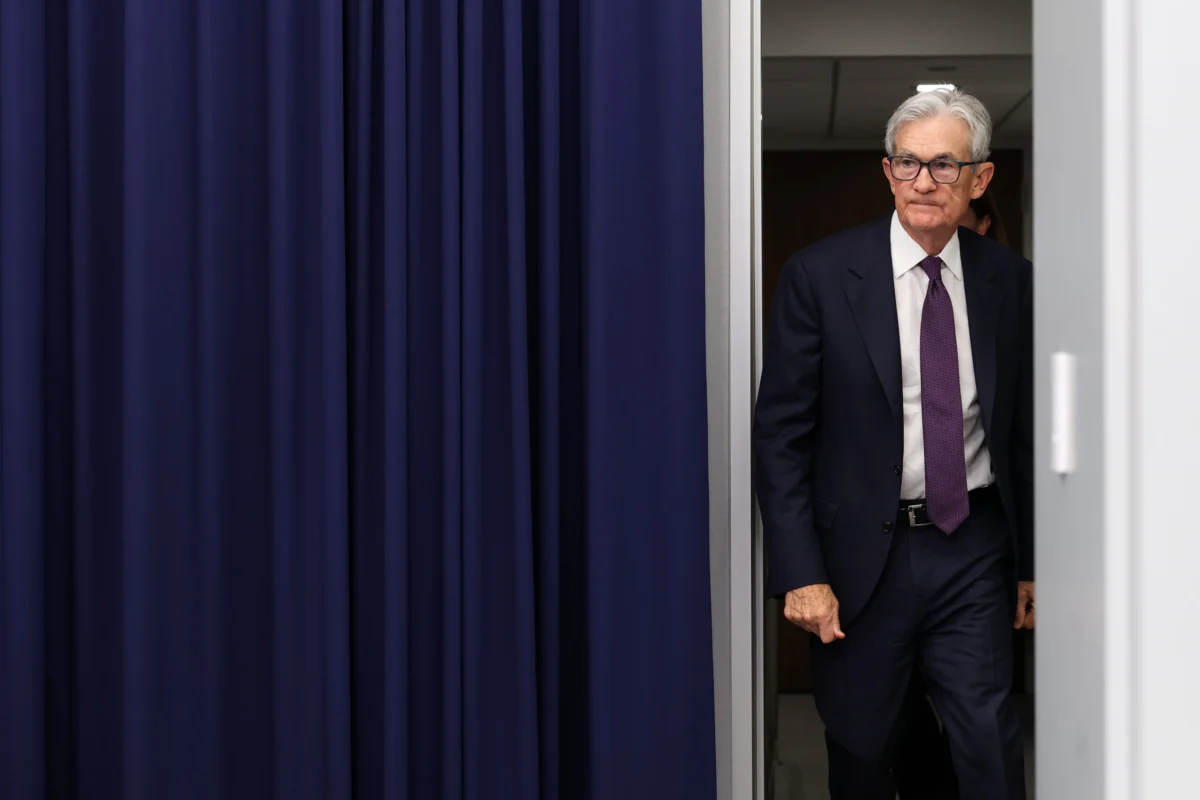
The current political and economic landscape is undergoing a significant transition. As Washington pivots toward a new era of central bank leadership and grassroots organizations deepen their engagement with local communities, the Roosevelt Institute has curated a comprehensive look at the week’s most pressing developments. From the shifting guard at the Federal Reserve to the reimagining of economic prosperity in Atlanta, we explore the forces shaping the nation’s future.
Part I: The Powell Era Ends—Assessing a Legacy of Turbulence and Independence
This week marks a historic turning point for the United States’ financial architecture: Kevin Warsh is set to be officially sworn in as the new Chair of the Federal Reserve. His ascension follows the tenure of Jay Powell, a period characterized by unprecedented global disruption, inflationary spikes, and a persistent, high-stakes battle to maintain the central bank’s institutional autonomy.
The Chronology of a Challenging Tenure
Jay Powell’s time at the helm of the Fed was anything but conventional. Inheriting a steady, if sluggish, recovery, his term was quickly defined by the COVID-19 pandemic. In the spring of 2020, Powell presided over a rapid, massive intervention to prevent a total market collapse. However, as the world moved into the post-pandemic recovery phase, the Fed faced a formidable adversary: historic inflation. Powell’s subsequent pivot to aggressive interest rate hikes became the defining feature of his later years, testing the Fed’s commitment to its dual mandate of stable prices and maximum employment.
Evaluating the Legacy: Expert Perspectives
The Roosevelt Institute’s "Good Life Residents on the Federal Reserve" have offered a nuanced autopsy of Powell’s leadership. Christian Flores, a lead voice in this cohort, suggests that while Powell’s record on financial regulation remains a point of contention among progressives, his ultimate historical legacy will be rooted in his defense of the Fed’s monetary policy independence.
"While his legacy on financial regulation is more mixed," Flores noted, "he will ultimately be remembered for defending the Federal Reserve’s monetary policy independence against relentless political pressure."
However, others are less optimistic about the trajectory of the institution. Ethan Struby, another contributor to the Roosevelt dialogue, expressed concern regarding the transition to the Warsh era. "It is unfortunate that his likely successor seems less likely to champion the Federal Reserve’s operational independence or to hold the Federal Reserve accountable to Congress rather than the White House," Struby stated.
The "Main Street" Critique
Despite the Fed’s technical successes in restoring market stability, critics argue that the central bank remains fundamentally disconnected from the lived experiences of the average American. Erin Lockwood, a fellow contributor, points out a glaring blind spot in Powell’s approach: the refusal to address inequality as a central component of monetary policy.
"Powell declared the unequal racial and class impacts of both the COVID-19 crisis and the Fed’s crisis response beyond its remit," Lockwood observed. This refusal to acknowledge the disparate impacts of policy leaves a void in the Fed’s mission. The prevailing sentiment among progressive economists is that the Fed must evolve to be accountable to "Main Street"—small business owners, service workers, and families—rather than remaining an echo chamber for Wall Street interests.
Part II: The Mandate in Question—Employment vs. Inflation
The most critical question facing the new Fed Chair, Kevin Warsh, is whether the institution will remain committed to its dual mandate. The mandate requires the Fed to balance stable prices with the pursuit of maximum employment.
Roosevelt Institute Principal Economist Michael Madowitz has been vocal about the red flags appearing in the confirmation process. During recent Senate hearings, Warsh was pressed on the issue of full employment—a core pillar of the Fed’s legal duty. According to Madowitz, the nominee’s response was, at best, evasive. "A question about full employment at Warsh’s Senate confirmation hearing went entirely unanswered," Madowitz noted. "A nominee who wanted to signal a commitment to full employment might have tried to answer that question a bit harder."
The implication is clear: if the central bank abandons its commitment to full employment, the risk of a "job-killing" austerity mindset becomes significantly higher. For millions of American workers, the Fed’s stance on labor market health is the difference between economic mobility and stagnation.
Part III: Atlanta’s Blueprint—Reimagining the "Good Life"
While Washington focuses on interest rates and institutional independence, the "Roosevelt on the Road" initiative recently shifted the focus to the local level. Last month, President and CEO Elizabeth Wilkins visited Atlanta, Georgia, to engage with university students and community leaders. The goal was simple but profound: to define what a "good life" actually looks like for the people on the ground.
The Problem: A Disconnect Between Elite Policy and Local Reality
The conversations in Atlanta revealed a deep-seated frustration with the status quo. Residents expressed that the state’s political establishment has largely ignored the needs of everyday people, choosing instead to cater to corporate interests. This "top-down" approach has arguably stifled equitable growth.
One graduate student captured the essence of the struggle, describing the demoralizing choice many young professionals face: "A choice between unemployment and jobs at the very mega-tech corporations that are squeezing every ounce out of their workers and taking choices away from the rest of us." This reflects a broader sentiment that the current economic model in Georgia—and by extension, the U.S.—prioritizes corporate consolidation over human well-being.
Defining Prosperity
What does a "good life" mean in the context of Atlanta? The feedback from local leaders and residents centers on several key pillars:
- Economic Agency: The ability to find meaningful work that does not require sacrificing personal autonomy to monolithic tech giants.
- Shared Prosperity: Moving away from growth metrics that only benefit shareholders and toward policies that distribute gains to the broader community.
- Political Accountability: A shift from elite-led decision-making to a model where everyday residents have a seat at the table.
Part IV: Implications for the National Agenda
The juxtaposition of the Fed’s leadership transition and the grassroots movements in cities like Atlanta provides a roadmap for the future of progressive economics.
Bridging the Gap
The central challenge for the coming year is bridging the gap between high-level monetary policy and local economic reality. If the Federal Reserve continues to treat labor market health as an abstraction, the economic "Good Life" demanded by residents in places like Atlanta will remain out of reach.
The Need for Structural Reform
The critique offered by the Roosevelt Society members suggests that the path forward requires more than just new leadership at the Fed; it requires a new framework of accountability.
- Transparency: The Federal Reserve must be held to account by Congress, ensuring that the needs of the labor market are weighted equally with inflation concerns.
- Broadening the Scope: The Fed must accept that economic crises do not affect all demographics equally. Ignoring the racial and class-based impacts of policy is, in itself, a policy choice—one that exacerbates existing inequalities.
- Local Empowerment: As the Roosevelt Institute’s visit to Atlanta demonstrates, the solutions to our most pressing problems are often already being articulated by the people living through them. The transition from elite-driven corporate policy to human-centric economic growth requires amplifying these local voices in the halls of power.
Conclusion: Looking Ahead
As Kevin Warsh assumes his position and the Roosevelt Institute continues its tour across the United States, the contrast between the two stories is striking. One deals with the levers of power in Washington, where institutional independence is being questioned and the dual mandate is under scrutiny. The other deals with the fundamental definition of prosperity in the heart of Georgia, where citizens are fighting for a future that values their humanity over corporate metrics.
The overarching theme of this week is one of vigilance. Whether it is the independence of the Federal Reserve or the economic aspirations of the people of Atlanta, the institutions of our society are being tested. The Roosevelt Institute remains committed to ensuring that these institutions are not just stable, but responsive, equitable, and ultimately, accountable to the people they serve. As we move forward, the conversation will continue to evolve—from the boardrooms of the Fed to the classrooms of Atlanta—in the pursuit of a truly "Good Life" for all.


 Nana
Nana
 Pevita Pearce