

 Neng Nana
In the heart of Chicago’s South Side, a quiet revolution is taking root, one building at a time. A collective of formerly incarcerated and justice-impacted individuals—primarily Black and Latina women—has transformed from a small group of entrepreneurs into a powerhouse of community wealth building. By leveraging the worker-owned cooperative model, they have created an ecosystem of businesses and housing that challenges the systemic barriers facing those returning from the carceral system.
Their efforts have resulted in the acquisition of seven properties, the launch of three distinct worker-owned cooperatives, and the establishment of a nonprofit incubator, the "Village of Leaders Thriving in Solidarity" (VOLTS). This is more than a story of economic success; it is a profound narrative of personal redemption, collective power, and the radical act of self-determination in a neighborhood long ignored by traditional investment.
The Genesis: ChiFresh Kitchen and the Power of Cooperation
The journey began in 2018, when Upside Down Consulting—an organization specializing in incubating worker-owned businesses—teamed up with local community organizers to recruit five formerly incarcerated women. The goal was simple yet ambitious: to build a business that could provide sustainable wages and ownership to those who had been marginalized by the "X" on their records.
"I saw some amazing stuff be done in prison," says Kimberly Britt, a co-founder of ChiFresh Kitchen and a visionary leader in this movement. "I’ve seen fire come from just putting two staplers and a battery together. People inside have a lot of space to tap into their inner genius. Making a space for it to shine through is life-changing for a lot of us."

Initially, the founders knew nothing about the intricacies of cooperatives. They learned on the fly, mastering everything from setting wages and managing cash flow to establishing democratic decision-making processes. In March 2020, ChiFresh Kitchen was officially registered as a Limited Worker Cooperative Association.
The timing proved fortuitous. Despite the chaos of the COVID-19 pandemic, the demand for emergency meal distribution surged. Utilizing networks of food pantries, churches, and transitional housing, ChiFresh Kitchen quickly outgrew its rented kitchen space. By December 2020, they secured a $350,000 loan from Shared Capital Cooperative to purchase a vacant former grocery store on the South Side. Following nearly two years of renovations, the facility opened in October 2022, scaling production from 500 to 5,000 meals a day and reaching $2.5 million in annual revenue by 2025.
Chronology of Expansion: From Kitchens to Communities
The success of ChiFresh Kitchen provided the proof of concept that emboldened the founders to expand. The realization that they could own their workplace led to the inevitable question: why not own their homes?
2020–2022: Establishing the Foundation
- March 2020: ChiFresh Kitchen is incorporated.
- December 2020: Acquisition of a former grocery store on the South Side.
- October 2022: ChiFresh Kitchen moves into its permanent home, drastically increasing capacity.
2023: The JumpStart and VOLTS Era
- Early 2023: JumpStart Housing Co-op acquires its first three-unit property in Bronzeville.
- April 2023: The collective wins a $2.25 million grant from JPMorgan Chase to launch VOLTS, a nonprofit designed to provide back-office support, mental health services, and further incubation of new cooperatives.
- 2023–2024: The ecosystem grows to include CrossTreats (snack manufacturing) and The Handlers (property management).
2025: Scaling for the Future
- September 2025: VOLTS acquires a building in Avalon Park for $50,000 to serve as a community hub, signaling a shift toward neighborhood-level ownership.
Supporting Data and Financial Strategy
The growth of this cooperative family has been fueled by a blend of public and private funding, totaling $3.8 million in grants and $2.8 million in loans. The strategy is deliberate: avoid the extractive nature of traditional banking and rely on partners who understand the cooperative model.

Key contributors include:
- Shared Capital Cooperative: A mission-driven financial co-op that has provided essential acquisition loans.
- Seed Commons: A national network that supports local cooperative investment.
- City of Chicago: A critical partner that provided $2.3 million of the $3.8 million in grant funding, specifically earmarked for "community wealth building"—an approach defined as the democratic ownership and control of assets.
- Jewish Council on Urban Affairs: Provided several zero-interest loans that bridged critical funding gaps during renovations.
For Edrinna Bryant, a co-founder of both ChiFresh Kitchen and the JumpStart Housing Co-op, the financial model is about more than just money; it is about "a community of care and love." By pooling resources, the group ensures that no single individual carries the burden of management, HR, or financial planning alone.
Official Responses and Policy Implications
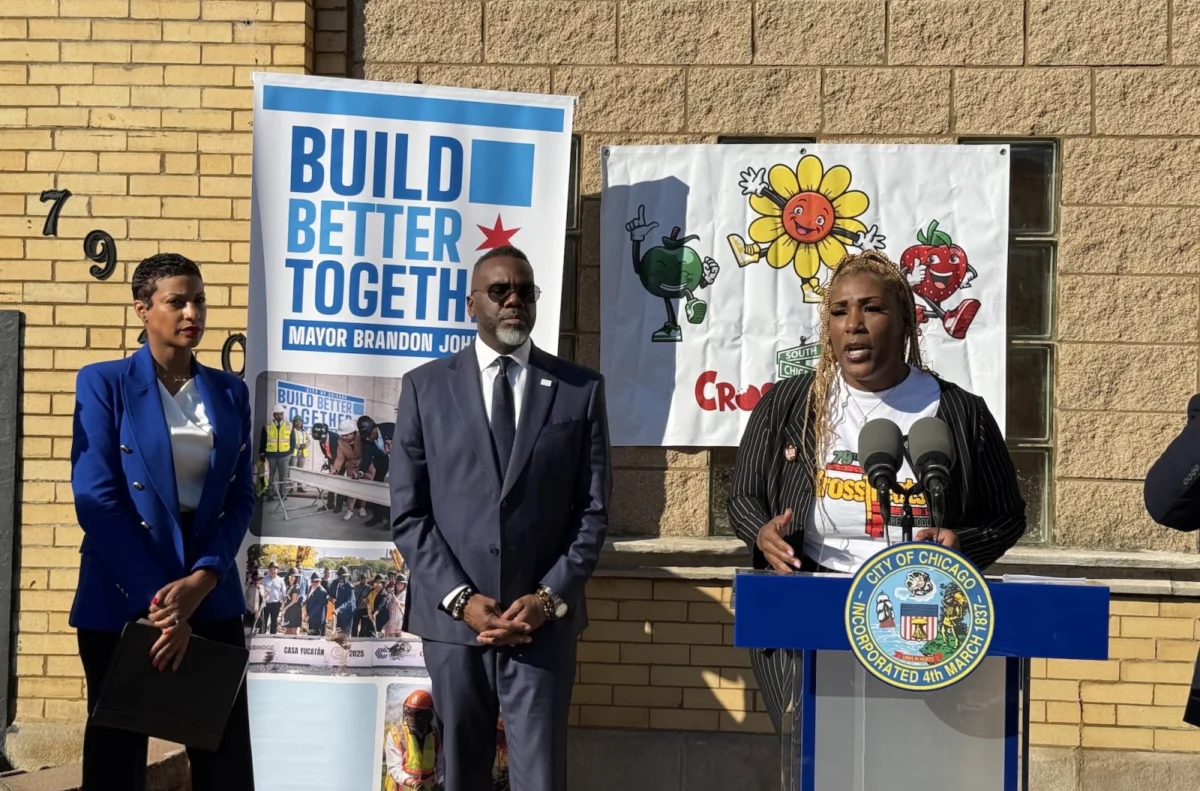
The City of Chicago’s involvement marks a significant shift in municipal policy. Under the administration of Mayor Brandon Johnson, the city has championed the "community wealth building" framework, viewing these cooperatives not just as businesses, but as essential tools for public safety and economic stability.
"This is more than a business," Mayor Johnson remarked at the groundbreaking for the CrossTreats facility. "This is a model for how Chicago can invest in local businesses that foster safer and more affordable and thriving communities."

However, the founders remain cautious. As competition for public grants increases, they are pivoting toward private philanthropy. Kimberly Britt notes that the group is wary of the volatility of public funding cycles. "Public money is not coming to us as easily as it was," she says. "We’re pivoting to private funders because there are a lot of people that really do believe in this work. We’re showing that the structure works."
The Human Impact: Beyond the Bottom Line
The most profound impact of the VOLTS ecosystem is the restoration of agency to individuals who were told they had none. The housing discrimination faced by formerly incarcerated people in Chicago remains a persistent hurdle, even with laws intended to prevent it. JumpStart Housing Co-op directly bypasses this barrier.
"I was still living with my parents when I got incarcerated," says Britt. "So just putting my own vibe and my own style inside of a place that I was calling home just means everything to me."
Furthermore, the creation of The Handlers property management firm ensures that the maintenance of these buildings remains in the hands of the community. It creates a closed-loop economy where the money spent on repairs stays within the cooperative family, creating jobs for others who face similar reentry struggles.

Future Outlook: Developing Community with Community
As the team looks toward the future, their focus is on the $50,000 building in Avalon Park. Unlike their previous projects, this space is intended for the broader community. The team is holding bi-weekly meetings with neighbors to decide the building’s function, with ideas ranging from an "Everything Library" (a lending library for tools and household goods) to a market for local products.
This is the next stage of their vision: turning the cooperative model outward. VOLTS intends to sell partial ownership of this building to the residents of Avalon Park once renovations are complete.
"It’s got to be an inclusive process," says Nyah Griffin, a chef and key member of the collective. "People [on the South Side] are very skeptical of anything that’s new. I think that they’re learning that we don’t want anything. We just want to bring opportunity."
The success of these women is a testament to the fact that when justice-impacted individuals are given the resources to control their own destiny, they do not just succeed—they build a foundation for everyone around them to rise. By centering shared power, democratic control, and a deep commitment to their neighbors, the VOLTS family is proving that the most sustainable economic development is that which is grown, nurtured, and owned by the community itself.

 Ammar Sabilarrohman

 Basiran