


 Basiran
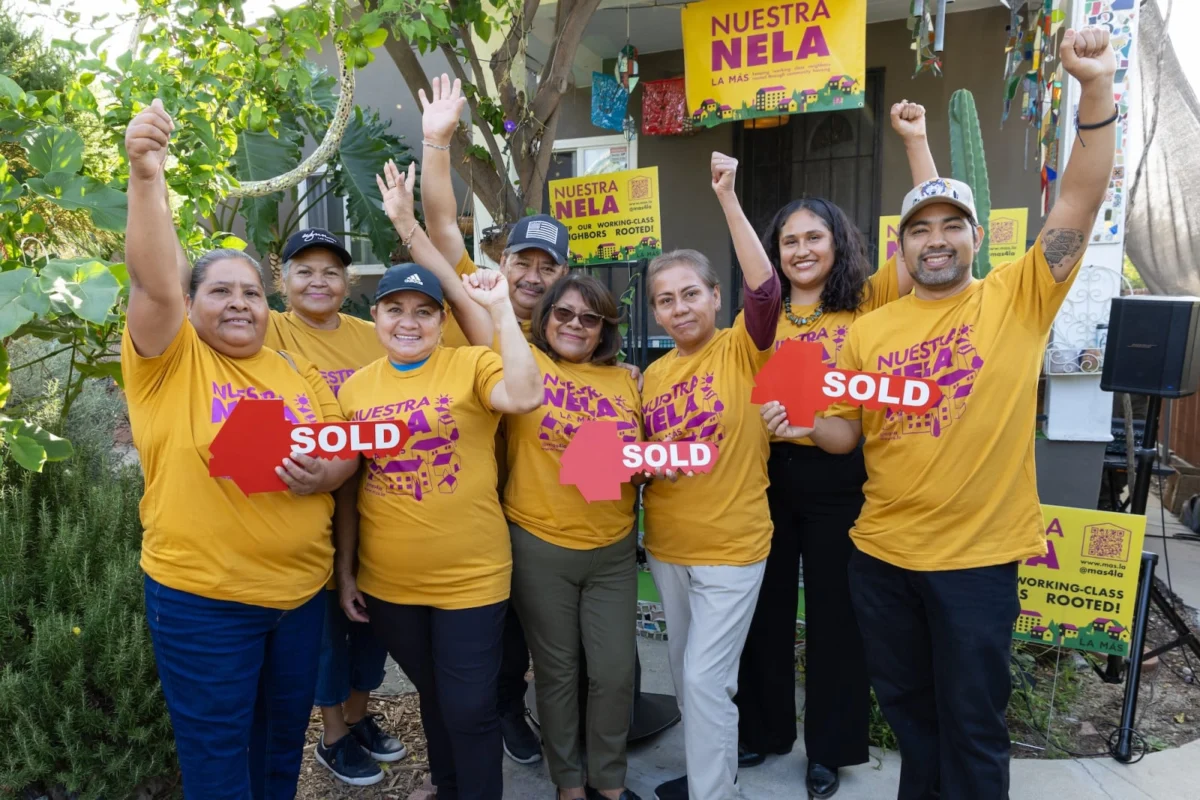
In the leafy, historically industrial neighborhoods of Northeast Los Angeles, a quiet revolution is taking place. As speculative real estate investors aggressively target rent-stabilized properties to flip them for market-rate profit, a local nonprofit has shifted its mission from design and advocacy to aggressive property acquisition. Led by executive director Helen Leung, LA Más is rewriting the playbook for community-based housing preservation, successfully securing dozens of units and shielding long-term residents from the threat of displacement.
The Catalyst for Change
For years, LA Más operated as a design-focused nonprofit, assisting working-class homeowners with accessory dwelling unit (ADU) construction and helping small businesses modernize their storefronts. However, the COVID-19 pandemic acted as a transformative crucible for the organization. As the crisis deepened, the nonprofit pivoted toward mutual aid, using its Frogtown office as a staging ground for community support.
The experience revealed a sobering reality: the neighborhood’s social fabric was unraveling under the pressure of predatory real estate speculation. Investors were utilizing legal loopholes to bypass rent-control protections, forcing tenants out to convert modest apartment buildings into high-priced rentals or condominiums. Recognizing that design interventions alone could not solve a systemic housing crisis, the LA Más board underwent a radical restructuring, centering the organization’s mission on direct property acquisition to ensure permanent affordability.

A Chronology of Acquisition
The journey into real estate development has been a high-stakes race against time. Each acquisition has functioned as a test of the organization’s financial agility and strategic partnerships.
The Arvia Street Breakthrough
In 2023, the death of a longtime community member left a five-unit rent-stabilized property on Arvia Street in Cypress Park in the hands of her heirs. Faced with aggressive offers from developers, the family chose to prioritize the community’s interests, opening a window for LA Más. With an appraisal value of $1.2 million and total project costs—including necessary rehabilitations—reaching $1.6 million, the nonprofit faced a significant capital gap.
Traditional debt financing failed to “pencil out” against the restricted rent rolls. The solution arrived through a partnership with the Self-Help Ventures Fund, a division of the North Carolina-based CDFI Self-Help. Instead of acting as a traditional lender, Self-Help entered a joint-venture co-ownership agreement, providing 75–80% of the capital. With this institutional backing, LA Más was able to secure the remaining funds through a mix of grants from the Local Initiatives Support Corporation (LISC) and the LA4LA public-private fund.

The Hancock and Chapman Projects
Buoyed by its initial success, LA Más began to operationalize its model. In March 2025, after being contacted by tenants facing displacement, the organization moved to acquire a five-unit building on Hancock Street. The deal utilized a $200,000 program-related investment (PRI) from the WHH Foundation—a first for both the foundation and the nonprofit—marking a new frontier in mission-driven philanthropy.
By September 2025, the organization took on its most complex challenge yet: the Chapman Street building. Here, 40 residents had spent over a year resisting “cash-for-keys” buyout offers. LA Más intervened, convincing the corporate landlord to exit a contract with a predatory buyer in favor of their offer. With $1.7 million from Self-Help and further PRI support from the WHH Foundation, the building was secured, proving that the “rinse and repeat” model of acquisition was viable.
The Drew Street Milestone
The most recent and significant acquisition involved two neighboring 1960s-era apartment buildings on Drew Street. Comprising 31 units, this $8.3 million project required a sophisticated "capital stack." Leveraging its track record, LA Más secured $7 million in funding from the newly formed LA County Affordable Housing Solutions Agency (LACAHSA). This represented the agency’s first-ever investment in a preservation-focused project. To close the remaining gap, LA Más pioneered a new community-based lending model, sourcing $200,000 in unsecured, one-percent interest loans from individual local investors.

Supporting Data and Financial Strategy
The success of LA Más rests on its ability to bridge the gap between market reality and social necessity. Their financial model relies on three key pillars:
- Joint-Venture Partnerships: By partnering with Self-Help, LA Más gains access to the sophisticated capital and development expertise of a large-scale CDFI, which allows the nonprofit to compete on equal footing with private equity firms.
- Program-Related Investments (PRIs): These below-market-rate loans allow foundations to fulfill their IRS-mandated 5% annual distribution requirements while keeping capital circulating in the community.
- Community Governance: Decisions are not made in a vacuum. A community governance committee—comprised of working-class Northeast LA residents—reviews every potential acquisition. This ensures that the nonprofit’s growth remains aligned with the needs of those it intends to serve.
Official Responses and Collaborative Impact
The partnership between LA Más and Self-Help has become a template for what is possible when institutional capital meets local grassroots leadership. Tim Quinn, senior project manager at Self-Help Ventures Fund, notes that while the model is not easily replicable due to its organic development, it provides a crucial proof-of-concept for the broader social housing movement.
“The governance aspect of it supports our investment, rather than being something that others might look at as a hindrance,” Quinn explains. By involving residents in the management of their buildings—such as allowing them to determine how often to meet or how to utilize vacant units—LA Más reduces management friction and increases resident pride. This human-centric approach is viewed by investors as a risk-mitigation strategy that traditional property management firms often overlook.

Implications for the Future of Social Housing
The model pioneered by LA Más has profound implications for urban policy. It demonstrates that under-resourced, community-based organizations can effectively compete in the open market if they have access to patient, flexible capital and strong institutional partners.
Stability Over Ownership
Leung is pragmatic about the "social housing" label. Unlike models that require residents to eventually purchase their units—a high-barrier requirement that often complicates financing—LA Más focuses on long-term rental stability and affordability. By maintaining rent levels that support existing residents, the organization provides a buffer against the volatility of the market.
Scaling the Impact
Having secured 54 units in just two years, LA Más is now setting its sights on a much larger target: 90 to 100 additional units over the next two years, with a fundraising goal of $25 million. This ambition reflects a growing realization among housing advocates that public sector efforts alone are insufficient to stem the tide of displacement.

A New Standard for Philanthropy
The use of PRIs and individual community loans suggests that there is a vast, untapped pool of capital currently sitting in traditional portfolios that could be redirected toward housing preservation. As more foundations look for ways to fulfill their social mission, the LA Más experiment serves as a blueprint for how to deploy wealth effectively.
"So much wealth is in the hands of people who don’t have great intentions for housing," Leung notes. "If we have good intentions and we’re smart and creative, we can figure it out."
As LA Más continues to scale, it stands as a testament to the idea that real estate can be a tool for community liberation rather than a vehicle for extraction. By reclaiming the neighborhood, unit by unit, the organization is not just preserving housing; it is preserving the identity and future of Northeast Los Angeles.

 Ammar Sabilarrohman