


 Nana
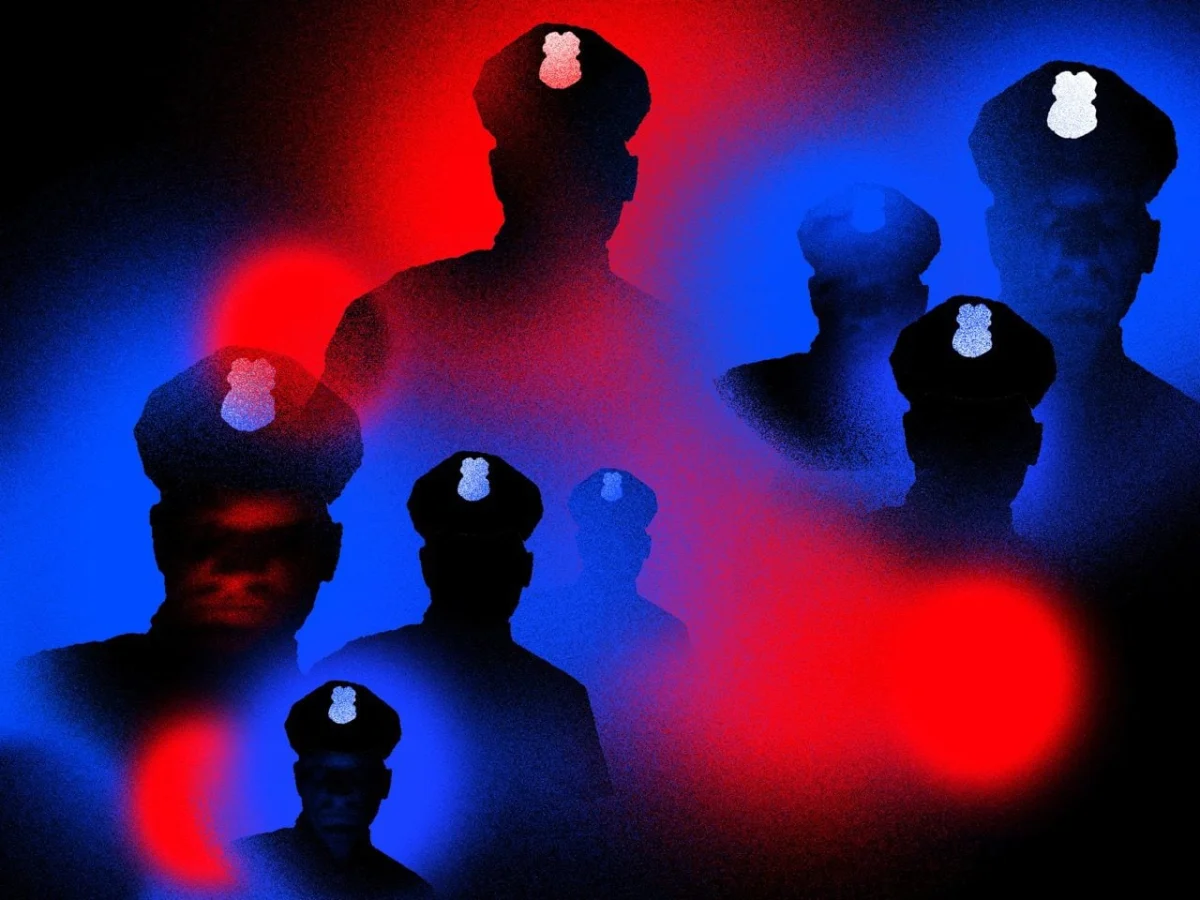
The death of 26-year-old Dexter Reed in March 2024, following a traffic stop for an alleged seat belt violation, ignited a firestorm of public outrage that forced the Chicago Police Department (CPD) into a rare moment of introspection. As the city grappled with the violent escalation of a routine stop, police leadership signaled a departure from the aggressive, broad-brush enforcement tactics that had long defined life in Chicago’s Black and Latino neighborhoods.
However, a year and a half later, the reality of Chicago’s policing remains obscured by a systemic failure of transparency. Despite promises of reform and a notable decline in the total volume of traffic stops, a new investigation by Bolts and Injustice Watch reveals that the department is conducting hundreds of thousands of “off-the-books” traffic stops, failing to disclose these encounters to state oversight agencies in clear violation of Illinois law. With the departure of Superintendent Larry Snelling last month, the city is left with a fragmented, murky picture of how its officers are patrolling the streets, raising profound questions about accountability, racial equity, and the efficacy of the department’s reform agenda.
The Discrepancy: A Pattern of Hidden Policing
The core of the issue lies in the chasm between the police department’s public narrative and its internal data. State law mandates that officers complete a "blue card" for every traffic stop—a detailed document capturing the location, the identity of the driver, the reason for the stop, and the outcome, including whether searches were conducted or contraband was recovered.
Yet, an analysis of dispatch records from the city’s Office of Emergency Management and Communications (OEMC) reveals that the CPD is systematically failing to file these reports. While total traffic stops have decreased—dropping from over 60,000 per month during the peak of previous enforcement strategies to under 40,000 under Snelling—the percentage of undocumented stops has paradoxically surged.
In the summer of 2024, an initial investigation by Bolts and Injustice Watch found that the department failed to report roughly one-third of its stops, totaling 200,000 undocumented encounters over a single year. In the year since, that rate has climbed to over 50 percent. This means that for every documented interaction, there is another occurring in the shadows—unrecorded, unreviewed, and invisible to the public or oversight bodies.
Chronology of Reform and Regression
The trajectory of Chicago’s traffic stop policy has been marked by a series of stops, starts, and stalled momentum:
- March 2024: The death of Dexter Reed serves as a turning point, placing the CPD’s use of pretextual stops—where minor traffic infractions are used as a gateway to search for unrelated criminal evidence—under a national microscope.
- June 2025: Facing mounting pressure from the City Council, the CPD officially acknowledges the documentation gap. A deputy director promises a “fix” through a new electronic reporting system, intended to replace the outdated blue cards.
- July 2025: Superintendent Larry Snelling retires, ending a three-year tenure defined by a decrease in overall stop volume but a persistent inability to close the reporting loophole.
- Present Day: The new electronic reporting system has failed to produce a sustained reduction in undocumented stops, leaving the city in a state of administrative limbo.
The failure to document these stops has direct consequences for the city’s ability to monitor constitutional policing. The Civilian Office of Police Accountability (COPA) has repeatedly noted that its investigations into misconduct are routinely impeded by this lack of documentation. Following the investigation into the officers involved in the Reed shooting, COPA pointed to a broader pattern of unreported stops by those same officers, noting that prior incidents involving illegal pat-downs and searches had gone undocumented, effectively shielding the officers from earlier disciplinary intervention.

Supporting Data: Who is Being Stopped?
The data that is reported to the state paints a clear, albeit incomplete, picture of institutional bias. Chicago police are significantly more likely to pull over and search Black drivers than their white counterparts. Furthermore, the nature of these stops rarely aligns with public safety mandates.
Fewer than two percent of reported stops in Chicago are initiated for speeding or other moving violations that pose an immediate threat to road safety. Instead, over one-third of all documented stops are for expired registrations or minor equipment issues—classic "pretextual" justifications.
W. Robert Schultz III, an organizer for the Active Transportation Alliance, argues that this enforcement focus is fundamentally misplaced. "There are hit-and-runs and 911 calls that don’t get a quick response or go unsolved," Schultz noted. "It just seems like we’re spending a lot of law enforcement time on stuff that brings very little return." By prioritizing these low-level infractions, the CPD maintains a dragnet that disproportionately impacts marginalized communities, fueling the very distrust that leadership claims it wants to dismantle.
Official Responses and the Consent Decree Stalemate
The path toward reform has become inextricably linked to the federal consent decree—the 2019 court-ordered framework governing CPD reform. While Superintendent Snelling initially pledged to bring traffic stops under the purview of this decree, the process has proven to be a labyrinthine, multi-year negotiation.
The delay has created a friction point between the police department and the Community Commission for Public Safety and Accountability (CCPSA). While the department has proposed a policy that would allow officers to continue using minor infractions as a pretext for investigation—albeit with some restrictions—the CCPSA has advocated for more robust reforms, including an outright ban on stops for minor equipment and registration violations.
This standoff is exacerbated by the secrecy inherent in consent decree negotiations. Because these discussions occur behind closed doors, stakeholders like Amy Thompson of Impact for Equity are left in the dark. "When it is clear that there are stops that are going unreported, it begs the question: What is happening in the shadows?" Thompson said. "How much credence can we give this when there are things going on out there that we are not being informed about?"
The CPD, for its part, has remained largely silent. The department did not respond to multiple requests for comment regarding the findings, nor did it offer a justification for the rising tide of unreported encounters.

Implications: The High Cost of Opaque Policing
The lack of a codified policy, combined with the loss of Superintendent Snelling, leaves the future of Chicago’s policing in a state of dangerous uncertainty. Without clear, transparent rules, enforcement becomes subject to the individual preferences of patrol officers and local commanders, rather than a cohesive department-wide strategy.
Experts like Aaron Gottlieb, a professor at the University of Chicago, argue that the goal should not be to reach a specific number of stops, but to redefine the ethics of policing. "Traffic safety should not be used as a way to try to fight crime," Gottlieb explained. "It’s more of an ethical question about, do you believe that this is how people should be treated when there’s no evidence of any benefit?"
Cities like Los Angeles, San Francisco, and Minneapolis have already taken steps to limit pretextual stops, often reporting a decrease in misconduct complaints and a more efficient allocation of police resources. For Chicago, the lesson appears to be that incremental, unmonitored changes are insufficient.
As the CCPSA prepares to search for a new superintendent, the city faces a critical choice. It can continue to operate in a "shadow system" where traffic stops are used as an informal, often discriminatory, tool of investigation, or it can move toward a model of constitutional, transparent policing that prioritizes actual road safety over mass-scale, undocumented surveillance.
Until the department can account for every interaction it initiates, the promise of reform remains hollow. For the citizens of Chicago, the current lack of data is not just an administrative failure; it is a fundamental breakdown of the contract between the police and the public they serve. Trust, once eroded by a lack of transparency, cannot be restored by policies that exist only on paper while the reality on the ground remains unchanged.

 Ammar Sabilarrohman

 Basiran