

 Laily UPN
Introduction: The Invisible Tax of Global Instability
In the autumn of 2026, the international community is grappling with a dual crisis: the immediate, devastating humanitarian impacts of the war in Iran and a silent, pervasive economic contagion rippling through household budgets worldwide. As oil and gas prices experience violent, conflict-driven volatility, a new economic reality has solidified: "fossilflation."
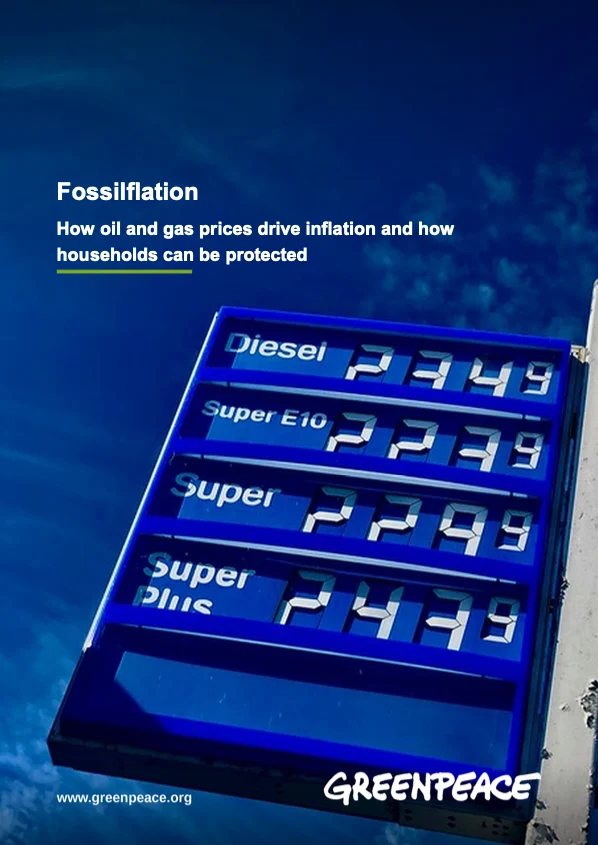
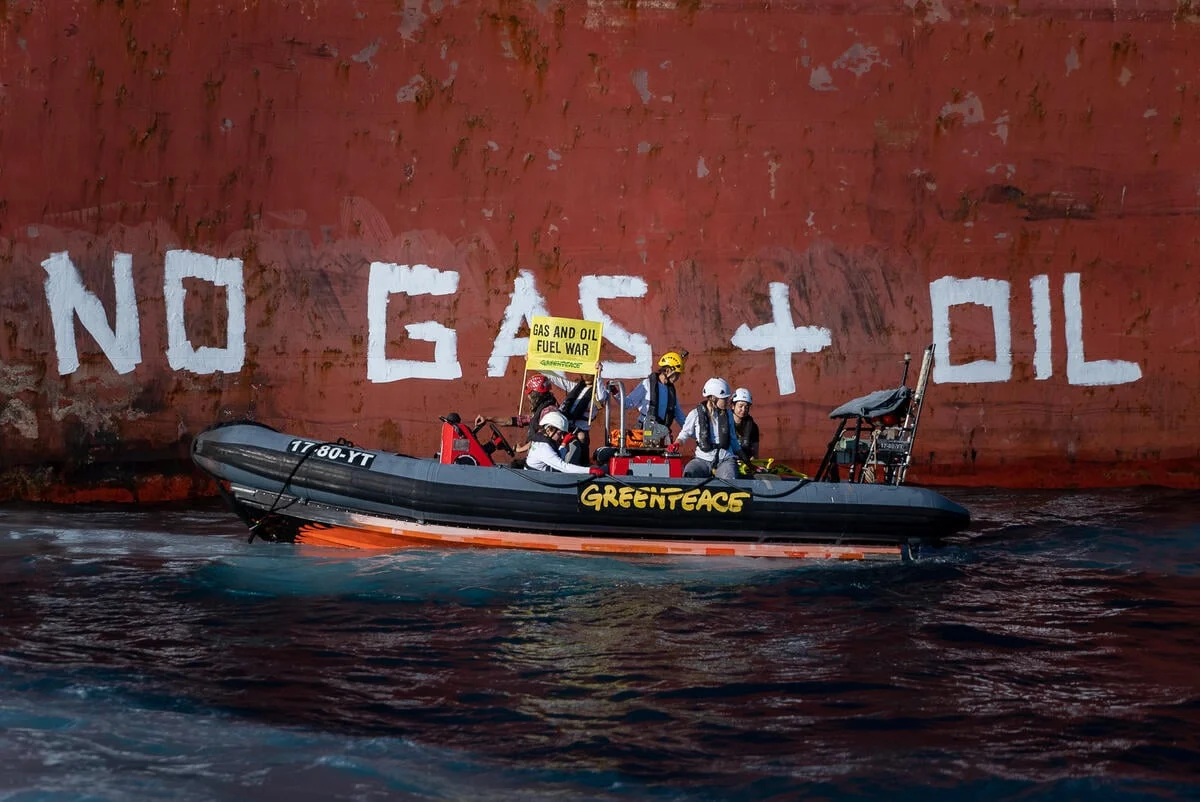
A landmark report released this October by Greenpeace International, authored by Dr. Mauricio Vargas, economist at Greenpeace Germany, illuminates the direct causal link between our reliance on fossil fuels and the rising cost of living. The report, Fossilflation: How oil and gas prices drive inflation and how households can be protected, argues that the current geopolitical instability in the Middle East has laid bare the fundamental fragility of modern economies tethered to volatile, finite energy sources.
Main Facts: Decoding the Fossilflation Phenomenon
Fossilflation is not merely a byproduct of general market fluctuations; it is a structural vulnerability. When a significant portion of a nation’s energy mix remains dependent on oil and gas, its domestic inflation rate becomes hostage to international supply disruptions, trade sanctions, and geopolitical maneuvering.
The core premise of Dr. Vargas’s research is that the war in Iran has acted as a catalyst, accelerating inflationary pressures that were already simmering due to global market inefficiencies. Because fossil fuels are primary inputs for everything from manufacturing and transportation to heating and food production, an increase in the price of a barrel of oil cascades rapidly into the price of a loaf of bread, a bus ticket, and the utility bill of an average household.
The report identifies three primary drivers of this inflationary cycle:
- The Input Price Shock: Fossil fuels serve as the "master commodity." When their cost rises, production costs for virtually all goods increase, forcing companies to pass those costs onto consumers.
- The Geopolitical Risk Premium: Markets react to the uncertainty of war by pricing in future supply outages. This causes "speculative inflation" even before physical supply chains are fully severed.
- The Structural Lag: Economies that rely on centralized, fossil-dependent grids lack the agility to switch to lower-cost alternatives, forcing consumers to absorb the price hikes regardless of their income level.
Chronology: From Stability to Energy Shock
The current economic environment can be traced back through a series of escalating events that have brought the global energy market to its breaking point.
- Q1–Q2 2026: Tensions in the Persian Gulf reach a multi-year high. Global energy markets begin to show signs of instability as insurance premiums for oil tankers spike in response to regional rhetoric.
- July 2026: The onset of the war in Iran triggers an immediate, vertical spike in Brent crude prices. Markets react with record-high volatility, causing panic buying across major European and Asian exchanges.
- August 2026: Inflation data across the Eurozone begins to deviate from central bank forecasts. Economists observe that energy-intensive sectors are the primary drivers of the Consumer Price Index (CPI) surge.
- September 2026: Governments begin to implement emergency subsidies to cushion the blow to the poorest households. However, these measures are widely criticized as stop-gap solutions that do nothing to address the underlying addiction to fossil fuels.
- October 2026: Greenpeace International publishes its comprehensive report, providing the first major academic attempt to quantify the cost of fossilflation during the current conflict and offering a roadmap for structural reform.
Supporting Data: The Eurozone and German Case Studies
Dr. Vargas’s report utilizes detailed modeling based on the Eurozone and Germany to quantify the relationship between energy prices and inflation. The data confirms a sobering correlation: for every 10% increase in gas prices, the inflationary impact on German manufacturing is magnified by approximately 1.5% within a single quarter, due to the high energy intensity of the sector.
The Elasticity of Dependence
The research highlights that the "elasticity of dependence"—the measure of how much a country’s economy suffers when fossil fuel prices rise—is highest in nations that have delayed the transition to decentralized renewable energy.
- Household Impact: In Germany, low-to-middle-income households are spending an average of 14% more on home heating and electricity compared to the same period in 2025.
- Energy Mix Efficiency: The report compares regions with high penetration of wind and solar against those still reliant on natural gas for baseload power. Regions with higher renewable integration experienced 30% lower inflationary pressure during the peak of the August price shocks.
- The Myth of Supplier Diversification: The report dispels the notion that simply switching suppliers (e.g., shifting from Iranian oil to other global sources) is a long-term solution. While it may provide short-term supply security, it does not decouple the economy from the global price volatility inherent in the fossil fuel market.
Official Responses and Political Implications
The release of the report has sent shockwaves through the corridors of power in Brussels and Berlin. While many policymakers acknowledge the validity of the research, the political response remains polarized.
The Governmental Stance
Governments are currently caught between the immediate need to prevent energy poverty and the long-term imperative of climate transition. The European Commission has signaled a move toward accelerating the "REPowerEU" initiative, with several member states calling for a "War-time Mobilization" of renewable infrastructure. However, conservative factions remain concerned that an aggressive shift away from fossil fuels during a period of war could jeopardize industrial output.

The Economic Perspective
Central banks, including the European Central Bank (ECB), have largely echoed the findings of the report, noting that "greenflation"—the temporary rise in prices associated with the capital-intensive transition to renewables—is a far more manageable and predictable threat than the chaotic, uncontrollable "fossilflation" that is currently ravaging the economy.
Implications: A Roadmap for Economic Security
The Greenpeace report concludes with a series of urgent policy recommendations. The fundamental argument is that the climate crisis and the economic crisis are two sides of the same coin: both are caused by our reliance on a finite, volatile, and polluting energy source.
1. Decentralized Renewable Energy
The report advocates for a massive, state-backed investment in distributed energy resources. By moving away from centralized, fossil-heavy grids, nations can empower communities to generate their own power, effectively "immunizing" themselves against global market shocks.
2. Investing in Efficiency
Electrification of transport and heating is not just a climate goal; it is a matter of national security. Heat pumps, electric public transport, and energy-efficient retrofitting of housing are presented as the most effective "economic shields" against future wars in energy-producing regions.
3. Just Transition Mechanisms
Perhaps the most critical policy proposal is the call for "equitable transition." Recognizing that the upfront costs of solar panels or heat pumps are prohibitive for many, the report demands that governments utilize windfall taxes on fossil fuel companies to create a "Universal Energy Access Fund." This would ensure that the transition to renewables does not exacerbate existing social inequalities.
Conclusion: Energy Independence as a Path to Peace
The war in Iran has acted as an uncomfortable mirror, reflecting the dangerous vulnerabilities of our globalized, fossil-dependent economy. As Dr. Mauricio Vargas emphasizes in his report, we have reached a historic juncture. We can continue to be pawns of volatile international markets, where the price of our domestic comfort is decided by the fortunes of war, or we can choose a path of sovereignty through renewable energy.
Greenpeace International is calling for a radical shift in perspective: renewable energy must be viewed as an urgent measure for peace and economic stability. By investing in a resilient, decentralized, and clean energy future, nations can effectively dismantle the machinery of fossilflation. The transition is no longer just about saving the planet—it is about securing the economy and protecting the dignity of households from the next inevitable shock.
As we move into the winter of 2026, the data is clear: the most dangerous form of dependence is that which leaves our citizens at the mercy of global conflict. The transition to a green economy is the only viable path to a stable, prosperous, and peaceful future.
To read the full findings and access the comprehensive data sets provided by Dr. Mauricio Vargas, the report "Fossilflation: how oil and gas prices drive inflation and how households can be protected" is available for download through the Greenpeace International digital archives.


 Nila Kartika Wati
 Lina Irawan