




 Lina Irawan
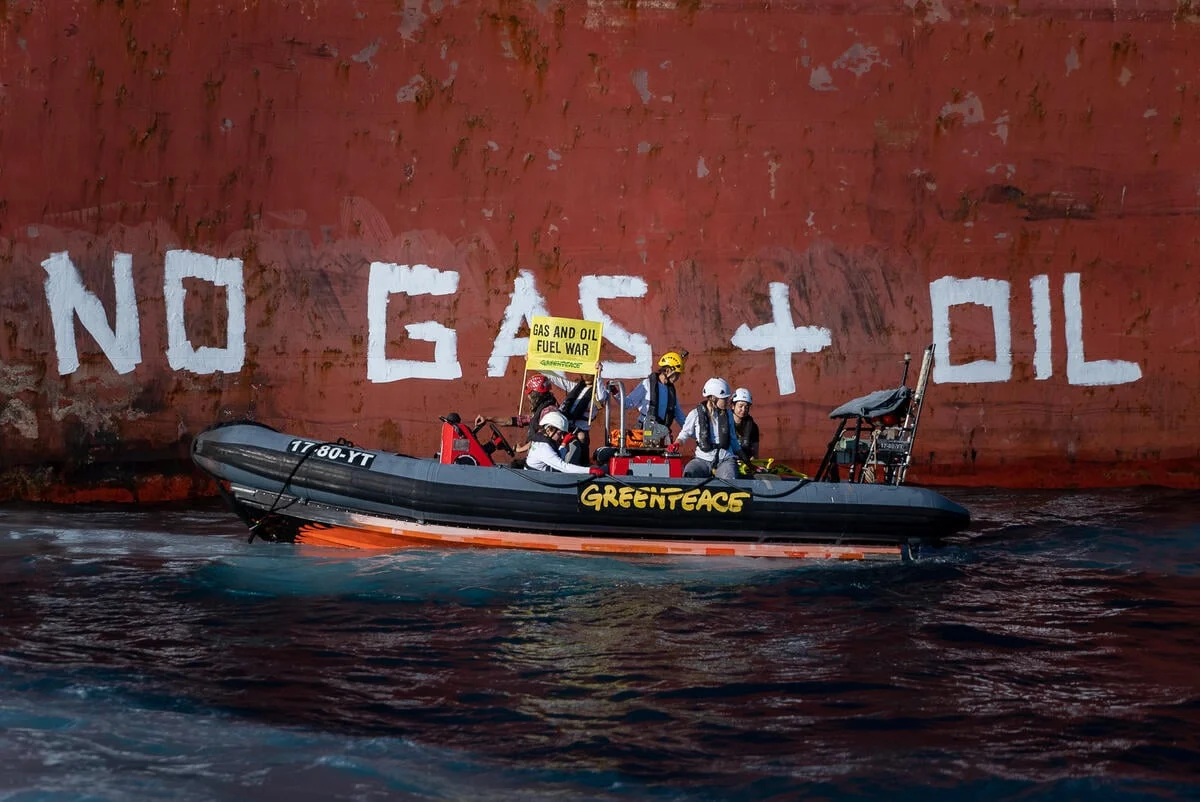
AMSTERDAM — As the eurozone grapples with the persistent sting of rising prices, a new, critical analysis from Greenpeace International has unveiled a sobering reality: the region’s economic instability is not a mystery of the market, but a direct consequence of a systemic addiction to fossil fuels.
Between January and August 2026, the entire rise in eurozone inflation—climbing from 1.7% to 3.2%—was fueled by the volatile price of energy. The report, titled Fossilflation: How Oil and Gas Prices Drive Inflation and How Households Can Be Protected, suggests that the current economic climate is not merely a result of broader market forces, but a predictable, recurring outcome of fossil fuel dependency.
The Anatomy of the Price Shock
The data paints a stark picture of vulnerability. According to the analysis, had the oil price shock triggered by the U.S.-Israel war on Iran not occurred, eurozone inflation in August 2026 would have sat at a far more manageable 2.2% instead of the actual 3.2%.
This "fossilflation"—a term used to describe the inflationary pressure exerted by the rising costs of oil, gas, and coal—reveals that the European economy remains dangerously tethered to geopolitical instability. Since 2024, as the temporary distortions caused by the global pandemic began to dissipate, energy prices have been responsible for 97% of the fluctuations in eurozone inflation.
For the average household, this means that every trip to the grocery store or utility bill payment is effectively a tax on a global fossil fuel market over which they have zero control. The findings suggest that fossilflation is not a temporary anomaly or an "act of God," but a structural weakness that requires immediate, systemic reform from both central banks and national governments.
Chronology: From Pandemic Recovery to Energy Crisis
To understand the current economic landscape, one must look at the timeline of the last two years:
- 2024 (The Baseline): As the dust settled on the pandemic-era supply chain disruptions, economists hoped for a period of stabilization. However, the data shows that 97% of inflation fluctuations in the eurozone since this time have been tied directly to energy costs.
- January 2026: Inflation in the eurozone sat at a relatively stable 1.7%. Households and businesses were beginning to adjust to the post-pandemic "new normal."
- Early 2026 (The Catalyst): The outbreak of the U.S.-Israel war on Iran acted as a massive shock to global energy markets. Brent crude and Dutch TTF natural gas prices surged as investors reacted to the threat of supply chain disruptions in the Middle East.
- January–August 2026: The impact was immediate. As oil and gas prices spiked, the cost of manufacturing, transport, and heating skyrocketed. By August, the cumulative effect had pushed inflation to 3.2%, with energy costs accounting for the entirety of that 1.5 percentage point increase.
Supporting Data: The Case for Electrification
Perhaps the most compelling aspect of the Greenpeace report is the simulation of a "decarbonized household." By comparing a standard household using the traditional consumer basket with a fully electrified household, the researchers illustrated the stark divide in economic resilience.
In a simulation focused on Germany, a standard household faced a 2.5% increase in costs between January and August 2026. Conversely, a household equipped with an electric vehicle, a heat pump, rooftop solar panels, and battery storage faced a price increase of only 1.5%.
This 1% difference represents more than just savings; it represents a shield. By moving away from fossil fuels and toward decentralized, renewable energy, households can effectively insulate themselves from the geopolitical volatility that defines the global oil market. The report emphasizes that this is not a luxury reserved for the elite, but a pathway to economic security that can be scaled across the continent.
Official Responses and Perspectives
John Noël, a campaigner at Greenpeace International, has been vocal about the systemic nature of this crisis. "The problem is bigger than any single conflict or oil price spike," Noël stated. "As long as economies remain tied to volatile fossil fuel markets, repeated disruptions will continue to hit household costs."
Noël argues that the current strategy of central banks—which often treats inflation as a general macroeconomic issue to be managed through interest rates—is insufficient because it ignores the root cause. "Central banks need to recognize fossil fuels as an economic risk," he noted. "Governments must accelerate the shift to decentralized renewable energy systems that shield people and local businesses from recurring price shocks, rather than leaving them exposed."
Critics of the current energy policy point to the "obscene profits" being reported by major fossil fuel companies, even as the average citizen struggles to cover basic costs of living. Greenpeace is calling for a paradigm shift, urging governments to fund the energy transition by implementing permanent taxes on the windfall profits of oil and gas corporations.
Implications: The Path Toward a Just Transition
The implications of this analysis for European policymakers are profound. If energy volatility is the primary driver of inflation, then the transition to green energy is no longer just an environmental imperative—it is a fiscal one.
1. Security Through Decentralization
The report argues that dependence on international oil and gas markets is a strategic liability. By generating energy closer to home through wind, solar, and local storage, European countries can decrease their reliance on the global, volatile commodities market.
2. A Shift in Monetary Policy
The findings pose a challenge to central banks, such as the European Central Bank (ECB). If inflation is primarily "fossilflation," traditional monetary tools—such as raising interest rates—may be ineffective or even counterproductive, as they fail to address the supply-side energy costs that are driving the price increases. The report suggests that economic stability is now inextricably linked to climate policy.
3. Protecting the Vulnerable
The disparity between the electrified household and the standard household highlights an urgent need for social policy. Without state-backed support for heat pumps, solar installations, and EV infrastructure, the burden of energy volatility will fall hardest on those with the least capacity to adapt.
4. Funding the Future
Greenpeace suggests that the capital required for this massive infrastructure shift should be sourced from the very companies that have profited from the current volatility. By taxing the windfall profits of fossil fuel giants, governments can create a "just energy transition" fund, ensuring that the shift away from carbon does not increase the burden on the working class.
Conclusion
As Europe navigates an increasingly unstable geopolitical landscape, the link between the climate crisis and the cost-of-living crisis has never been clearer. The Greenpeace analysis serves as a wake-up call to policymakers: fossil fuels are not just polluting the planet; they are destabilizing the economy.
The transition to a decentralized, renewable energy system is no longer a distant goal for the future—it is an immediate economic necessity. Whether through the mass adoption of heat pumps, the expansion of public transport, or the aggressive deployment of rooftop solar, the path to lower inflation and greater financial stability lies in breaking free from the shackles of the fossil fuel age.
As John Noël poignantly summarized: "Renewable energy can protect households and give them more control over their bills. It is time for governments to act, not just for the sake of the environment, but for the economic health and security of their people."


 Siti Muinah

 Nila Kartika Wati





