



 Ali Ikhwan
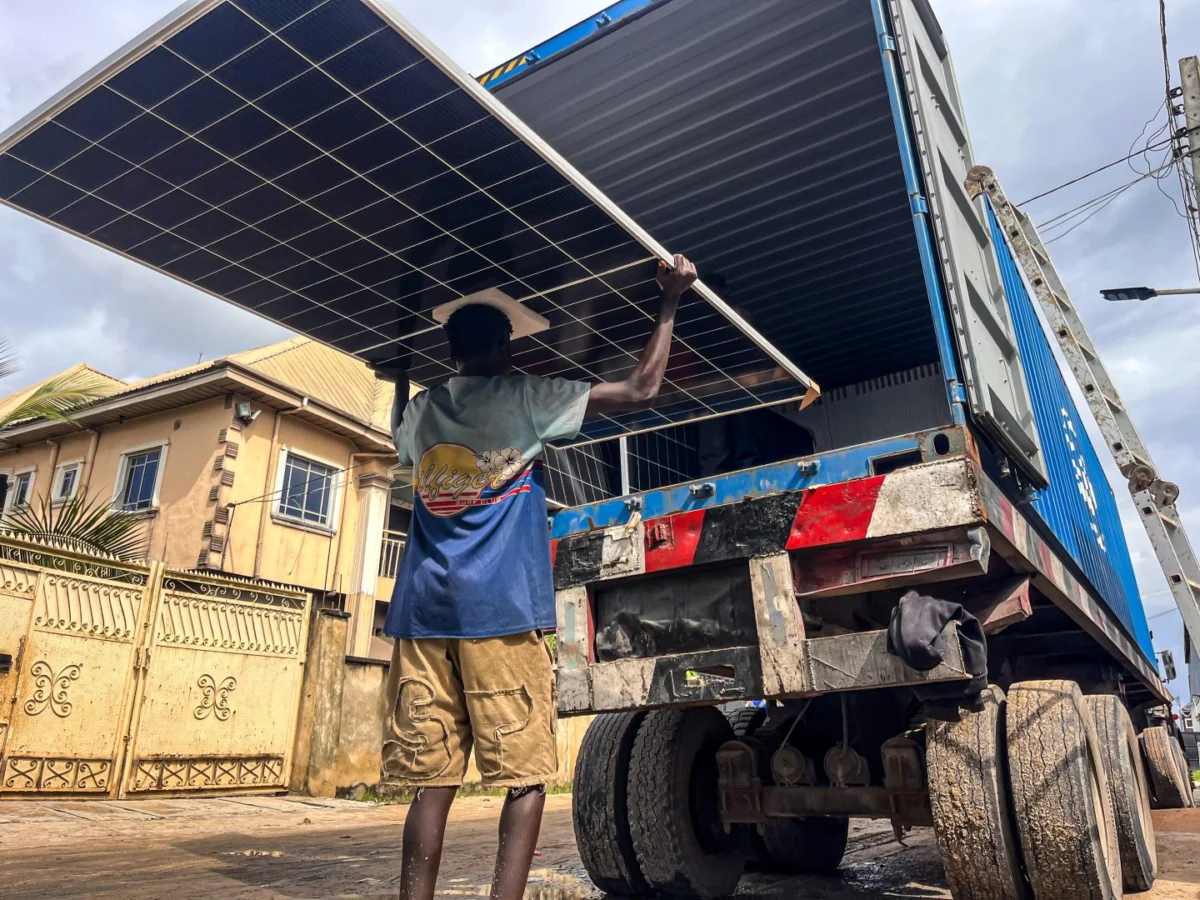
As the African continent accelerates its transition toward sustainable energy, a paradox has emerged at the intersection of climate progress and environmental stewardship. While the rapid adoption of solar panels, lithium-ion batteries, and advanced inverter technology is bridging the energy gap for millions, it is simultaneously sowing the seeds of a potential waste crisis. Across the continent, governments are now racing to draft regulatory frameworks to manage the looming influx of “green waste,” warning that without immediate investment in recycling and circular economy infrastructure, the energy transition risks creating a new environmental catastrophe.
Main Facts: The Shadow of the Solar Boom
The surge in renewable energy adoption across Africa is undeniably a success story. By bypassing the traditional, often inefficient, and fossil-fuel-dependent centralized grid, households and businesses are taking power into their own hands. However, this decentralized revolution carries a technical shelf life.
Standard solar photovoltaic (PV) panels have an average lifespan of 20 to 30 years. As the initial wave of off-grid and small-scale solar installations—many of which were deployed a decade or more ago—approaches its end-of-life, the volume of discarded equipment is projected to climb exponentially. These systems contain hazardous materials, including lead, cadmium, and various rare earth metals, alongside valuable commodities like silver, copper, and aluminum. If these components are relegated to landfills, they risk leaching toxic heavy metals into the soil and groundwater. If they are managed through a circular economy, they represent a significant secondary source of raw materials.
Chronology: A Trajectory of Unprecedented Growth
The current situation is the result of a rapid acceleration in technology adoption over the last five years.
- 2020–2022: The Inflection Point. Following global supply chain disruptions during the pandemic and rising fuel costs, African nations saw a marked increase in demand for off-grid solar solutions.
- 2023: Establishing a Baseline. Growth trends solidified, with solar capacity additions consistently hitting double digits. Policy discussions began to shift from "how to facilitate installations" to "how to manage the infrastructure."
- 2024: The Record-Breaking Year. Installations grew by 25% year-over-year. The environmental footprint of decommissioned batteries and panels became a visible issue in major urban centers and rural hubs.
- 2025: The Acceleration Phase. A 51% growth spike in solar capacity brought a massive influx of new hardware, putting further pressure on waste management systems that were not designed for electronic waste (e-waste) at this scale.
- 2026: The Projected Horizon. Energy think-tank Ember forecasts that the continent will install a staggering 17 gigawatts (GW) of solar capacity this year. This equates to approximately 100,000 solar panels being installed every single day across the continent.
Supporting Data: The Scale of the Challenge
The data provided by Ember highlights the sheer magnitude of the task ahead. A record-breaking 17 GW of solar capacity in 2026 is not merely a statistical milestone; it represents a physical influx of millions of units of hardware that will, eventually, require disposal.
Table: Projected Solar Growth in Africa
| Year | Growth Rate | Capacity Context |
|---|---|---|
| 2024 | 25% | Steady adoption for SMEs and households. |
| 2025 | 51% | Rapid scaling of large-scale and home systems. |
| 2026 | Record (17 GW) | Equivalent to ~100,000 panels per day. |
Beyond capacity, the material composition of these systems presents a complex logistical challenge. A typical solar module is roughly 75-80% glass, 10% polymer, 8% aluminum, and 1% silicon, with the remaining fraction consisting of high-value silver and copper. Currently, Africa lacks large-scale, automated recycling facilities capable of separating these materials cost-effectively. Most existing waste management infrastructure is geared toward municipal solid waste, which is ill-equipped to handle the specialized, hazardous, and high-value materials inherent in renewable energy hardware.
Official Responses: Legislating for Sustainability
Government officials are beginning to recognize that the “clean energy” label is not a free pass to ignore downstream waste management.
The Namibian Perspective
Anselm Marungu, Namibia’s deputy minister of environment, forestry and tourism, has been a vocal advocate for proactive regulation. His position is clear: the energy transition must be holistic. "Rules must be put in place to ensure that valuable materials can be recovered from discarded solar panels, batteries, and inverters at the end of their useful life," Marungu stated recently. His office is currently exploring Extended Producer Responsibility (EPR) schemes, which would require manufacturers and importers to bear the financial and physical responsibility for the end-of-life recovery of their products.
Regional Initiatives
Across the African Union, policy discussions are shifting toward a unified approach. The African Circular Economy Alliance (ACEA) has begun advocating for harmonized standards across borders. The argument is that if countries adopt fragmented regulations, the illegal dumping of foreign e-waste—or the cross-border movement of hazardous solar waste—will become easier. By creating a unified market for recycled materials, African nations hope to attract private investment into specialized recycling plants that can serve multiple countries, achieving the economies of scale necessary to make the process profitable.
Implications: A Risk or an Opportunity?
The impending waste crisis presents a fork in the road for African policymakers.
The Risks of Inaction
Failure to implement robust waste management policies will result in three primary negative outcomes:
- Public Health Crisis: Unregulated disposal leads to the contamination of local water tables with lead and cadmium, particularly in rural areas where informal recycling—often involving open-air burning—is common.
- Economic Loss: Failing to recover silver, copper, and rare earth metals represents a significant loss of potential revenue. These materials are essential for the production of new electronics, and reclaiming them locally could reduce the continent’s reliance on imported raw materials.
- Reputational Damage: If the African renewable sector becomes associated with widespread environmental pollution, it could discourage international climate financing and green investment, which are critical to meeting the continent’s energy goals.
The Opportunity: A Green Circular Economy
Conversely, if managed correctly, this "waste" is a goldmine. The establishment of a recycling industry could generate thousands of "green-collar" jobs in collection, logistics, and material processing.
For the circular economy to take root, investment is required in four key areas:
- Infrastructure: Building specialized facilities that can safely dismantle and process PV modules and battery chemistries.
- Logistics: Developing "reverse supply chains" that incentivize consumers and businesses to return old equipment to collection centers rather than discarding them in standard waste streams.
- Technology Transfer: Partnering with international firms to acquire the proprietary technology needed for the efficient, high-purity recovery of minerals.
- Policy Enforcement: Moving from voluntary guidelines to mandatory EPR legislation, ensuring that the cost of recycling is internalized into the initial purchase price of the hardware.
Conclusion: Bridging the Gap
The growth of solar energy in Africa is a monumental achievement, reflecting a continent that is bypassing historical hurdles to leapfrog into a modern, decentralized energy future. However, the hardware that powers this transition is not eternal. The 100,000 panels installed daily in 2026 are the future waste streams of the 2040s.
As Anselm Marungu and his counterparts across the continent recognize, the transition is only truly "clean" if it is sustainable from start to finish. By establishing robust regulatory frameworks, incentivizing the development of a recycling industry, and viewing discarded panels not as trash but as a strategic resource, Africa can set a global standard for the circular energy economy. The clock is ticking, but the opportunity to define a truly sustainable future remains within reach.


 Nila Kartika Wati
 Laily UPN





