

 Asep Darmawan

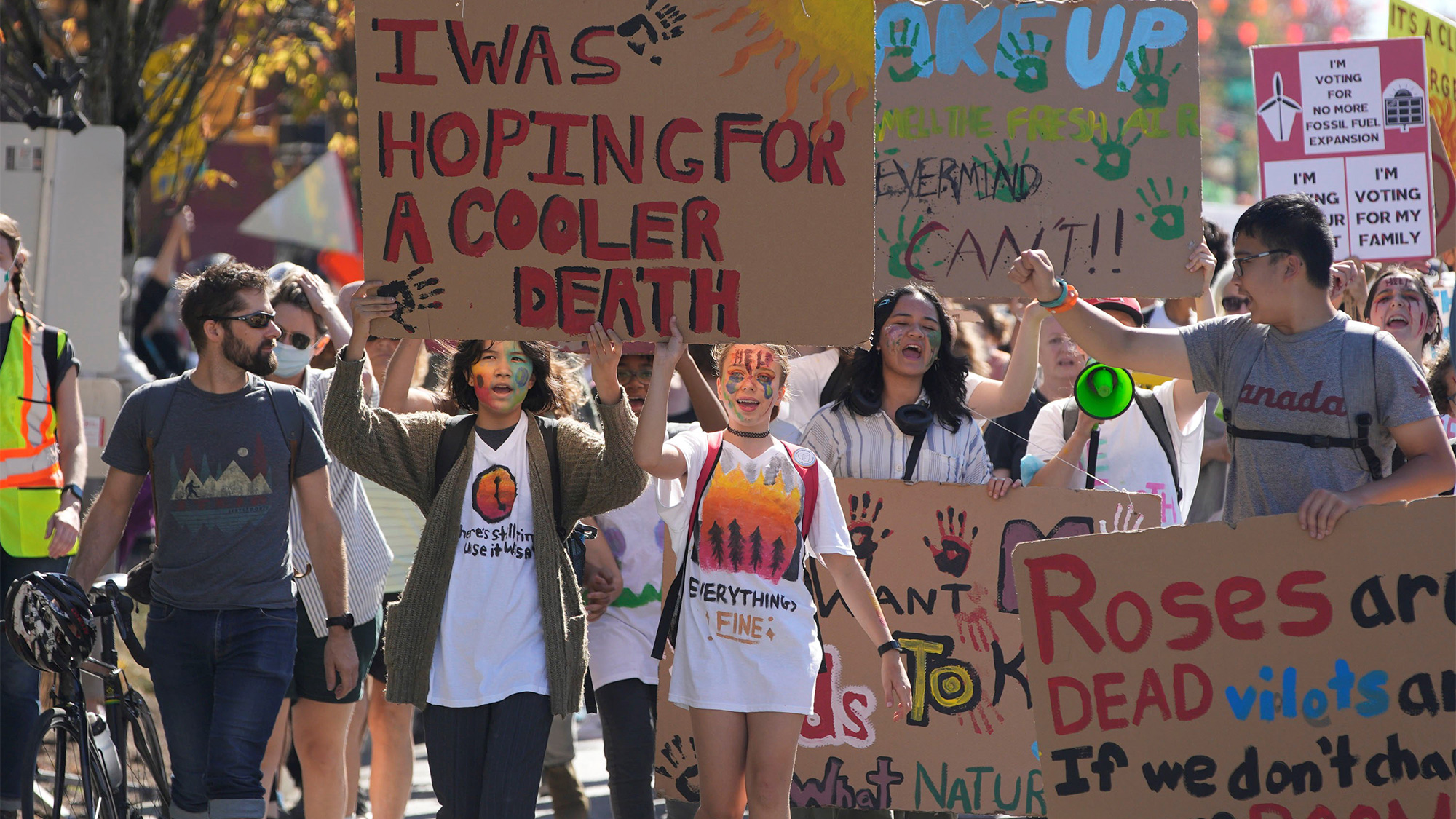
In a courtroom in Vancouver, the abstract existential threat of climate change is being transformed into a tangible legal battle. Today marks the commencement of La Rose v. His Majesty the King, a historic trial in which 15 Canadian youth are suing the federal government, alleging that its failure to adequately address the climate crisis constitutes a direct violation of their fundamental constitutional rights.
While thousands of climate-related lawsuits have been filed across the globe in recent years, legal scholars and environmental advocates are characterizing this trial as perhaps the most consequential to ever reach the bench. The case represents a sophisticated evolution of youth-led litigation, moving beyond symbolic protest and into the rigorous, evidentiary arena of the Canadian judicial system.
The Constitutional Core: Life, Liberty, and the Climate
The plaintiffs, who range from diverse backgrounds—including six youth who identify as Indigenous—first filed their lawsuit in 2019. At the heart of their claim is Section 7 of the Canadian Charter of Rights and Freedoms, which guarantees every citizen the right to "life, liberty, and security of the person."
The youth argue that the federal government’s ongoing support for fossil fuel expansion and its failure to meet science-based emission reduction targets directly imperil their physical safety and future well-being. By allowing the planet to warm beyond sustainable thresholds, the plaintiffs contend, the state is effectively infringing upon their right to a future.
Initially, the lawsuit also invoked Section 15 of the Charter, which covers equality rights, arguing that the government’s inaction unfairly burdens younger generations who will suffer the most extreme consequences of global warming. While the Federal Court of Appeal dismissed the Section 15 argument in 2023, it granted the plaintiffs a narrow but significant path forward, allowing them to proceed with their Section 7 claims provided they focus on specific federal policies and legislative failures.
A Chronology of Conflict: From Filing to Trial
The road to this courtroom has been fraught with procedural hurdles and judicial skepticism. To understand the gravity of this week’s proceedings, one must look at the timeline of the struggle:
- 2019: The 15 plaintiffs, represented by Our Children’s Trust and supported by local legal experts, file their initial claim against the federal government.
- 2020: A federal judge dismisses the case without a trial, ruling that the accusations were overly broad and that the court was not the appropriate venue for what the government termed "political matters."
- 2023: The Federal Court of Appeal reverses the lower court’s dismissal regarding Section 7, acknowledging that the plaintiffs had successfully articulated a justiciable issue. The court demanded, however, that the complaint be amended to focus on specific legislative frameworks.
- 2024–2025: The plaintiffs amend their complaint to center on the Canadian Net-Zero Emissions Accountability Act (2021) and the subsequent 2030 emissions reduction plan. They argue that these measures are insufficient to meet the urgency of the crisis and constitute a breach of the government’s own stated commitments.
- 2026 (Present Day): The trial begins in Vancouver, scheduled for a five-week duration.
The Evidence: Bringing Science to the Bar
Over the next five weeks, the courtroom will serve as a theater for both personal testimony and high-level scientific scrutiny. The plaintiffs are expected to testify, sharing their firsthand experiences with the changing landscape of Canada—from the wildfires that have choked western cities with smoke to the loss of traditional hunting grounds for Indigenous youth.
However, the trial will rely heavily on expert testimony. The legal team has assembled a roster of climate scientists, renewable energy specialists, child health advocates, and environmental economists. Their goal is to bridge the gap between government policy and the physical reality of a warming atmosphere. By demonstrating that current federal targets are disconnected from the scientific consensus required to limit warming, the plaintiffs aim to prove that the government’s inaction is a choice, not an inevitability.
Official Stance: The Government’s Defense
The federal government’s position remains a delicate balance of acknowledgement and procedural defense. While the government has consistently avoided challenging the scientific reality of climate change, its legal strategy focuses on the separation of powers.
In response to inquiries regarding the trial, Samantha Bayard, a spokesperson for Environment and Climate Change Canada, issued a statement: “Our commitment to net-zero by 2050 has not wavered, and we are implementing an ambitious climate agenda. The Government of Canada respects the role of the courts, the right of Canadians to bring matters before the courts, and the important role that an independent judiciary plays in our democracy.”
By framing the issue as an "ambitious agenda" rather than a failure, the government is signaling that it intends to prove its policies—however criticized—are a legitimate exercise of executive authority that should not be usurped by the judiciary.
The Global Context: Lessons from Montana and Beyond
The La Rose case does not exist in a vacuum. It is part of a growing international movement facilitated by non-profits like Our Children’s Trust. Globally, more than 3,000 climate cases have been logged over the past few decades, but the vast majority are dismissed or settled before they ever reach a judge.
The most notable exception is Held v. Montana in the United States. In 2023, a Montana judge ruled that the state’s energy permitting policies violated the youth plaintiffs’ right to a "clean and healthful environment," a decision upheld by the state’s Supreme Court in 2024. This success provided a massive boost in morale for the Canadian legal team.
"We found that some of the positive decisions from some countries have been inspirational in other countries," notes Michael Gerrard, faculty director of Columbia University’s Sabin Center for Climate Change Law. "This trial will be closely watched."
Unlike the U.S. system, where constitutional interpretations can vary wildly by state, the Canadian trial will be interpreted through the lens of the Charter of Rights and Freedoms. While a victory in Vancouver might not set a formal precedent in other nations, it would serve as a powerful "persuasive authority," influencing how judges in other Commonwealth nations interpret environmental duties under human rights law.
Implications: A Blueprint for the Future
Even if the plaintiffs fail to secure a decisive win, legal scholars believe the trial is already a success. James May, an environmental law professor at Washburn University, suggests that the very act of reaching trial is a victory for climate advocacy.
"Seldom has climate been put on trial," May explains. "This case provides a blueprint for how to litigate climate change effectively. By forcing the government to defend its specific legislation, such as the Net-Zero Emissions Accountability Act, in a public forum, the plaintiffs have already succeeded in shifting the narrative."
If the court rules in favor of the youth, it could trigger a seismic shift in how Canadian law treats future generations. It could force the government to move beyond empty targets and toward legally enforceable, science-aligned carbon budgets. Conversely, a loss could clarify the limitations of the judiciary in solving global environmental crises, potentially pushing the climate movement back toward more aggressive legislative lobbying and civil activism.
Conclusion: A Window into 2027
As the trial progresses, the eyes of the global legal community will remain fixed on Vancouver. Closing arguments are slated for February, and while a final ruling is not expected until 2027, the proceedings are already doing the work of holding power accountable.
For the 15 plaintiffs—who have spent the better part of their young lives preparing for this moment—the trial is more than a legal dispute. It is an assertion of their place in the future. As Kelly Matheson of Our Children’s Trust aptly stated, "It’s the chance for the young people to tell their story." Whether that story becomes a foundational chapter in Canadian constitutional law remains to be seen, but the courtroom doors are finally open, and the silence surrounding government inaction is being replaced by the sound of testimony.


 Evan Lee Salim
 Lina Irawan





