


 Asep Darmawan
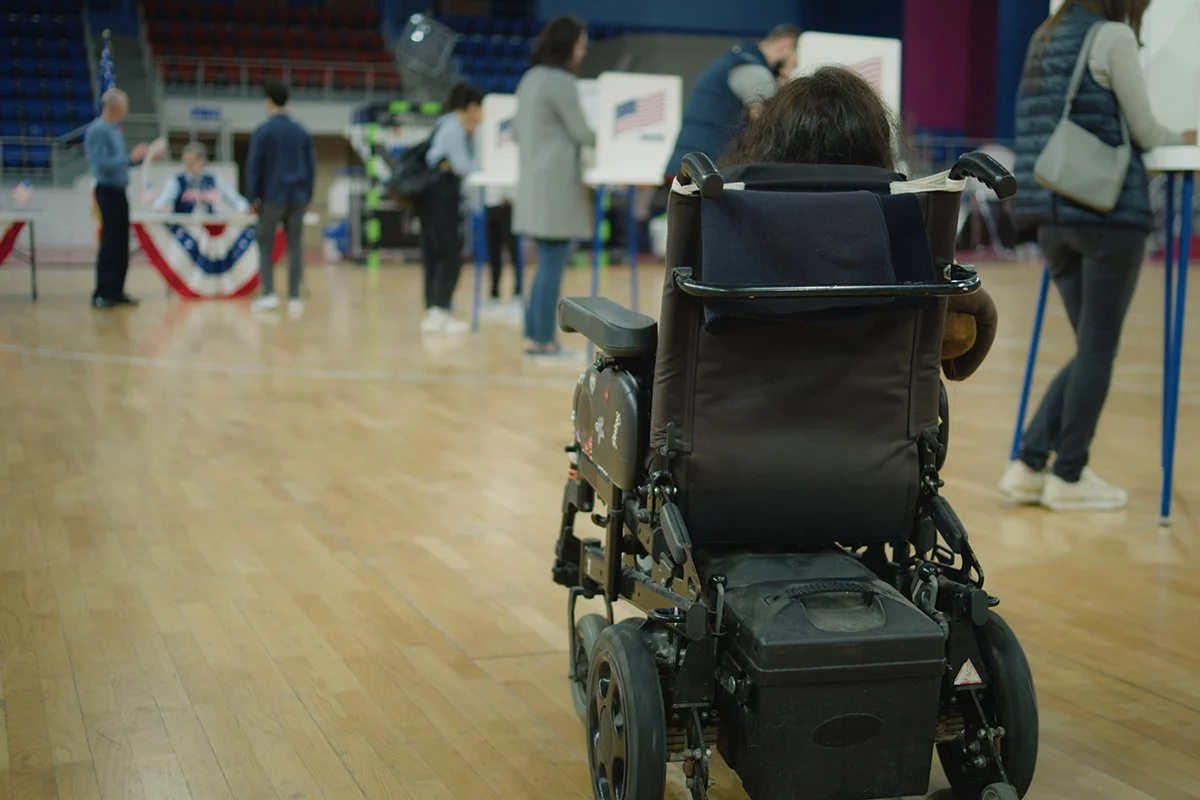
In the United States, the right to vote is framed as a fundamental pillar of democracy, yet for millions of Americans with disabilities, that right remains an aspirational ideal rather than a practical reality. Recent findings from an expansive audit conducted during Michigan’s 2025 elections have cast a harsh light on a systemic failure: only 10 percent of the assessed polling locations met basic, federally mandated accessibility standards. This revelation, spearheaded by Detroit Disability Power (DDP), underscores a nationwide crisis where the physical and procedural barriers to the ballot box remain stubbornly high, decades after the passage of landmark civil rights legislation.
The State of Access: A Grim Reality
The 2025 Michigan audit, the largest of its kind in the nation, surveyed over 400 polling locations to determine if disabled voters could navigate the voting process independently. The findings were stark. With one in three adult Michiganders identifying as having a disability, the failure of 90 percent of surveyed sites to meet accessibility benchmarks is not merely a technical oversight—it is a significant disenfranchisement of a massive voting bloc.
These findings echo a sobering national trend. A comprehensive government study conducted nearly a decade ago revealed that 83 percent of polling locations nationwide were inaccessible. Despite the promises of the Voting Rights Act of 1965, the Americans with Disabilities Act (ADA) of 1990, and the Help America Vote Act (HAVA) of 2002, the gap between legal mandate and physical reality remains wide. For many disabled voters, the barrier is not just a lack of intent, but a lack of enforcement and training. While Boards of Elections are theoretically liable for discrimination, legal challenges are notoriously slow, often taking years to resolve while the cycle of exclusionary elections continues unabated.
Chronology of an Audit: From Informal Roots to National Scale
The movement to systematically document these barriers began informally in 2018, when advocates first started flagging inconsistent experiences at polling sites. Recognizing the need for empirical data to drive policy change, Detroit Disability Power formalized its audit program in 2022, partnering with The Carter Center to expand its reach.
During the 2022 midterms, DDP audited 261 locations across Metro Detroit—a project that, at the time, represented the largest poll accessibility audit in American history. The program continued to grow in ambition and scope. By 2024 and 2025, the audit had expanded statewide, covering 415 Election Day polling locations and 32 early voting sites.
Interestingly, the percentage of sites passing these audits has trended downward, from 16 percent in 2022 to 10 percent in 2025. Eric Welsby, advocacy director at DDP, suggests this decline is a function of a larger, more diverse sample size rather than a regression in infrastructure. As the audit covers more rural or aging infrastructure, the complexity of compliance becomes clearer. Looking forward, the organization aims to audit roughly 700 of the state’s 5,000 polling locations in the current cycle, with results expected in early 2026.
The Anatomy of Inaccessibility: Why Compliance Fails
To conduct these audits, DDP trains volunteers and credentials them as "election challengers." This status is vital, as it grants auditors the legal freedom to move through a polling place, providing a firsthand view that standard poll watchers lack.
Auditors utilize a 24-question survey designed to measure compliance against four non-negotiable criteria:
- Parking and Path of Travel: The existence of accessible parking and a clear, unobstructed route to the building.
- Accessible Entrance: Ensuring that the threshold is reachable without stairs or significant architectural barriers.
- Accessible Voting Machines: Ensuring that hardware is fully operational and configured for various needs.
- Independent Marking: The provision of a wheelchair-height voting booth that allows for a private, independent paper ballot experience.
A site is labeled "inaccessible" if it fails even one of these four categories. While some failures are rooted in insurmountable structural issues—such as historic buildings with steep stairs or parking lots degraded by harsh winters—many failures are startlingly simple to rectify.
The Low-Hanging Fruit of Election Integrity
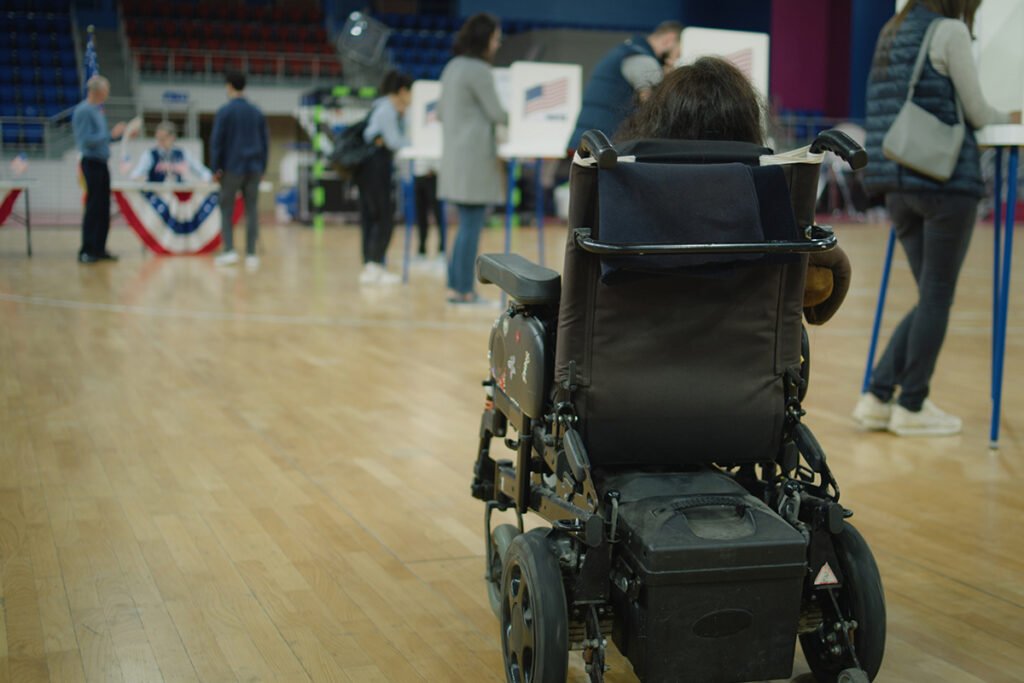
Perhaps the most frustrating finding for advocates is how many barriers could be removed without a single dollar spent on construction. Welsby notes that many failures are administrative: "You don’t need a jackhammer. You don’t need to do major construction. It’s really about knowing how to have them set up, how to set them up properly, how to make sure a voter using those can cast their ballot independently and secretly."
The most common point of failure identified in the 2025 report involved accessible voting machines. These units are designed with audio functions, braille keyboards, large-font screen displays, and ports for sip-and-puff devices to assist voters with mobility or visual impairments. The audit found that many of these machines were either left unplugged, hidden in corners that compromised voter privacy, or missing essential components like headphones. Simple signage—often overlooked—was another major culprit, preventing voters from identifying the accessible entrance of a building.
Expanding the Frontline: The National Coalition
Recognizing that the battle for access is not unique to Michigan, DDP has helped launch the National Polling Access Audit Coalition. This group works to export the audit model to other states, providing mentorship and funding through the Voting Access Audit Fellowship.
The fellowship currently supports five key nonprofits:
- Cobb Collaborative (Georgia): Operating in a state with a history of restrictive election laws, this group is auditing 30 sites to combat systemic suppression.
- Count US IN (Indiana)
- Keystone Progress Education Fund (Pennsylvania)
- Civic Nebraska (Nebraska)
- Metropolitan Asian Deaf Association (New York)
Jacob Rogers of the Cobb Collaborative highlights the urgency of this work in the South. "Georgia has a long history of voter suppression," Rogers says, noting that 2021 legislation in the state restricted absentee ballot access and limited drop boxes—two features that are disproportionately vital for disabled voters. With the current national political climate featuring increased scrutiny and rhetoric against mail-in voting, the physical accessibility of polling places has become an even more critical lifeline.
Implications for the Future of Democracy
The implications of these findings are profound. If the goal of a democratic election is universal participation, then the current state of polling place accessibility is a failure of public administration. When a voter must rely on the kindness of strangers to assist them in a private act, or when they are forced to navigate physical hazards simply to cast a ballot, the integrity of the process is compromised.
As the National Polling Access Audit Coalition gains momentum, the goal is to shift the narrative from "compliance" to "empowerment." By providing clerks and election officials with data-driven reports, these nonprofits hope to foster a collaborative relationship. As Welsby emphasizes, the objective is not to punish election workers, but to support them in creating an environment where every voter—regardless of physical ability—can exercise their rights.
Ultimately, the audit findings serve as a stark reminder that voter education is meaningless if the physical door remains locked. As Rogers aptly put it: "Voter education means little if a voter can’t actually get through the doors to use any of the voter resources that are available to them." For the millions of Americans with disabilities, the true test of democracy in the coming years will not be found in campaign slogans or televised debates, but in the accessibility of the local gym or community center where they show up to cast their vote. Until these systemic hurdles are removed, the promise of the Voting Rights Act remains a goal yet to be fully realized.


 Pevita Pearce

 Reynand Wu






