
 Reynand Wu
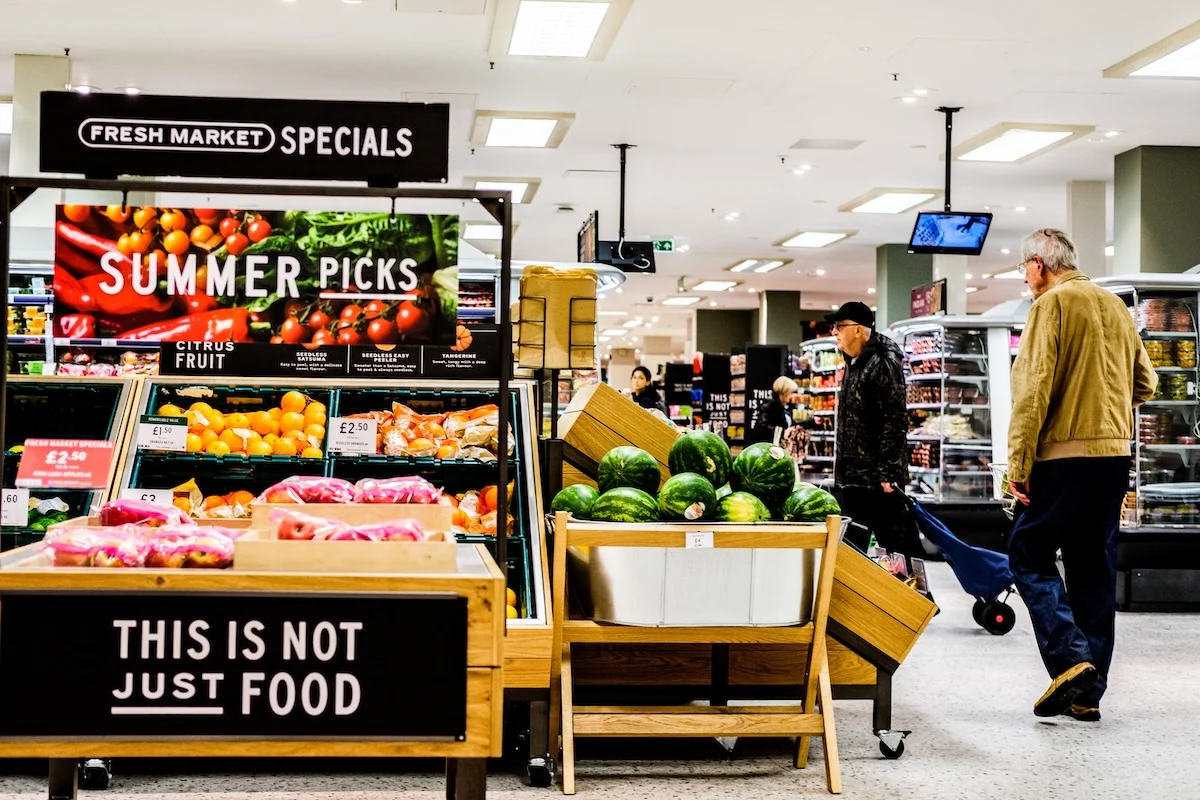
We are all “preppers” now. The term, once relegated to the fringes of survivalist subcultures, has migrated into the mainstream lexicon of households across the West. Driven by a confluence of geopolitical volatility, inflationary pressures, climate-induced disasters, and the emergence of non-traditional threats like state-sponsored cyber warfare, the global food supply chain is undergoing a fundamental—and often painful—re-evaluation.
For decades, the globalized food system was built on the premise of “just-in-time” efficiency. Today, that model is collapsing under the weight of reality. As Africa and other emerging markets reel from the combined impact of aid cuts and environmental degradation, developed nations in Europe and the United Kingdom are finding that their own grocery aisles are no longer immune to the shocks of a fragile world.
The Fragile Supply Chain: A New Reality
The vulnerability of our modern food systems was laid bare in a series of alarming events throughout late 2026. In southern Italy, a massive strike by truckers protesting fuel prices left grocery shelves bare, creating a visible, visceral reminder of how easily the flow of goods can be severed. Meanwhile, in the United Kingdom, government officials have taken the unprecedented step of urging citizens to maintain a three-day supply of essentials—including food, water, and windup radios—to prepare for potential disruptions caused by extreme weather, cyberattacks, or infrastructure sabotage.
This directive followed a chilling incident in mid-October: a sophisticated cyberattack targeted refrigeration units across Europe. By remotely cranking up temperatures, the attackers forced retailers to discard massive quantities of food, triggering localized panic-buying and highlighting the digital fragility of our physical sustenance.
A coalition of leading academics and food policy experts recently issued a stark warning to UK Prime Minister Andy Burnham, noting that the West is entering a “new era” in which food supplies are increasingly prone to disruption. “Public expectations may not be met,” the letter stated, “and food can be weaponized.”
Chronology of a Crisis
- Early 2025: The World Economic Forum and Bain & Company release a landmark report calling for $1.1 trillion in annual investment over five years to transition to resilient, sustainable food production. Current commitments meet less than 5% of this target.
- Summer 2026: Record-breaking heat and drought ravage European crops. The Energy & Climate Intelligence Unit estimates a loss of €3.2 billion in production—the equivalent of the entire grain output of Italy, Belgium, and the Netherlands combined.
- September 2026: British retail giant Tesco anchors Henry Dimbleby’s Bramble Partners fund with a £20 million investment to accelerate food sector innovation.
- Mid-October 2026: Cyberattackers sabotage European supermarket refrigeration units, causing widespread food spoilage.
- October 16, 2026: IMF director Rodrigo Valdes reports that global food prices have hit a four-year high. Rice prices have surged 50% year-to-date, with wheat up 37% and soybeans up 21%.
Supporting Data: The High Cost of Inaction
The financial implications of the current food crisis are staggering. Beyond the immediate loss of production due to drought, the long-term systemic risks are mounting. The International Monetary Fund (IMF) has raised alarms regarding a “perfect storm” of factors: a potent El Niño weather event, the rising cost of fertilizer, and ongoing disruptions in critical shipping lanes like the Strait of Hormuz.
The economic math is clear: the global food system is in a state of disequilibrium. With 80% of European arable land now considered near or fully degraded, the reliance on intensive, non-regenerative farming is no longer just an environmental issue; it is a profound economic liability. Investors who once viewed sustainable agriculture as a “nice-to-have” ESG (Environmental, Social, and Governance) metric are beginning to view it through the lens of national security and survival.
Official Responses and Strategic Pivots
Governments and private entities are finally moving from rhetoric to mobilization. The European Union has maintained recommendations for food stockpiling since the Russian invasion of Ukraine, but the focus is shifting toward long-term structural change.
Henry Dimbleby, former author of the UK’s National Food Strategy and co-founder of Bramble Partners, is at the forefront of this shift. He is currently raising a £100 million venture capital fund specifically targeting growth-stage companies that make food more affordable, healthy, and sustainable.
“I have spent most of my career trying to make our food healthier and better for the environment,” Dimbleby noted. “Increasingly, those changes are commercial opportunities rather than regulatory requirements.”
Bramble Partners is not alone. A wave of capital is flowing into the sector:
- Astanor (Belgium): Manages €800 million dedicated to sustainable agrifood.
- Triodos & Fondaction: Launched the “Value Nature Fund,” a €300 million vehicle targeting regenerative agriculture and forestry.
- SWEN Terra (Sweden): Raising €200 million for farms transitioning to regenerative practices.
- Nordic Foodtech VC (Helsinki): Backing deep-tech companies that are fundamentally rewriting the biology of food production.
The Challenge of “Patient Capital”
Despite the influx of funds, a significant friction remains: the disconnect between venture capital timelines and the biological reality of farming. Rogier Pieterse, managing partner of the Amsterdam-based impact investor Pymwymic, argues that the industry is plagued by unrealistic expectations.
“Investors want to see a certain return in the shortest possible time,” Pieterse explains. “But innovations in the food system don’t scale as fast as a traditional San Francisco software model, because it typically takes one or two seasons for farmers to test and adopt something new.”
Pymwymic, which has been in the impact space since 1994, is attempting to bridge this gap. By managing a portfolio that includes over 40 companies across 16 countries, they have learned that “patient capital”—money that stays in the game for the long haul—is the only way to repair a broken system. They target a 10% return, eschewing the 20-25% “unicorn” targets that have historically caused investors to abandon agricultural projects too early.
Implications: A Systemic Transformation
The transformation of the food system is mirroring the energy transition. Just as the renewable energy sector only achieved true scale when major oil and utility companies began to treat solar and wind as essential assets rather than fringe experiments, the food sector requires the same level of institutional commitment.
“There was a lot of skepticism around the energy transition, but in the end, it has become a necessity,” says Pieterse. “The same is now happening for food.”
The implications for the average citizen are profound. The era of cheap, infinite, and globally sourced food is being replaced by a more localized, resilient, and digitized model. Consumers will likely face higher prices, but they may also see a shift toward food products that are more traceable and ethically produced.
However, the transition faces massive hurdles, primarily the consolidation of power among a few dominant players in the value chain. As Pieterse notes, even the most brilliant ag-tech innovation requires the buy-in of the massive corporate entities that control distribution. Unless these giants adopt new, more sustainable models, systemic change will be stifled.
Ultimately, the goal of this new, well-funded movement is not merely to "prepare" for the next crisis, but to build a system that is inherently resistant to the shocks of a changing planet. Whether it is through precision-application fertilizers, drone-based livestock monitoring, or new packaging technologies that extend shelf life—like those developed by Dimbleby’s first investment, KluraLabs—the focus is on creating a system that can withstand the “multiple breadbasket failures” that climate scientists fear are on the horizon.
We are indeed all preppers now, but the best preparation may not be found in a basement filled with canned goods. It may be found in the patient, institutional capital being deployed today to ensure that when the next storm comes, the global table remains set.


 Ammar Sabilarrohman
 Suro Senen