

 Iffa Jayyana
By Heather Mansfield, Founder and Editor-in-Chief of Nonprofit Tech for Good
The digital landscape for nonprofits has undergone a seismic shift. For years, organizations relied on the promise of "organic reach"—the idea that high-quality content would naturally find its way to new supporters through the algorithms of major social media platforms. Today, that era has effectively concluded. With average monthly growth rates for social media pages stagnating between a modest 0.4% and 1%, nonprofits can no longer afford to be passive participants in their own digital outreach.
In this new reality, growth is no longer a byproduct of existence; it is the result of deliberate, strategic design. To capture the attention of donors and advocates, organizations must pivot from waiting for discovery to actively guiding their audience toward their social channels.

The Core Challenge: Navigating the 1% Growth Ceiling
Recent data from social media analytics firm Social Status confirms a sobering reality for digital marketers: social media platforms have increasingly moved toward "pay-to-play" models. With organic reach now hovering between a meager 1% and 3%, the reliance on non-paid discovery is a failing strategy.
For the modern nonprofit, this necessitates a two-pronged approach. First, organizations must allocate a dedicated budget for social media advertising to bypass algorithmic suppression. Second, they must integrate "discovery touchpoints" across every aspect of their digital and physical infrastructure. If your organization is not actively cross-promoting its social presence at every point of engagement, you are losing potential supporters to the void.
Chronology of the Shift: From Virality to Intentionality
The trajectory of social media for nonprofits has moved through three distinct phases:

- The "Wild West" Era (2008–2014): During this period, platform algorithms were largely chronological. Posting content was often sufficient to reach a significant percentage of followers.
- The Algorithmic Pivot (2015–2020): Platforms began implementing interest-based filtering. Nonprofits saw their reach drop as platforms prioritized personal connections and paid content over brand pages.
- The Era of Intentionality (2021–Present): With market saturation and algorithmic paywalls, "organic" growth has become a myth. Today, growth is only achieved through aggressive integration of social calls-to-action (CTAs) across the entire nonprofit ecosystem—from email newsletters to physical mailers and "thank you" landing pages.
Six Strategic Pillars for Audience Growth
To combat the decline in organic reach, nonprofits must implement a multi-channel strategy that treats social media as a core component of their communication architecture, rather than an isolated silo.
1. Website Integration: The Header and Footer Protocol
Your website is the hub of your nonprofit’s digital presence. If your social icons are relegated to an obscure corner of the footer, you are missing thousands of conversion opportunities.
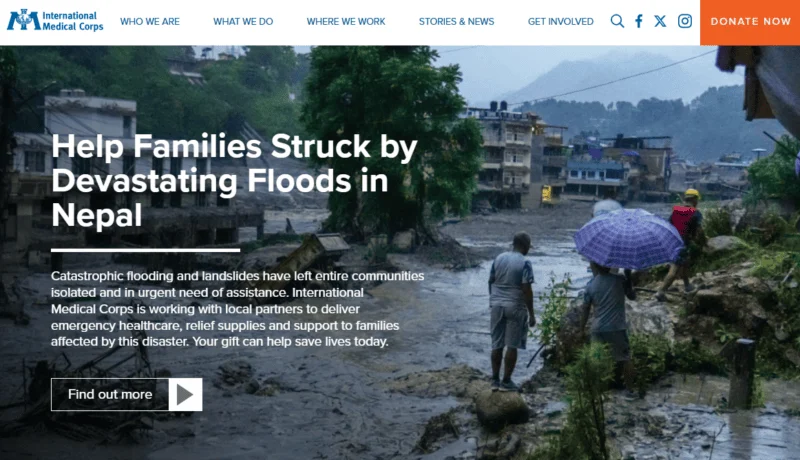
If social media is a core pillar of your engagement strategy, your icons should appear in the upper right-hand corner of the header—the "prime real estate" of web design—and again in the footer. A stellar example of this is the International Medical Corps. By placing icons in both locations, they ensure that whether a visitor is at the top of the page or finishing a long-form article, the path to connection is immediate. Furthermore, their use of target="_blank" attributes ensures that visitors are not navigating away from the core site, but rather opening social profiles in new tabs—preserving the user’s session on your primary domain.

2. The Newsletter Reimagined
Email remains the highest-converting channel for nonprofits, yet many organizations treat social media links as an afterthought in the footer. Families Against Mandatory Minimums (FAMM) offers a masterclass in modernizing this approach. Following a comprehensive rebrand, FAMM moved its social icons to the upper-right header of their newsletter. This ensures that even before a reader engages with the content, they are invited to join the conversation on social platforms.
3. Monetizing the "Thank You" Moment
Perhaps the most underutilized real estate in digital fundraising is the "Thank You" landing page. After a donor contributes or a subscriber joins your list, they are in a state of high intent and receptivity. This is the moment they are most likely to follow you on social media to stay updated on the impact of their gift.
The World Wildlife Fund (WWF) excels at this. Instead of a sterile "Thank you for your donation" page, they use this space to provide further value and community entry points, including links to social media and educational resources. By transforming a confirmation page into an engagement portal, they capitalize on the user’s peak enthusiasm.

4. The Post-Subscription Email Sequence
The "Thank You" email is often the first communication a new subscriber receives. It is the perfect opportunity to bridge the gap between their inbox and your social feeds. Water.org provides a compelling example: their automated follow-up emails for new subscribers explicitly include a clear, visually appealing call-to-follow. This reinforces the relationship immediately, moving the subscriber from a static contact list to an active, engaged community member.
5. Bridging the Gap: Print and Physical Campaigns
While we live in a digital age, print remains vital for many nonprofits. However, long, complex URLs are a barrier to entry. To overcome this, organizations like the Africa Wildlife Foundation utilize "vanity" or redirect URLs. By using a simple domain structure—such as awf.org/facebook—they make it easy for donors to type a link from a printed mailer into their browsers. Additionally, integrating QR codes into print materials provides an instant, frictionless path for donors to move from paper to a digital follow.
6. Proactive Engagement: The 30-Minute Rule
A social media page is not a broadcast tower; it is a community center. Nonprofits must spend at least 30 minutes per week proactively engaging with others. This means moving beyond posting your own content and instead interacting with the posts of partners, funders, and sponsors.

On LinkedIn, toggling between your personal profile and your organization’s page allows you to lend the weight of your organization to important causes. This builds "social capital." When you engage with a partner’s post, you aren’t just being polite; you are increasing your visibility to their audience, which is often composed of people already interested in your mission.
Implications for the Future of Nonprofit Marketing
The data is clear: the passive strategy is dead. The shift toward AI-driven algorithms and pay-to-play ecosystems means that nonprofits that fail to integrate their social strategy across all platforms will see their influence decline.
The move toward "AI-literacy" is the next logical step in this evolution. As algorithms become more complex, the ability to use AI tools for data analysis, content creation, and targeted advertising will be the differentiator between organizations that grow and those that stagnate. Programs such as the 2026 Certificate in Artificial Intelligence (AI) for Marketing & Fundraising are designed to equip nonprofit professionals with the skills necessary to navigate this new era.

Final Thoughts: A Culture of Intentionality
Growth in the current environment is not an accident. It is the result of a culture of intentionality. By optimizing every touchpoint—from your website header to your physical mailers—and by committing to the labor of daily, proactive engagement, nonprofits can reclaim their ability to reach, engage, and mobilize supporters. The tools are available; the challenge lies in the discipline of implementation. As we move further into the decade, those who adapt to the new digital reality will be the ones who continue to drive meaningful change.

 Suro Senen

 Reynand Wu