


 Raul Delapena Setiawan
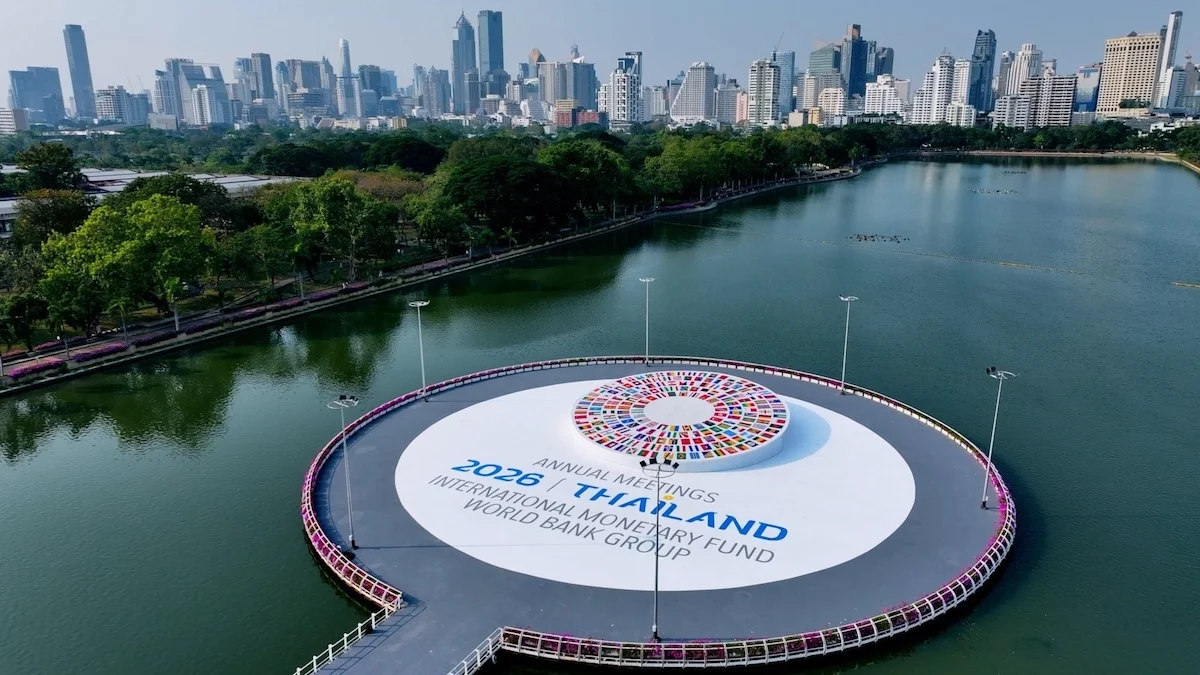
Bangkok, Thailand – The recent annual meeting of the World Bank in Bangkok was underscored by a palpable sense of urgency, a stark contrast to the usual spring gatherings in Washington D.C. Held against the backdrop of a city still grappling with the devastating impacts of recent major flooding, the event served as a potent reminder of the escalating climate crisis and the critical need for development finance to pivot decisively towards climate-focused initiatives. This year’s deliberations were not just about financial flows; they were about reimagining the very architecture of global development in an era defined by environmental volatility and shifting geopolitical landscapes.
The discussions, according to insights from key stakeholders, revealed three dominant themes: a renewed emphasis on collaborative engagement among development finance institutions (DFIs) and multilateral development banks (MDBs), a strategic approach to harnessing the transformative potential of artificial intelligence (AI) in developing economies, and a critical imperative to simplify processes to unlock unprecedented levels of private capital.
The Urgent Imperative: Climate Resilience and Development Finance
The setting in Bangkok was not merely coincidental. The city’s ongoing recovery from extensive flooding cast a long shadow over the proceedings, imbuing the conversations with a gravitas that transcended typical economic discourse. The visible scars of climate-induced disasters served as a stark, real-time illustration of the risks that developing nations face and the inadequacy of current financial mechanisms to address them comprehensively. This heightened awareness has prompted a significant recalibration of priorities within the development finance community.
Key Takeaways from Bangkok: A New Dawn for Development Finance
While the preceding years have been marked by fiscal austerity, a retreat from multilateralism, and a prioritization of national interests by donor nations, the Bangkok meetings presented a more optimistic outlook. Leaders of DFIs and MDBs expressed a renewed sense of purpose, fueled by a shared vision for a more resilient and sustainable future. This optimism is not without foundation, stemming from the development of concrete strategies designed to navigate the complex fiscal and geopolitical realities of today.
Collaborative Engagement: Forging New Alliances in a Challenging Landscape
The grim narrative of slashed budgets and dwindling development aid has, paradoxically, spurred a deeper commitment to collaboration. In the corridors of the World Bank meeting, a palpable shift was observed: a clear recognition that mutual reliance, shared expertise, and significantly closer working relationships are not merely desirable but essential for effective development finance. This collaborative spirit is manifesting in concrete financial innovations and strategic partnerships aimed at mobilizing private capital and addressing critical development needs.
One notable example of this evolving landscape is the Allianz ACE fund, anchored by BII (British International Investment) earlier this year. This $1 billion fund exemplifies a strategic pooling of resources to address significant investment gaps. Equally impactful is BII’s key role in launching the FAST-P blended finance initiative based in Singapore. This initiative is specifically designed to mobilize a staggering $5 billion of private capital for South-East Asia, demonstrating a targeted approach to regional development challenges.
Further underscoring this collaborative push, Proparco, a French development finance institution, has entered into a €200 million financing agreement with the West African Development Bank (BOAD). This agreement facilitates the creation of a sophisticated financial instrument structured as a cross-currency transaction between the euro and the CFA franc, thereby enhancing financial stability and accessibility in the region.
In Latin America, a powerful consortium of European DFIs, including Proparco, DEG (Deutsche Investitions- und Entwicklungsgesellschaft), and FMO (Nederlandse Financierings-Maatschappij voor Ontwikkelingslanden N.V.), has committed to a $300 million syndicated senior unsecured loan facility for Guatemala’s Banco Industrial. This facility is specifically earmarked to support loans to companies engaged in vital sectors such as renewable power generation, green building, and sustainable transport, directly contributing to the region’s climate transition.
The impact of this collaborative ethos extends across continents. European DFIs were instrumental in establishing a significant $3 billion trade finance partnership with the pan-African financial group Ecobank. These are not isolated incidents but rather indicative of a broader, transformative trend in global development finance. In each instance, DFIs are actively partnering with local institutions to forge innovative financial platforms and initiatives, actively reshaping the global development finance ecosystem in real time.
Shaping the Algorithm: Harnessing the Power of Small AI for Development
The advent of Artificial Intelligence (AI) presents both profound opportunities and significant risks for developing economies. Paschal Donohoe, the World Bank’s chief knowledge officer, did not shy away from acknowledging the potential downsides of AI, particularly concerning job displacement and ethical considerations. However, he also powerfully articulated the transformative role that "small AI" can play in empowering developing nations.
The prevailing perception of AI often centers on massive investments in large language models and vast data centers. In contrast, "small AI" refers to accessible, affordable applications that can be deployed on mobile phones, even in areas with limited connectivity. For a smallholder farmer in Zambia, for instance, a small AI-powered application could revolutionize crop or water management, leading to significant gains in productivity and resilience. Crucially, these applications are often available in local languages, ensuring inclusivity and accessibility.
From a DFI perspective, this presents a clear mandate: to redouble commitments to providing the essential digital infrastructure and reliable energy sources necessary to capitalize on the AI revolution. While traditional development has often been measured in incremental gains over years, AI-powered development promises to accelerate progress exponentially, potentially achieving in years what once took decades. This necessitates a strategic investment in digital literacy, connectivity, and the foundational infrastructure that will enable developing countries to leverage AI for their benefit.
Simplify, Simplify: Unlocking Private Capital Through Streamlined Processes
The mobilization of private capital into development has emerged as the dominant theme at every DFI and MDB gathering, and the Bangkok meetings were no exception. What has changed is the composition of the rooms where these discussions are taking place. DFIs are now engaging directly with venture capitalists, global insurers, pension funds, and sovereign wealth funds – sophisticated investors with specific demands.
The consistent ask from these private capital providers is for DFIs to simplify their complex investment frameworks. They seek aligned impact measurement methodologies, standardized deal structures, transparent and consistent policies, and the opportunity for larger, more impactful transactions. This puts pressure on the DFI community to adapt and deliver. The current reality, where intricate deal structures can take up to two years to finalize, is unsustainable and hinders the pace of development.
A critical element in unlocking private capital is the role DFIs must play in derisking investments. By strategically absorbing certain risks, DFIs can create an environment where private capital providers, who are often constrained by fiduciary responsibilities from investing in higher-risk markets, can confidently deploy their funds. Furthermore, there is a growing recognition of the need to aggregate smaller, disparate projects into larger, investable portfolios that are more attractive to institutional investors.
The strong push for DFIs to fast-track execution and origination, thereby reducing transaction costs and accelerating the deployment of capital, was a recurring sentiment. In a concrete step towards this goal, FMO and BII recently signed a Memorandum of Understanding (MOU) to deepen their cooperation across a range of critical areas. This includes responsible investing principles, environmental and social standards, legal processes, and targeted sectoral engagement. By sharing expertise and adopting proportionate, risk-based approaches, these institutions aim to enhance efficiency, strengthen co-financing opportunities, and create clearer pathways for capital to reach emerging economies more effectively.
The collaborative efforts among six MDBs to standardize and package investments for institutional investors, such as pension funds and insurance companies, are particularly noteworthy. The objective is to create more standardized, investable assets, thereby improving portfolio liquidity, expanding secondary markets for development finance assets, and enabling MDB balance sheets to recycle capital more efficiently. This move towards securitization and standardization is crucial for attracting the scale of private capital required to meet global development goals.
On a personal note, discussions with peers revealed a significant uplift in the utilization of substantial guarantee activity, with a clear emphasis on risk transfer as a key tool for attracting institutional capital into emerging markets. These guarantees, provided by DFIs, can bridge the gap between the risk appetite of private investors and the perceived risk of projects in developing countries.
In conclusion, the World Bank’s annual meeting in Bangkok has unequivocally demonstrated that the world of development finance is accelerating at an unprecedented pace. The challenges are immense, from the escalating climate crisis to the complexities of geopolitical shifts and the transformative potential of new technologies. However, the renewed spirit of collaboration, the strategic embrace of innovation, and the urgent call for simplification offer a compelling roadmap for the future. The onus is now on DFIs and MDBs to work together, with agility and shared purpose, to keep pace with this rapidly evolving landscape and ensure that development finance effectively serves the needs of a world facing urgent and interconnected challenges.
Leslie Maasdorp, CEO of BII, provided these insights, highlighting the critical shifts and strategic imperatives shaping the future of development finance. His observations underscore a period of profound transformation, demanding a more collaborative, innovative, and efficient approach to global development.


 Muslim

 Ali Ikhwan