


 Basiran
Date: May 13, 2026
By: HIAS Staff
For decades, Mexico served primarily as a transit corridor for those seeking safety in the United States. Today, that paradigm has shifted fundamentally. Mexico has transitioned from a country of passage to a country of destination and settlement. As global migration patterns evolve, the nation now hosts over 780,000 displaced individuals—a diverse population encompassing refugees, asylum seekers, stateless persons, and those internally displaced by domestic instability.
This seismic shift has placed unprecedented pressure on Mexico’s social, legal, and humanitarian infrastructure. With the convergence of gang violence, climate-induced displacement, and increasingly restrictive U.S. immigration policies, thousands of people are finding themselves trapped in a state of permanent uncertainty.
Main Facts: A Country at the Crossroads
Mexico’s current humanitarian landscape is defined by its sheer scale and complexity. The country is currently managing a multifaceted crisis involving:
- Diverse Origins: While the majority of asylum seekers originate from Latin American nations—notably Honduras, Venezuela, Haiti, El Salvador, and Cuba—the population is truly global. Mexico now provides refuge to individuals from over 100 countries, including migrants from Afghanistan, China, and India.
- The Internal Displacement Crisis: Beyond those arriving from abroad, there are over 260,000 internally displaced Mexicans. These individuals are primarily fleeing the pervasive criminal violence associated with illicit drug trade routes, though an increasing number are being displaced by the tangible impacts of climate change and natural disasters.
- The "Reverse Migration" Phenomenon: Perhaps the most significant development is the emergence of "reverse migration." Thousands of individuals, once determined to reach the United States, are being pushed back toward the south due to U.S. policy shifts, effectively stranding them in Mexican cities where they lack community ties or sustainable means of survival.
A Chronology of Escalation
The evolution of the current crisis can be mapped across several distinct phases:
- Pre-2021 (The Transit Era): Mexico functioned largely as a bridge. Migratory flows were fluid, and the primary goal for most was to reach the U.S. border.
- 2021-2023 (The Systemic Strain): Following a sharp increase in asylum applications, the Mexican Commission for Refugee Assistance (COMAR) began to show signs of extreme institutional fatigue. This period saw the initial "bottleneck" effect as processing times slowed significantly.
- 2024-2025 (The Policy Shift): With the implementation of more stringent U.S. border policies, the flow of people moving northward was effectively dammed. This period marked the beginning of large-scale, forced returns of third-country nationals to Mexico, creating a humanitarian logjam.
- 2026 (The Current Reality): We are currently witnessing a period of "prolonged legal limbo." The intersection of domestic resource scarcity and international policy restrictions has left displaced populations in a state of indefinite waiting, forcing many to choose between returning to the dangers they fled or attempting to integrate into a strained Mexican economy.
Supporting Data: The Anatomy of a Crisis
The data paints a sobering picture of why these individuals are moving and what they face upon arrival. According to the UNHCR, approximately 85% of people in transit through Mexico cite violence as the primary driver for their flight.
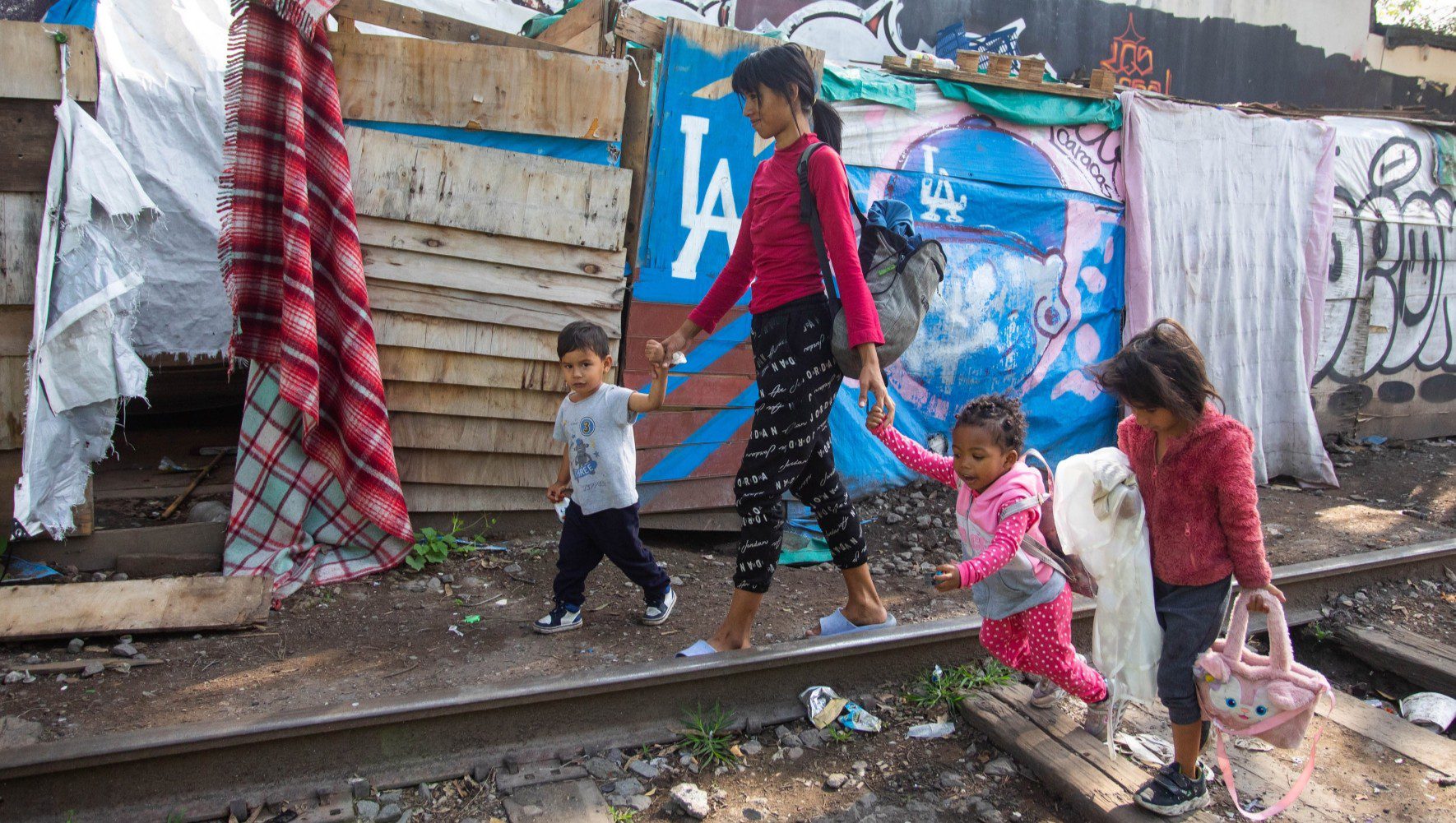
This violence is not merely a memory; it is a persistent threat. Refugees, migrants, and internally displaced persons—specifically women and girls—living in northern border cities face extreme risks, including kidnapping, human trafficking, and sexual exploitation.
The economic burden is equally significant. While Mexico possesses an inclusive legal framework designed to integrate refugees into the workforce, these protections are only as effective as their implementation. Drastic reductions in global humanitarian aid have stripped the system of its capacity to provide essential services, including legal counsel and psychological support. Consequently, even those who obtain legal status often find themselves unable to access the very social programs intended to help them achieve self-sufficiency.
Official Responses and Institutional Challenges
The Mexican government, alongside international partners and civil society organizations, remains the primary line of defense. However, the system is struggling. COMAR, the agency tasked with managing the influx, is perpetually under-resourced and overwhelmed.
The delay in issuing humanitarian visas has become a critical point of failure. Without these documents, displaced people are effectively locked out of the formal labor market. This lack of formal employment forces individuals into the informal economy, where they are susceptible to exploitation and further violence.
International advocacy groups, including HIAS, continue to press for more humane and evidence-based policies. The goal is to shift the narrative from "border control" to "human protection." By building alliances with civil society and utilizing academic partnerships—such as the ongoing collaboration with Columbia University and El Colegio de la Frontera Norte (COLEF)—there is a concerted effort to generate data that can inform better, more sensitive protection strategies. This research is vital to understanding the psychosocial impact of forced migration and ensuring that mental health care remains a cornerstone of humanitarian aid.
The Human and Geopolitical Implications
The implications of this crisis extend far beyond the border.
- Human Rights Erosion: When asylum seekers are deported to Mexico—a country where they have no ties—and are subsequently unable to access legal protection, the fundamental right to seek asylum is hollowed out. This practice risks violating international human rights norms and puts thousands of lives at risk in environments where they are highly vulnerable.
- Societal Pressure: As the number of displaced people grows, local communities in Mexico are feeling the strain. While many in the private sector have shown a willingness to hire refugees, the competition for basic services—health care, education, and housing—creates potential friction points that require proactive, government-led social integration programs.
- The Failure of Deterrence: Evidence suggests that restrictive policies do not stop migration; they merely change the path and increase the danger for the migrants. The "reverse migration" trend demonstrates that when legal pathways are closed, desperate people do not simply disappear; they become more marginalized, more exploited, and more likely to face life-threatening situations.
Conclusion: The Path Forward
The situation in Mexico is a litmus test for the global community’s commitment to refugee protection. The current landscape is one of shifting patterns and deepening needs. It is no longer sufficient to view this as a transitory issue; it is a permanent feature of the regional humanitarian map.
For HIAS, the mission remains steadfast: to provide life-saving assistance where and when it is needed most. Through legal aid, mental health support, and advocacy for systemic change, we work to ensure that the individuals behind these statistics—the families fleeing violence, the children seeking school, and the women seeking safety—are treated with the dignity they deserve.
As we look to the future, the integration of data, humanitarian aid, and a renewed commitment to human rights will be the only way to transform the current cycle of crisis into a sustainable model of protection. The support of the international community is not just a gesture of goodwill; it is a humanitarian necessity.
Your donation empowers HIAS to provide life-saving humanitarian assistance to refugees and displaced people. To learn more about our work in Mexico and how you can support these vital programs, please visit our website.

 Rifan Muazin
 Asep Darmawan