

 Suro Senen
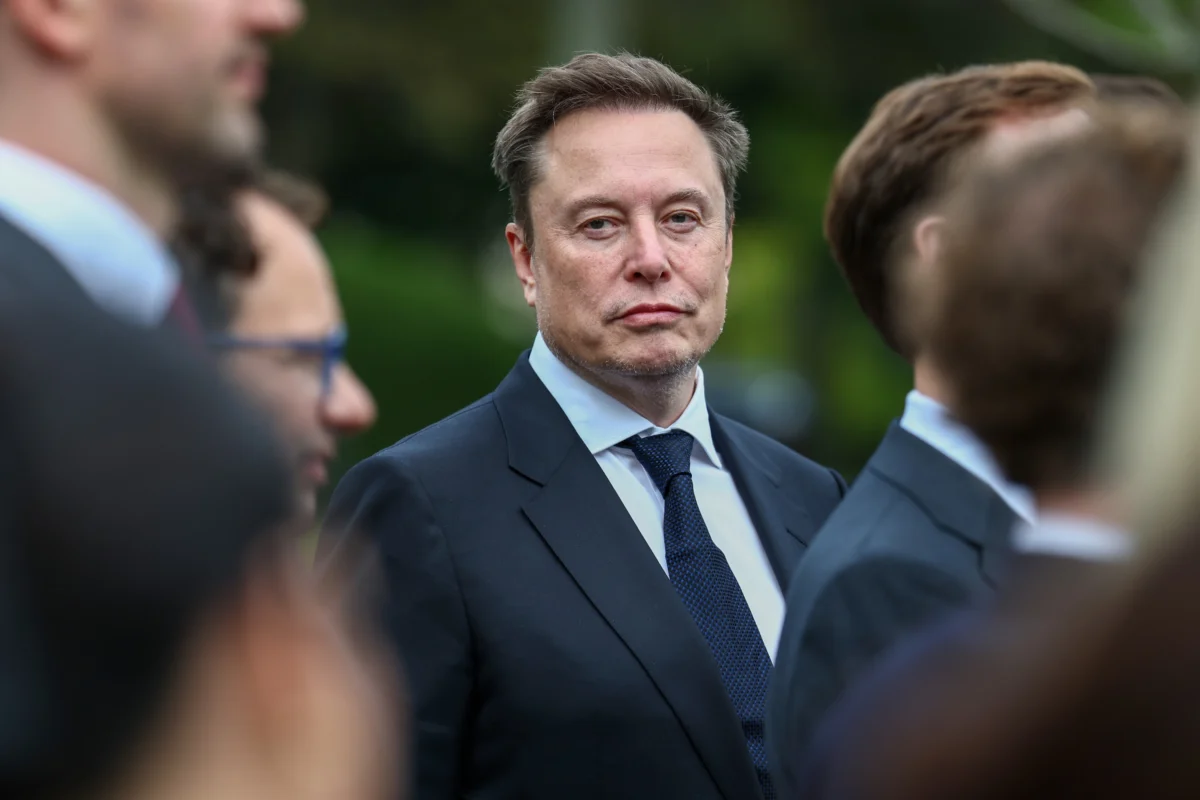
WASHINGTON, D.C. — As the 2026 midterm elections approach their fever pitch, the intersection of private wealth and public governance has reached an unprecedented crossroads. Elon Musk, recently minted as the world’s first trillionaire, has shattered all historical records for individual political involvement, effectively becoming the primary financier of the Republican Party’s effort to maintain and expand its legislative influence. However, as new reports emerge regarding the "Department of Government Efficiency" (DOGE) and its controversial legacy, the nature of Musk’s financial support is under intense scrutiny.
Recent revelations of internal campaign communications suggest that the relationship between Musk and the Republican establishment has evolved beyond mere donor-candidate synergy. In Michigan, a high-stakes Senate race has become the flashpoint for a new kind of political defense: the "shielding" of a private citizen from the oversight powers of the United States Congress.
Main Facts: The Half-Billion Dollar Midterm
According to a comprehensive analysis by The Washington Post, Elon Musk has injected nearly $500 million into the 2026 midterm cycle, making him the largest single political donor in modern American history. This massive infusion of capital has created a staggering financial disparity between the two major parties. As of late October 2026, Republican committees and affiliated Super PACs have outspent their Democratic counterparts by more than $300 million, a gap largely attributed to Musk’s contributions.
The primary vehicle for this spending is Musk’s "America PAC," which has focused heavily on battleground states. In Michigan, the PAC has spent $8.6 million specifically targeting the Senate race. Of that, $5.2 million was dedicated to "opposition messaging" against Democratic candidate Abdul El-Sayed, while $3.4 million directly supported Republican candidate Mike Rogers.
The controversy deepened this week following a leaked fundraising email from the Rogers campaign. The message, which was circulated by the Michigan Democratic Party, explicitly asks donors to contribute not just to win a seat, but to "protect Elon." The email characterizes Democratic calls for congressional inquiries into Musk’s government work as a "socialist retaliation plot" and a "Soviet-style" attempt to destroy a visionary leader.
This development highlights a burgeoning "quid pro quo" narrative: Musk provides the capital necessary for Republican victories, and in exchange, Republican lawmakers pledge to block subpoenas and investigations into Musk’s activities during the early months of Donald Trump’s second term.
Chronology: From Donor to "Special Government Official"
The current friction dates back to the immediate aftermath of the 2024 presidential election. Upon the inauguration of Donald Trump for a second term in January 2025, Elon Musk was appointed to lead the "Department of Government Efficiency" (DOGE). While not a traditional Cabinet-level department confirmed by the Senate, DOGE functioned as a powerful advisory body with "special government official" status granted to Musk.
Early 2025: The Purge Begins
In his first 100 days, Musk initiated a series of "efficiency audits" that resulted in the immediate suspension of billions of dollars in federal grants and the termination of thousands of civil service positions. These actions were characterized by the administration as "cutting the fat," but critics described them as an illegal dismantling of the regulatory state.
Mid-2025: Legal Challenges and Court Rulings
By summer 2025, several federal judges began issuing rulings against DOGE’s actions. A landmark case in October 2025 found that Musk had illegally accessed sensitive personnel data through the Office of Personnel Management (OPM) to identify employees for termination based on their involvement in Diversity, Equity, and Inclusion (DEI) initiatives. Another ruling declared Musk’s "coup at the Treasury"—wherein he attempted to unilaterally redirect appropriated funds—to be a violation of the Separation of Powers.
2026: The Humanitarian Fallout
As the midterms approached, the real-world consequences of the DOGE cuts became apparent. Reports from the U.S. Agency for International Development (USAID) suggested that the withdrawal of funding for global health initiatives, spearheaded by Musk, had jeopardized the lives of millions of children. Domestic cuts to the Veterans Administration (VA) and Social Security administration led to significant backlogs and service denials, fueling public outcry.
October 2026: The "Shield" Strategy
With the midterms looming, Representative Ro Khanna (D-California) led a formal call for Musk to be subpoenaed to testify before the House Oversight Committee. In response, the Republican campaign apparatus shifted its messaging to frame Musk as a victim of political persecution, leading to the "Protect Elon" fundraising appeals currently circulating in Michigan and elsewhere.
Supporting Data: The Cost of Efficiency
The scale of Musk’s influence is best understood through the lens of the "Senate Leadership Fund," the primary Super PAC for Senate Republicans. This summer, Musk contributed $158 million to the fund in a single transaction. This represents one of the largest single transfers of wealth into a political entity in the history of the Republic.

In Michigan, the Senate Leadership Fund has spent $43.3 million. When combined with America PAC’s spending, the pro-Rogers/anti-El-Sayed spending exceeds the Democratic budget by a factor of nearly three to one.
Beyond the campaign trail, the data regarding DOGE’s impact is sobering:
- International Aid: The dismantling of USAID programs is projected to lead to the deaths of 14 million people globally by 2030 due to the collapse of malaria and HIV/AIDS prevention networks.
- Veterans’ Care: Internal VA emails leaked in late 2025 revealed that DOGE-mandated cuts led to a 22% increase in wait times for emergency mental health services.
- Public Health: Senator Bernie Sanders recently warned that $13.5 billion in cuts to the National Institutes of Health (NIH) have effectively halted 40% of ongoing cancer research trials in the United States.
Official Responses: A War of Words
The rhetoric surrounding the "Protect Elon" campaign has been exceptionally sharp, reflecting the polarized nature of the 2026 electorate.
The Republican Defense:
Mike Rogers’ fundraising email remains the most direct evidence of the GOP’s defensive posture. "When you stand with my Senate campaign today, you are directly shielding Elon Musk, protecting the movement to audit the federal government, and stopping this socialist retaliation plot dead in its tracks," the email stated. Rogers has consistently argued that Musk’s work was necessary to save the country from bankruptcy and that the "Deep State" is now seeking vengeance.
The Democratic Challenge:
Representative Ro Khanna has emerged as Musk’s primary antagonist in Congress. "Mr. Musk acted with the authority of the federal government but without any of its accountability," Khanna said in a recent press briefing. "He must answer for the 4.5 million children around the world whose lives were put at risk by his dismantling of USAID. This isn’t about politics; it’s about the rule of law and the basic human right to survive."
The Judicial Perspective:
Federal judges have been increasingly critical of the "special official" loophole used by the Trump administration to empower Musk. In a recent ruling regarding the Treasury Department, one judge noted, "The delegation of executive authority to a private citizen who maintains vast commercial interests creates an inherent conflict of interest that the Constitution does not permit."
Implications: The Future of the American Regulatory State
The 2026 midterms are increasingly viewed as a referendum on the "Musk Model" of governance. The implications of this struggle extend far beyond the immediate electoral results.
1. The Privatization of Policy
If Republican candidates like Mike Rogers are successful, it will validate a model where billionaire donors can transition into "special officials" to enact sweeping policy changes without Senate confirmation. This creates a "shadow government" dynamic where the traditional checks and balances of the bureaucracy are bypassed in favor of corporate-style "disruption."
2. The Legal Immunity of Donors
The effort to "shield" Musk from congressional inquiry suggests a new era of political protection. If a donor provides enough capital to secure a legislative majority, that majority can then act as a legal firewall, preventing any meaningful investigation into the donor’s conduct. This effectively places the wealthiest individuals in the country above the oversight powers of the people’s representatives.
3. The Erosion of Civil Service
The DOGE cuts have already caused a "brain drain" within the federal government. If these cuts are upheld and the architects remain insulated from accountability, the American civil service may never recover its capacity to manage complex systems like Social Security, the VA, or national health research.
As voters head to the polls, the central question remains: Is the "efficiency" promised by the world’s first trillionaire worth the cost of the democratic norms and human lives that have been sacrificed in its pursuit? The outcome of the Michigan Senate race may provide the first definitive answer.

 Pevita Pearce

 Nana