

 Muslim
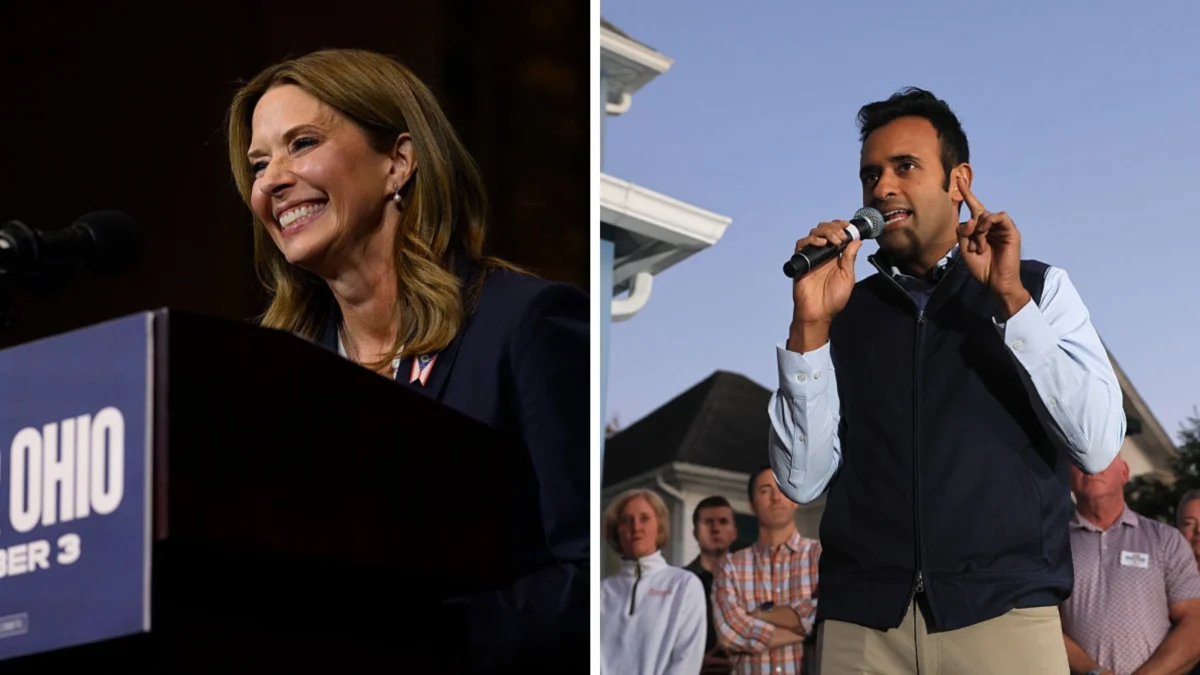
In the high-stakes arena of the 2026 election cycle, the gubernatorial race in Ohio has transcended traditional political discourse. The contest between billionaire entrepreneur Vivek Ramaswamy and Dr. Amy Acton, a public health figure, has become the epicenter of a national debate regarding the ethics of campaigning. At the heart of this firestorm is a controversial campaign advertisement released by the Ramaswamy camp, which utilizes the testimony of Acton’s estranged mother to attack her character.
For many political observers, this move is not merely a hard-hitting campaign strategy; it is a calculated effort to weaponize childhood sexual abuse against a female candidate. By leveraging the deep, personal trauma of a survivor to discredit her fitness for office, the campaign has reignited a fierce national conversation about the systemic barriers women face when seeking power and the disturbing normalization of misogynistic tactics in modern politics.
The Context: Women and the Political Gender Gap
The 2026 election cycle has been defined by a historic surge in women running for office. Data from the Center for American Women and Politics (CAWP) at Rutgers University indicates that 85 major-party candidates are currently pursuing governorships, shattering the previous record of 69 set in 2022. Simultaneously, female candidacies for the U.S. House of Representatives are nearing an all-time peak.
Despite these numbers, the "gender gap" in political ambition and representation remains a stark reality. Men continue to dominate state legislatures, federal committees, and judicial appointments. This structural imbalance carries profound consequences for policy, particularly regarding reproductive healthcare. The 2018 Mississippi abortion ban—a law that served as the catalyst for the Supreme Court’s eventual overturning of Roe v. Wade—was authored and passed by a legislature where more than 85 percent of members were men.
Research from organizations like Change Research suggests that even as women achieve higher levels of education than men, they are less likely to believe they are qualified for political office. This "ambition gap" is exacerbated by the unique, often hostile, environments female candidates must navigate. While men are frequently validated and encouraged when they enter the arena, women often face intense scrutiny of their personal lives, families, and histories, turning their private identities into public liabilities.
Chronology of an Attack: The Acton Ad
The current controversy centers on a digital advertisement launched by the Ramaswamy campaign. The ad features an interview with Dr. Amy Acton’s estranged mother, who labels her daughter a "liar" and asserts she is unfit to lead the state of Ohio.
The moral weight of this attack is derived from the history between the two women. Dr. Acton is a survivor of childhood sexual abuse. Between the ages of 9 and 12, she was subjected to persistent abuse by her stepfather. When these crimes were discovered and the stepfather was indicted, Acton’s mother did not support her child; instead, she sided with the abuser and left the jurisdiction with him while he was out on bond.
The two have remained estranged for nearly 50 years, with their only contact being a traumatic encounter in a courtroom during the original legal proceedings. By platforming a parent who abandoned her child in the wake of such horrific abuse, the Ramaswamy campaign has crossed a line that many critics describe as not only political malpractice but a profound ethical failure.
Supporting Data: The Prevalence of Trauma
The tactic of weaponizing trauma is particularly chilling when considering how many women share similar experiences. According to the National Sexual Violence Resource Center (NSVRC), one in five women in the United States will experience completed or attempted rape during their lifetime.
Crucially, the majority of these assaults are perpetrated by someone the victim knows—a family member, a friend, or a trusted authority figure. The data shows that one in three female victims of sexual violence experienced their first assault between the ages of 11 and 17.
When a campaign treats a candidate’s history of abuse as "fair game" for political dismantling, they are sending a message to millions of survivors across the country: that their trauma is a weakness that can be exploited for electoral gain. This serves to reinforce the silence of survivors who fear that coming forward will lead to public ridicule and victim-blaming, the very same tactics now being deployed against Dr. Acton.
Official Responses and Political Hypocrisy
The fallout from the advertisement has been swift and deeply partisan. Rather than condemning the tactic, leadership within the Republican party has leaned into the vitriol. Donald Trump, who has been found liable for sexual abuse in a civil court, issued a statement on his social media platform, Truth Social, backing the campaign’s approach. He argued that the mere existence of a rift between a daughter and her mother should preclude that woman from holding public office.
Trump subsequently escalated his rhetoric, describing Dr. Acton as "defective," "dishonest," and a "disaster." This rhetoric is consistent with his past interactions with female critics and accusers, most notably his disparagement of E. Jean Carroll. During his legal battles regarding his own sexual misconduct, Trump famously dismissed Carroll as a "whack job" and a "liar," despite the fact that a jury of his peers found him liable for sexual abuse and defamation—a verdict recently upheld as the Supreme Court declined to hear his appeal.
This pattern of behavior highlights a grim reality: the weaponization of abuse is not an accidental byproduct of modern campaigning, but an intentional strategy utilized by those who view the denigration of women as a path to political dominance.
The Implications: A Breaking Point
The decision to utilize such a vicious, personal attack has, however, created a significant divide within the Republican Party itself. Some strategists worry that the blatant cruelty of the ad will alienate suburban women and moderate voters who have grown weary of the "politics of personal destruction."
The timing of this incident is also significant. It occurs against a backdrop of increasing public scrutiny regarding sexual assault in elite institutions and the government. As the Cornell University sexual assault controversy continues to generate headlines, and as Democrats on the House Judiciary Committee release new reports linking high-profile political figures to systemic cover-ups of sex crimes, the American public is demonstrating a lower tolerance for the normalization of sexual violence in public life.
Many women, and a significant portion of the male electorate, are signaling that they are "fed up." The weaponization of Dr. Acton’s childhood trauma may prove to be a miscalculation—a moment where the political establishment pushed too far, prompting a backlash that could shift the momentum of the midterm elections.
Conclusion: Reclaiming the Narrative
The Ohio gubernatorial race has become a mirror reflecting the broader struggle for the soul of American politics. When a campaign chooses to dig into a candidate’s childhood scars to manufacture a political defeat, it degrades the office they seek to occupy.
The movement for reproductive freedom and bodily autonomy is, at its core, a movement for the right of individuals to define their own lives without the interference of those who would see them broken. As thousands of Americans share their stories through platforms like The Majority, the message is becoming clear: reproductive health and personal integrity are not just issues to be debated—they are the foundational rights that allow citizens to pursue an education, build families, and contribute to society.
Whether the voters of Ohio will reward the cruelty of the current campaign or reject it in favor of a more substantive dialogue remains to be seen. However, one thing is certain: the era of silencing women through the weaponization of their trauma is being met with a rising, unified voice of resistance. The political landscape is changing, and the candidates who rely on the tactics of the past may find that the electorate of the future has no appetite for them.


 Reynand Wu
 Jia Lissa