


 Jia Lissa
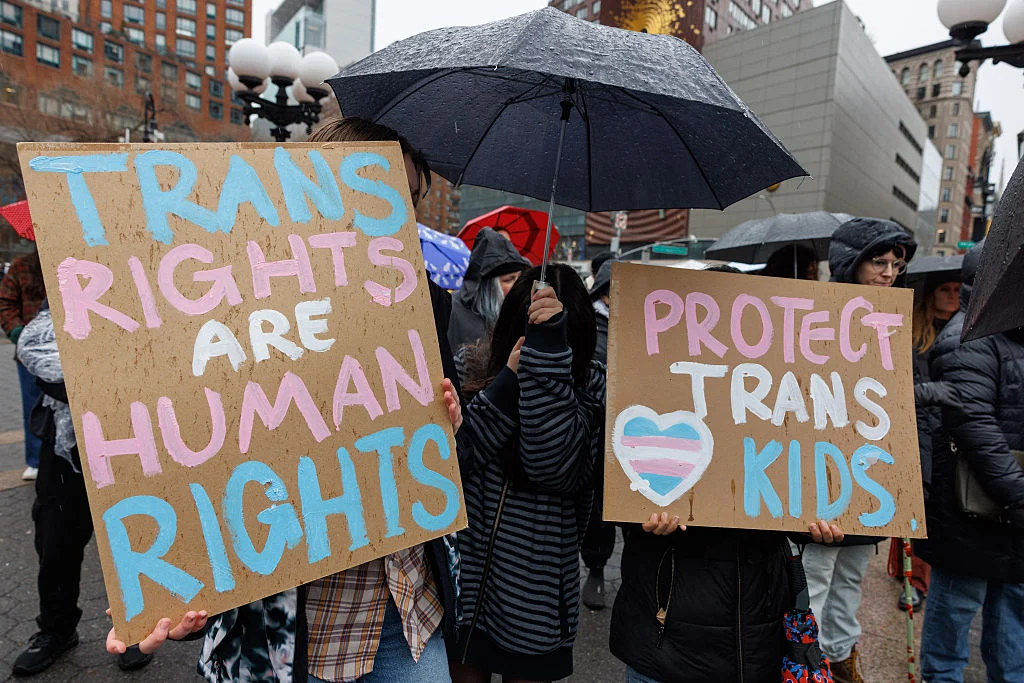
As the midterm election cycle reaches a fever pitch, the political landscape is being defined not just by congressional races or gubernatorial battles, but by a series of high-stakes ballot measures that have placed transgender rights at the center of the American public consciousness. From Arizona to Washington, a concerted, well-funded effort is underway to use the ballot box to implement sweeping restrictions on athletic participation, healthcare access, and student privacy.
While the 2024 presidential campaign established a playbook for centering anti-trans rhetoric in national politics, the current trend shifts that momentum to the state level. By bypassing legislative chambers and taking these issues directly to the voters, proponents of these measures are forcing a debate that threatens to codify discrimination into state constitutions, often using language that critics argue is designed to mislead or confuse the electorate.
The Strategic Shift: Moving from Legislatures to the Ballot Box
Historically, ballot measures have served as a powerful tool for direct democracy. In 2008, California’s Proposition 8 temporarily dismantled marriage equality in the state, while earlier in the 20th century, 15 states secured women’s suffrage through similar initiatives. Today, that same mechanism is being leveraged by conservative organizations and wealthy donors to push a restrictive agenda against the LGBTQ+ community.
The current wave of initiatives is not organic; it is the product of sophisticated political machinery. In Arizona and Colorado, political consultant Tim Mooney—a veteran operative with a track record of success in ballot-measure campaigning—has been instrumental in drafting and promoting these initiatives. The financial backing behind these efforts is similarly robust, involving dark-money groups, family-oriented political alliances, and private donors with interests ranging from tax policy to cultural warfare.
A State-by-State Breakdown of the Initiatives
The following measures represent a significant departure from standard legislative processes, aiming to lock in restrictions that are difficult to challenge once they are enshrined in law or, in some cases, the state constitution.
Arizona: Proposition 318 and the Broadening of Surveillance
Proposition 318 represents one of the most aggressive expansions of anti-trans legislation in the country. While Arizona already maintains a ban on trans girls in public school sports, this measure would extend that prohibition to virtually every competitive arena in the state, including private clubs, Little Leagues, and collegiate sports.
Beyond athletics, the proposition introduces a mandate that "restrooms, locker rooms, shower rooms, or other private spaces" must be restricted based on sex assigned at birth. The ambiguity of the phrase "integral to athletic engagement" has sparked significant alarm, with legal experts suggesting it could be used to police the behavior of spectators and parents, not just athletes. Because the Arizona state constitution restricts the legislature from repealing voter-passed initiatives, a "Yes" vote on Proposition 318 would create a near-permanent legal barrier.
Colorado: Propositions 134 and 135
Colorado faces a dual-pronged attack. Proposition 134 seeks to ban trans girls from girls’ sports, relying on language regarding "biological reproductive systems" that critics fear will necessitate invasive and humiliating physical inspections of young athletes.
Simultaneously, Proposition 135 aims to prohibit gender-affirming surgeries for minors and restrict the use of public funds—including Medicaid—for such care. Medical professionals have warned that this is a dangerous intrusion into the patient-provider relationship, noting that the procedures targeted are already rare for adolescents and virtually non-existent for children under 12.
Missouri: Amendment 3 and the Intersection of Rights
Missouri’s Amendment 3 is a complex and controversial effort that combines the repeal of constitutional abortion protections with a permanent ban on gender-affirming care for minors. By bundling these two issues, proponents have been accused of attempting to exploit anti-trans sentiment to secure the passage of an abortion ban. Even though gender-affirming care for minors is already prohibited by state statute, enshrining this ban in the constitution would make it significantly harder for future courts to strike down the policy as unconstitutional.
Nebraska: Initiative Measure 442
In Nebraska, the strategy is one of constitutional entrenchment. Initiative Measure 442 aims to move the state’s current ban on trans athletes from a statutory law to a constitutional provision. By making this change, organizers hope to render the ban virtually immune to legal challenges that might otherwise succeed in the court system.
Washington: Initiatives 638 and 001
Washington is seeing some of the most extreme rhetoric in the country. Initiative 638 would not only ban trans girls from sports but would mandate that female athletes prove their sex through "reproductive anatomy, genetic makeup, or normal endogenously produced testosterone levels." This has prompted widespread condemnation from civil rights groups, who argue it would force schools to conduct genital examinations on children.
Initiative 001 focuses on "parental rights," mandating that schools provide parents with access to all medical and mental health records. Opponents argue this will force schools to "out" LGBTQ+ youth to potentially unsupportive or abusive guardians, jeopardizing the safety of vulnerable students.
Supporting Data: The Human Cost
The implications of these measures extend far beyond the legal text. According to data from the Trevor Project and various mental health advocacy groups, transgender youth are already facing an unprecedented mental health crisis. With nearly 40 percent of trans youth reporting they have seriously considered suicide in the past year, the atmosphere of constant political debate regarding their right to exist in public spaces exacerbates this trauma.
Hazel Heinzer, an Arizona-based marriage and family therapist, notes that the impact of these measures is felt by all women, not just those who are transgender. "That level of surveillance from regular people is really scary," Heinzer says, pointing out that she has been accosted in restrooms simply for having short hair. The rhetoric surrounding these bills, she argues, invites public policing of bodies that do not conform to traditional gender expectations.
Official Responses and Political Motivations
The organizations backing these measures often frame their efforts as a defense of "fairness" or "parental rights." In Colorado, groups like Protect Kids Colorado cite concerns over the "sexualization" of children. In Washington, donors like hedge fund manager Brian Heywood have poured millions into these efforts, sometimes alongside campaigns to repeal taxes on the wealthy, suggesting that these initiatives are part of a broader ideological platform.
Conversely, medical and educational associations have consistently opposed these measures. Major medical organizations in Colorado and elsewhere have issued statements emphasizing that gender-affirming care is evidence-based medicine, not "ideology." They argue that the government has no place in the exam room and that these measures represent an unprecedented level of political overreach.
Implications for the Future of Civil Rights
The success or failure of these ballot measures will set a significant precedent for the next decade of American civil rights.
- Constitutional Erosion: By placing discriminatory policies into state constitutions, these initiatives make it significantly harder for the judicial branch to provide a check on legislative or popular majorities.
- The "Copy-Paste" Strategy: The involvement of political consultants like Tim Mooney suggests that the same language and strategy used in one state will be exported to others. If these measures pass in 2026, we can expect a coordinated rollout in additional states by 2028.
- The Normalization of Surveillance: The mandates in states like Washington—requiring genetic or physical proof of sex—threaten to normalize the surveillance of minors. This sets a standard that could eventually impact a much wider segment of the population.
- Institutional Trust: When schools and healthcare providers are forced to act as agents of the state in "outing" children or policing biological markers, the foundational trust required for these institutions to function is severely damaged.
Conclusion
The 2026 midterm season has turned the ballot box into a site of intense cultural conflict. As voters in Arizona, Colorado, Missouri, Nebraska, and Washington head to the polls, they are not merely voting on local policies; they are participating in a national referendum on the bodily autonomy and public inclusion of transgender people.
The consequences of these votes will be immediate and lasting. For the families, doctors, and youth impacted by these measures, the stakes are not abstract. They are living in an environment where their daily lives—who they are, how they play, and the privacy of their medical care—are being debated, scrutinized, and potentially stripped away by the very systems meant to protect them. As the results come in, the nation will see whether the trend of using the ballot box to target minority groups becomes a permanent feature of American political life, or if the electorate will push back against what critics are calling a systematic assault on civil liberties.

 Muslim

 Reynand Wu