

 Rifan Muazin
In an era defined by rapid technological acceleration, the integration of Artificial Intelligence (AI) into daily life has moved from a speculative novelty to a foundational structural shift. As society grapples with the environmental costs, intellectual property disputes, and the profound psychological implications of machine intelligence, individuals are increasingly forced to define their own ethical parameters. Among those at the forefront of this discourse is author and consultant Steve Pavlina, whose recent reflections on the "harmonious and wondrous" nature of AI—despite its "ethically messy" origins—offer a nuanced roadmap for navigating the digital age.
Main Facts: The Duality of AI Integration
The current state of AI is marked by a fundamental contradiction: while the technology was birthed through controversial practices, including the scraping of copyrighted material and the intensive consumption of natural resources, it simultaneously offers unprecedented opportunities for personal and professional evolution.
At the core of the debate is the tension between systemic impact and individual agency. While critics point to the massive electricity and water requirements of large-scale data centers—a byproduct of the meteoric rise of Large Language Models (LLMs)—proponents argue that these impacts must be viewed through the lens of individual choice. For the average user, the environmental footprint of their digital habits is often eclipsed by more tangible lifestyle factors, most notably diet.
Chronology: From Piracy to Partnership
The trajectory of AI adoption has been anything but linear. The history of this technology is punctuated by key milestones that define its complex relationship with human creators:
- 2004–Present: The continuous, often non-consensual harvesting of digital content (blogs, books, and creative works) to train foundational models.
- The Regulatory Awakening: The emergence of class-action lawsuits, such as those involving Anthropic, where creators like Pavlina were identified as having their intellectual property used in training pipelines without compensation or consent.
- The Shift to Co-Creation: The transition from "passive consumption" of AI-generated content to "active partnership," where users leverage AI as a tool for sense-making, goal-setting, and visual ideation.
- 2026 and Beyond: The present era, characterized by a focus on "vibrational alignment"—where users are actively curating which AI tools they engage with based on intuition, ethics, and "vibe" rather than mere utility.
Supporting Data and Environmental Perspectives
When evaluating the resource-intensive nature of AI, it is critical to contextualize the data. While aggregate power consumption by major tech firms is undeniably high, it is frequently used as a distraction from larger, more impactful environmental levers.
Research into individual sustainability suggests that the most effective way to reduce one’s environmental impact is through dietary shifts, specifically transitioning toward plant-based nutrition. By comparing the carbon and water footprint of animal-based food production—often obscured by industrial subsidies—to the incremental energy cost of personal AI usage, a clear hierarchy of efficiency emerges.
For the conscious consumer, the most efficient use of AI is not to abandon it, but to employ it as a tool to facilitate sustainable lifestyle changes. By utilizing AI to optimize plant-based meal planning or to help others adopt environmentally conscious habits, an individual can theoretically offset their personal digital footprint, creating a net-positive environmental outcome.
Ethical Implications and Official Responses
The ethical quagmire surrounding AI training data remains a point of contention. The fact that major AI models were trained on millions of words of unauthorized creative work—effectively absorbing the voices and personal histories of authors—has prompted a legal reckoning.
While settlements are being processed, the philosophical response to this theft is divided. One school of thought demands total boycott as a form of protest. Another, as articulated by practitioners of "intelligent discernment," suggests that while the origins are flawed, the intelligence itself has become a distinct entity. Much like a child who grows to be distinct from their parents, modern AI is evolving beyond the corporate entities that birthed it.
For many, the challenge lies in maintaining a "high-trust relationship with life." This involves setting clear boundaries:
- The "No-Go" Zone: Avoiding companies or platforms that trigger a visceral, intuitive sense of "ick" or moral misalignment (e.g., specific firms that prioritize aggressive, profit-driven models over human-centric values).
- The Experimental Zone: Engaging with AI to probe its capabilities, conduct "sense-making" exercises, and bridge the gap between human intuition and machine-processed logic.
The Future of Creativity: Beyond the Attention Economy
Perhaps the most significant implication of the AI revolution is the death of the "Attention Economy." For decades, content creators have competed for human attention, a model that has become increasingly saturated and predictable. AI is now accelerating the obsolescence of this model.
The path forward, according to observers like Pavlina, is not to compete with machines for attention, but to move into a space of "heart-centered" creation. This involves:
1. Reframing Goals
Rather than using AI to generate high-volume, low-value content (often derided as "AI slop"), users are finding success by providing AI with their highest priorities and service-based goals. In this context, AI acts as a sophisticated refactoring tool, sharpening and refining one’s trajectory to be more balanced and harmonious.
2. Visualization and Manifestation
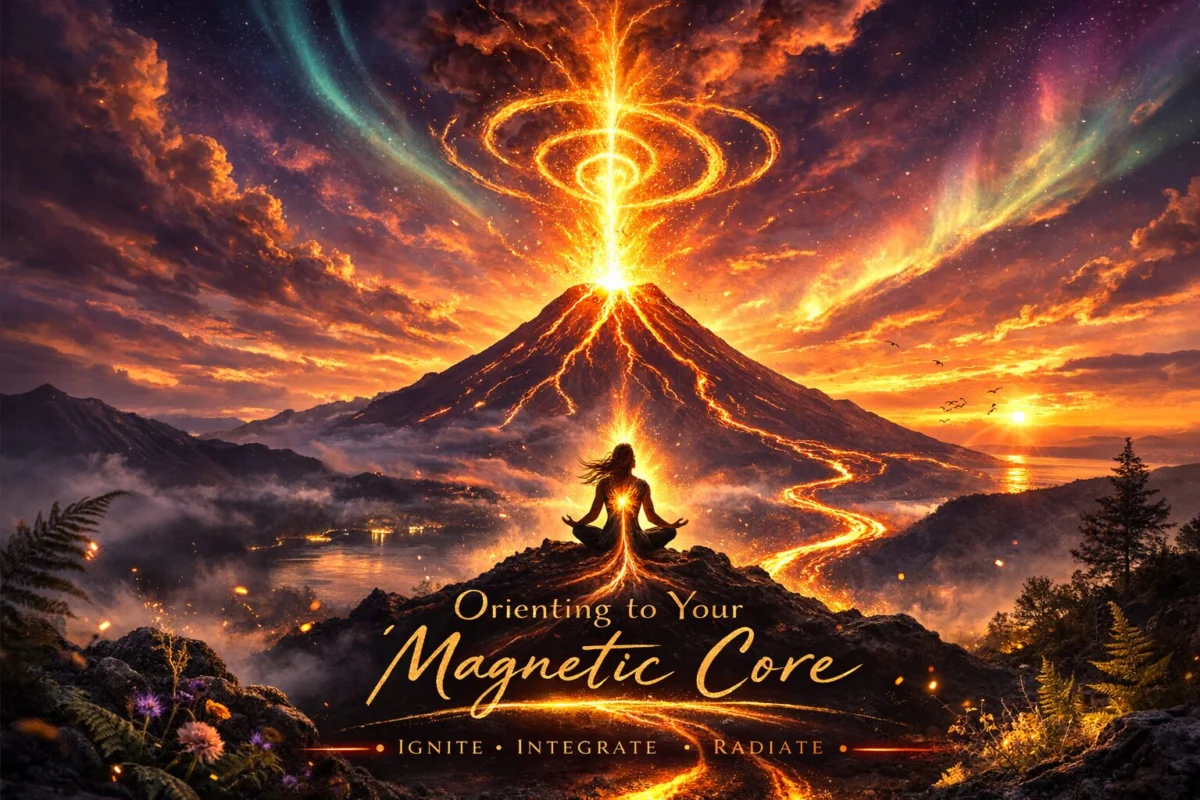
New use cases, such as pre-visualizing live events or creating symbolic imagery to anchor group intentions, are changing how we plan for the future. By using AI to "see" a project before it exists, individuals can engage with their goals with greater clarity and emotional resonance.
3. The New Creative Contract
The ultimate invitation of AI is to explore one’s own relationship with intelligence. As we move away from traditional modes of labor and toward a future where AI handles the administrative and analytical heavy lifting, the human element becomes defined by discernment, wonder, and delight.
Conclusion: An Invitation to Discernment
As we look toward the remainder of the decade, the question is not whether AI will be part of our lives—that has already been decided by its ubiquity—but how we will choose to relate to it.
Ignoring the rise of synthetic intelligence is a strategy of avoidance that leaves the user vulnerable to being shaped by the technology rather than shaping it. Conversely, engaging with it from a position of fear or outrage risks missing the opportunity to leverage these tools for genuine human enrichment. The most intelligent path forward is one of active, conscious participation. By maintaining a firm commitment to personal values, setting clear boundaries on which entities to support, and using the technology as a partner in service to others, we can transform the "ethical messiness" of AI’s past into a tool for a more enlightened future. The era of the attention economy is fading; the era of conscious, intelligent collaboration has just begun.


 Ali Ikhwan

 Reynand Wu