



 Dwi Wanna

In the contemporary landscape of American academia, the line between rigorous research and ideologically driven polemic has become increasingly porous. While a fringe conspiracy theorist posting on Substack about "Venezuelan ghostware" would likely be relegated to the margins of public discourse, a similar conspiratorial framework, when wrapped in the formal prose of a prestigious university press, often receives a veneer of intellectual legitimacy. A recent publication, Manufactured Outrage: The Conservative Industrial Complex’s War on Education and How to Fight Back, serves as a case study for this phenomenon. Authored by four professors of education at public research universities—Elena Aydarova, T. Jameson Brewer, Emily M. Hodge, and Serena J. Salloum—the book attempts to map a shadowy, coordinated right-wing assault on the American school system. Instead, critics argue, it offers a stark illustration of the fragility and ideological capture currently plaguing the field of education research.
Main Facts: The Anatomy of a "Complex"
Manufactured Outrage, released by Harvard Education Press, seeks to explain the seismic shifts in state-level education policy observed in the early 2020s. The authors argue that the sudden legislative focus on dismantling Diversity, Equity, and Inclusion (DEI) initiatives, banning cell phones, and adopting the "science of reading" is not a organic grassroots reaction, but the product of a "Conservative Industrial Complex" (CIC).
According to the text, the CIC is a vast, fascist, and fear-mongering apparatus designed to promote the interests of Evangelical Christians, protect "predatory capitalism," and dismantle democratic institutions. The authors paint a picture of a coordinated entity that, they claim, operates in a manner akin to colonial resource extraction, causing widespread harm to public education and contributing to broader societal issues, including the "impending climate catastrophe."
The core thesis rests on the existence of an "interlocking directorate"—a massive, unified network of think tanks, foundations, and advocacy groups working in lockstep. The authors include in this list entities as diverse as the American Enterprise Institute (AEI), the Heritage Foundation, the Cato Institute, the Walton Family Foundation, and even reform-oriented groups like 50CAN.
Chronology of the Narrative Shift
The rise of the "industrial complex" narrative did not occur in a vacuum. It follows a decade of increasing polarization within educational research.
- Pre-2020: The foundation for this style of writing was laid by earlier works that sought to frame school choice and market-based education reforms as existential threats to public schooling. Books such as Diane Ravitch’s Slaying Goliath and A Wolf at the Schoolhouse Door established the template: identify a "cabal," label their motives as malicious, and frame the resulting policy changes as a "war" on the public.
- 2020–2022: The rapid adoption of anti-CRT (Critical Race Theory) legislation and the subsequent backlash against DEI in public universities provided fresh fodder for scholars to consolidate their theory of a "right-wing conspiracy."
- 2023–2024: Publishers began producing a wave of titles—such as Josh Cowen’s The Privateers—that explicitly sought to map the financial and organizational connections between conservative donors and state-level education legislation.
- 2026: The publication of Manufactured Outrage marks a maturation of this genre, where the focus has moved from specific policy debates (like vouchers) to a totalizing, conspiratorial worldview that classifies any conservative-aligned policy as an instrument of "social fascism."
Supporting Data: The Problem of "Guilt by Association"
The primary issue critics find with Manufactured Outrage is its lack of empirical distinction between vastly different political actors. The authors engage in a form of "mash-up" politics, grouping Reagan-era traditionalists, libertarians, and populist culture warriors into a single, monolithic entity.
To demonstrate the absurdity of this categorization, one need only look at the inclusion of the American Enterprise Institute (AEI). AEI, a fixture of the center-right, is frequently criticized by the populist "MAGA" right for being too academic, too establishment-oriented, and insufficiently aggressive in its partisan leanings. By lumping AEI alongside groups like the Daily Wire or the Heritage Foundation, the authors ignore the profound, often vitriolic, disagreements that define the modern conservative movement.
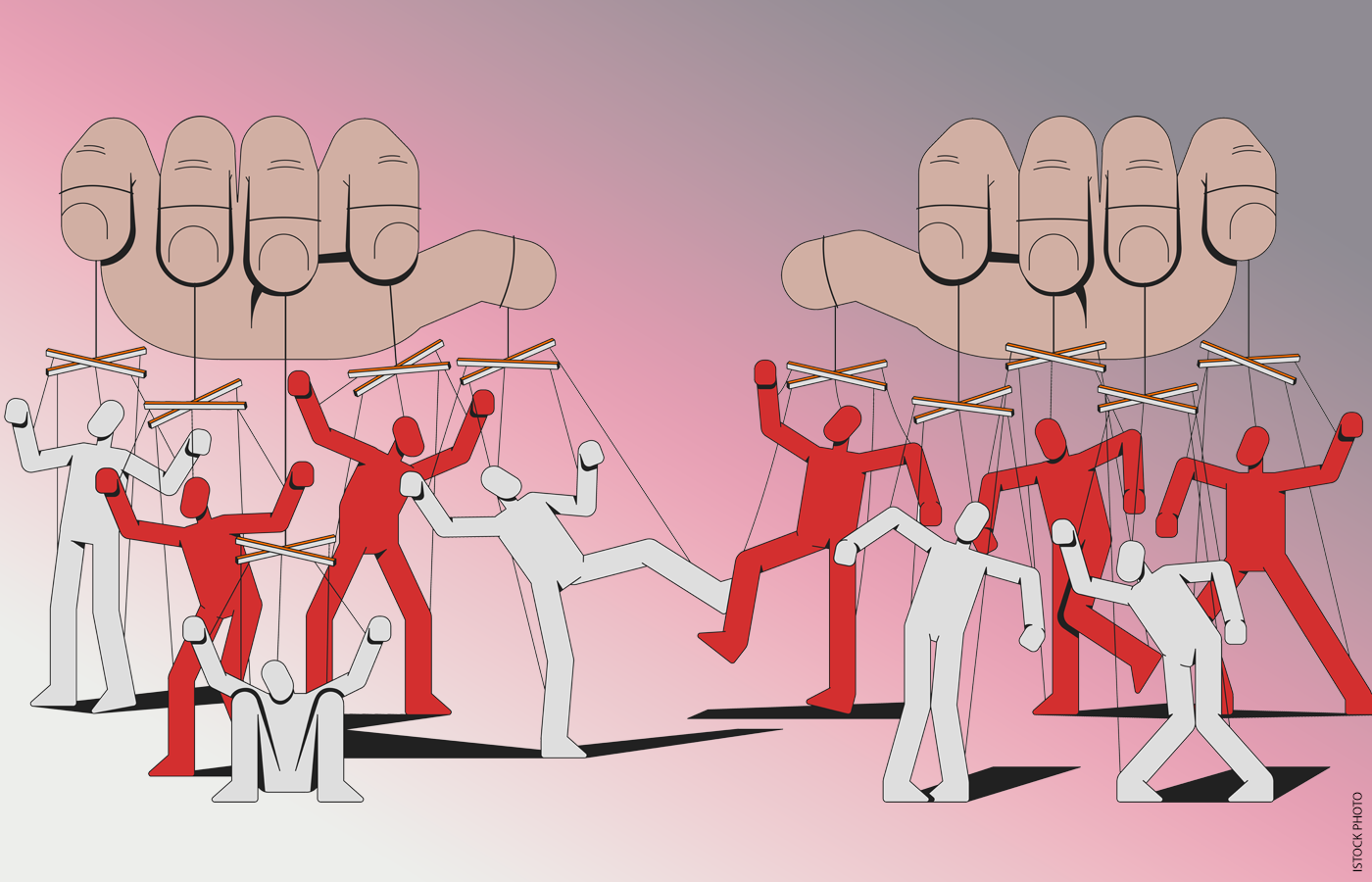
Furthermore, the "evidence" provided for the existence of the CIC is largely anecdotal. The authors focus on superficial commonalities, such as shared funding sources or attendance at conferences, to infer a unified strategic command. This mirrors the logic of extreme partisan podcasters who might claim that figures as disparate as Barack Obama and Ralph Nader are part of a singular, deep-state agenda. When the analytical framework fails to account for the internal friction and genuine intellectual diversity of the group being studied, the resulting "research" ceases to be an analysis and becomes, effectively, a political manifesto.
Official Responses and Peer Critique
The academic community has been sharply divided in its response to this trend of "conspiracy scholarship." Defenders argue that the book performs a necessary service by "following the money" in conservative education politics. They contend that the influence of large, private foundations on state legislative processes warrants critical, even if polemical, investigation.
However, many scholars in the field of education policy have responded with skepticism. Jay Greene, a senior research fellow and veteran observer of education policy, has noted the recurring inconsistency in these types of books. In his review of similar works, he highlighted how authors often rely on obscure organizations—such as the Council for National Policy (CNP)—to provide the "smoking gun" of conspiracy. Yet, in Manufactured Outrage, the CNP is barely mentioned. This leads to a critical question: If the conspiracy is as grand and coordinated as the authors claim, why is the evidence so inconsistent between books published by the same academic press?
Critics suggest that these books are "make-it-up-as-you-go" narratives. By failing to engage with the actual arguments of the policymakers they critique—such as the pedagogical shift toward the "science of reading"—the authors miss an opportunity to engage in meaningful debate. Instead, they frame pedagogical reforms as tools for "deprofessionalizing" teachers, a tactic that avoids discussing the actual evidence regarding literacy rates and student outcomes.
Implications for Education Research
The implications of this trend are significant for the future of the academy. When public research universities lend their prestige to books that rely on cartoonish caricatures rather than nuanced political science, the credibility of the entire field suffers.
- The Erosion of Intellectual Pluralism: If scholars are rewarded for producing works that demonize half of the political spectrum, the university becomes an echo chamber rather than a marketplace of ideas. This discourages younger researchers from pursuing objective, empirical studies that might challenge the prevailing consensus of their departments.
- The Failure of Public Engagement: By framing every policy dispute as a battle between "good" (public education advocates) and "evil" (the CIC), the authors alienate the very people they seek to influence. Parents, school board members, and legislators who do not fit the "far-right" caricature are given no seat at the table, ensuring that the political divide will only widen.
- Missed Opportunities for Analysis: There are genuinely fascinating questions to be asked about the current moment in education. For example: How did the post-2020 landscape transform the conservative coalition? Why have cell phone bans found support across the political aisle? By choosing to view these events through the lens of a "nefarious conspiracy," the authors ignore the complex, coalitional, and often messy reality of how policy is actually made in a democracy.
In conclusion, Manufactured Outrage stands as a cautionary tale. It serves as a reminder that when scholarship abandons the rigors of reality in favor of the comfort of a pre-packaged narrative, it loses its ability to inform or improve public policy. For the "normies"—the average citizens, teachers, and policymakers—the best response to such agit-slop may simply be to step back, recognize the partisan theatrics for what they are, and return to the harder, less glamorous work of actual empirical inquiry. The "Conservative Industrial Complex" may exist in the pages of academic diatribes, but in the real world, the challenges facing American education remain far more complicated—and far more human—than any conspiracy theory can capture.


 Laily UPN

 Nila Kartika Wati






