

 Laily UPN
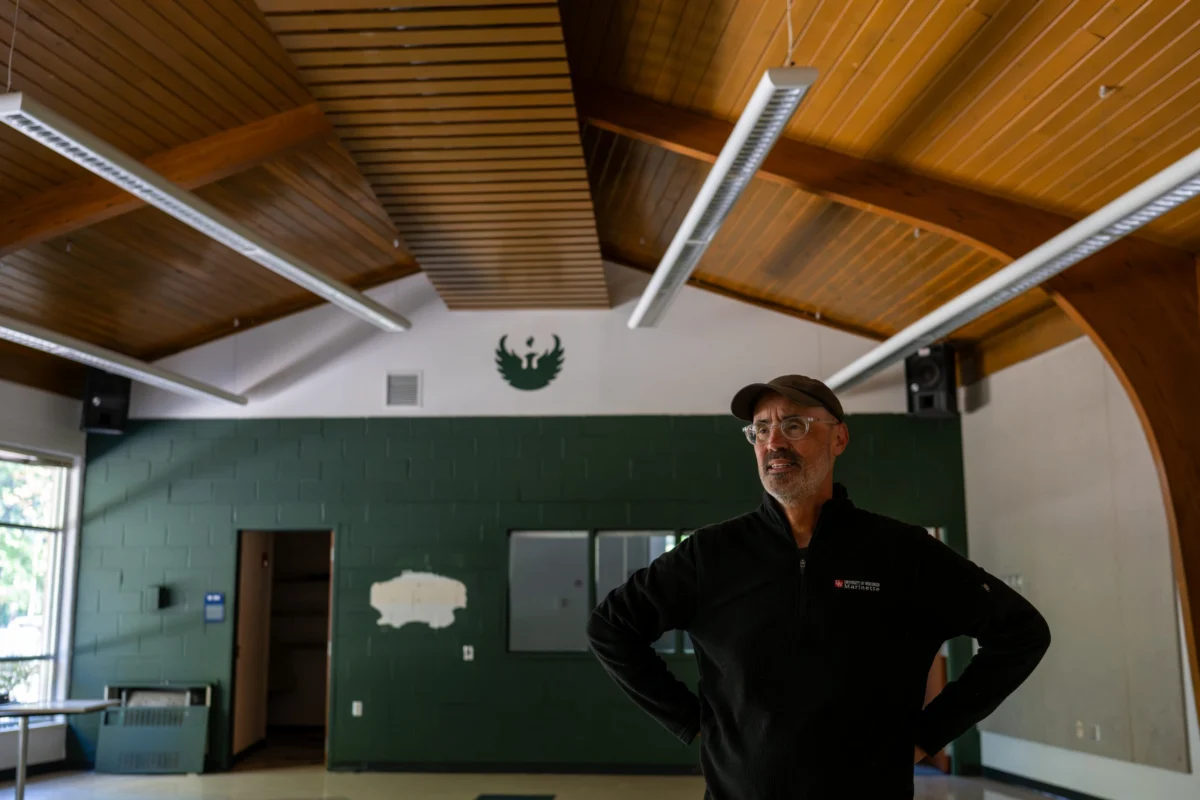
Last May, as the academic year drew to a close at the University of Wisconsin—Platteville Baraboo Sauk County, the mood on campus was not one of graduation-day jubilation, but of quiet mourning. For nearly 60 years, the institution—affectionately known as “Boo U”—had served as a cornerstone of the south-central Wisconsin community. When the final doors were locked, it wasn’t just a facility that shuttered; it was an essential, accessible gateway to the middle class that vanished.
The closure of the Baraboo campus is not an isolated incident. It is the latest chapter in a systemic dismantling of Wisconsin’s two-year branch campuses. In just three years, the University of Wisconsin (UW) system has permanently closed eight of its 13 branch campuses. While higher education institutions across the country are facing turbulence, the systematic shuttering of Wisconsin’s public, two-year colleges stands out as a stark, aggressive outlier. These institutions, historically focused on the liberal arts, long provided a low-barrier, affordable on-ramp for first-generation and rural students. As they disappear, they are leaving behind “education deserts,” fundamentally altering the social and economic landscape of the state.
A Chronology of Decline: From Expansion to Consolidation
The decline of the branch campus model did not happen overnight. For decades, these schools were vital regional hubs. However, the path to their current demise began in earnest with a confluence of legislative, financial, and administrative shifts.
2015: The Budgetary Tipping Point
Following years of austerity measures, including significant budget cuts introduced under former Governor Scott Walker, the UW system was left as one of the least-funded public university systems in the nation. Coupled with long-term tuition freezes, these fiscal pressures made it increasingly difficult for smaller, regional campuses to maintain aging infrastructure and competitive staffing levels.
2017: The Structural Merger
In a move intended to streamline operations, the UW Board of Regents approved a massive restructuring in 2017. The two-year colleges were merged into larger, four-year “hub” universities. While intended to create efficiency, the result was a competitive scramble. The smaller branches were suddenly forced to compete for resources and students against their larger, better-resourced parent institutions. In many cases, these parent schools—eager to bolster their own enrollment numbers—lowered admissions requirements, effectively cannibalizing the very branches they were meant to support.
2023–2024: The Final Curtain
By 2023, the writing was on the wall. University officials began citing sharp enrollment declines as the primary justification for closure. The Baraboo campus, which once boasted an enrollment of over 500 students, had dwindled to just 100 in its final year. The math became insurmountable: revenue from tuition and state support could no longer cover the overhead of buildings, faculty, and administrative staff. In 2024, UW-Marinette ended in-person instruction, limping along for a final year via remote courses before closing entirely.

The Data Behind the Disappearance
The rationale provided by the UW administration centers on demographic shifts and enrollment numbers. The UW system as a whole has seen a 10% drop in enrollment since 2010, but the two-year schools have suffered far more disproportionately.
However, experts point to a deeper issue: the correlation between physical proximity and college attendance. Research by scholar Nicholas Hillman, a leading voice on the "geography of opportunity," highlights that the vast majority of students attend college within 20 miles of their homes. When a college is removed from a rural area, it doesn’t just mean students have to drive further; it means they stop enrolling entirely.
Hillman uses the term “education desert” to describe these regions, warning that Wisconsin is actively pursuing a policy of “higher education desertification.” The data supports his alarm: rural student enrollment in the UW system has plummeted at a rate significantly higher than the statewide average. The closure of these branches is not merely a response to declining enrollment; it is a catalyst for it.
The Philosophical Shift: Vocationalism Over Liberal Arts
The closure of these campuses is mirrored by a broader ideological shift within the university system. In 2023, former UW President Jay Rothman recommended a strategic pivot: the system should de-emphasize liberal arts programs in favor of career-specific, vocational training, particularly at institutions serving low-income populations.
This directive has had immediate consequences. A recent investigation by student journalists at UW-Madison revealed that of 82 academic programs cut across the system, the vast majority were in the humanities and social sciences.
"There is an increasingly narrow focus on vocational education," says Alyssa Ratledge, a researcher at the nonprofit MDRC. "The prevailing mindset has become obsessed with ‘Return on Investment’ (ROI). But the original mission of these colleges wasn’t just to produce employees; it was to help students—especially rural and first-generation students—try on new identities, discover their interests, and broaden their horizons."

This shift stands in direct opposition to the "Wisconsin Idea," the long-standing, Progressive-era philosophy that the boundaries of the university should be the boundaries of the state, and that education should serve to improve the lives of all citizens, regardless of their economic station.
Implications: The "Other" Brain Drain
The human cost of these closures is best exemplified by the stories of students like Alex Stevens. Growing up in a rural area with significant caretaking responsibilities, Stevens saw UW-Marinette as his only viable path to higher education. Without the proximity and affordability of that campus, his trajectory toward becoming a teacher would have been effectively blocked.
"I was rural, poor, and smart," Stevens recalls. "The campus gave me a chance to start my life."
The loss of these opportunities creates a new form of "brain drain." While much has been written about educated young people leaving Wisconsin for coastal cities, there is now a "front-end" brain drain occurring. By denying rural youth access to the early stages of higher education, the state is effectively limiting the potential impact these individuals could have had on their own communities as doctors, teachers, local business owners, and civic leaders.
"When we limit college access, we are also limiting the kind of impact these students might have had in their own communities," says Douglas Haynes, author of Teaching Toward Slow Hope. "We are essentially telling a generation of rural students that higher education is not for them."
A Fading Legacy
In the wake of these closures, the communities left behind are struggling to find a way forward. In Baraboo, officials are debating the future of a cluster of empty, taxpayer-funded buildings. In Marinette, a small theater program remains, kept alive by private donations and the sheer grit of the few remaining staff members.

Lauryn Albaugh, who oversees the theater program at the former Marinette campus, is one of the last two employees standing. She sees the theater as a beacon, but she is the exception to the rule. Most of the campus is silent, save for the weekly rounds of a maintenance worker checking the mothballed facilities.
The closure of these schools represents more than a financial adjustment; it marks a retreat from the democratic promise of public education. As these doors close, the pathways to social mobility for thousands of rural Wisconsinites are being bricked over, leaving a hollowed-out landscape where the "Wisconsin Idea" is increasingly replaced by a cold, transactional view of what it means to be an educated citizen.
This report is part of a collaborative project involving five nonprofit newsrooms exploring the state of rural higher education. The series, supported by the Ascendium Education Group, highlights the critical challenges facing rural workforces and the educational institutions that support them.


 Nila Kartika Wati

 Lina Irawan