



 Neng Nana
October 26, 2026 — As the healthcare industry grapples with a persistent epidemic of clinician burnout, artificial intelligence (AI) has been touted as the ultimate digital panacea. A new study published in the Annals of Internal Medicine offers a nuanced look at the reality behind the hype. Researchers from the Beth Israel Lahey Health system found that while AI-driven ambient scribes can shave minutes off documentation tasks, the technology’s impact on overall productivity remains underwhelming, raising critical questions about whether we are solving the burnout crisis or merely shifting the burden into a new, automated digital format.
The Core Findings: A Marginal Shift in Documentation
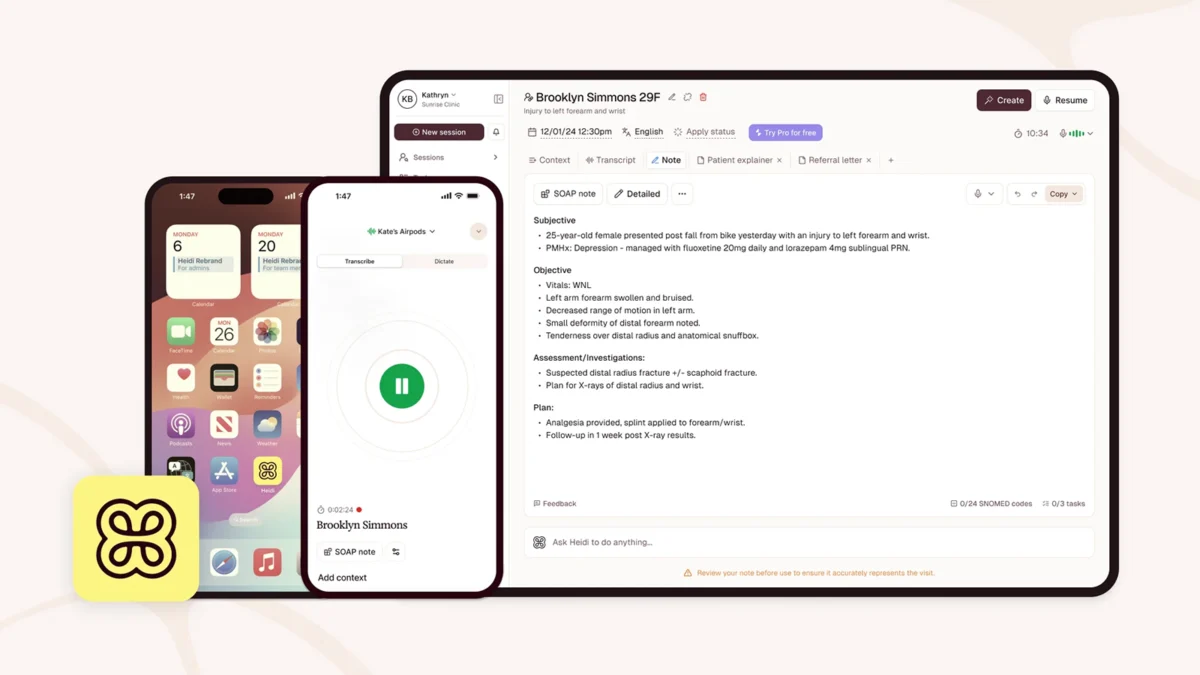
The study, led by Dr. Jennifer P. Stevens of Beth Israel Deaconess Medical Center, analyzed the real-world deployment of "Heidi," an AI ambient scribe system introduced across a 14-hospital network. The research aimed to determine if these tools could alleviate the crushing documentation burden that forces many physicians to spend upwards of three hours per day on electronic health record (EHR) tasks during their off-hours.
The data revealed a modest success story: for the cohort of clinicians who enrolled in the system, median "note-active time"—the time spent directly editing or inputting data—dropped from 21 minutes to 18.6 minutes. Simultaneously, the median length of clinical notes increased from 4,854 characters to 5,187.
At first glance, this appears to be a triumph of efficiency. However, the study’s secondary findings paint a more complicated picture. Metrics regarding same-day note closure, after-hours documentation, and overall clinical productivity showed virtually no significant improvement. The AI, it seems, helps write the note, but it does not necessarily clear the physician’s desk any faster.
Chronology: The Rollout of "Heidi"
The integration of the Heidi system followed a phased, voluntary rollout strategy designed to accommodate diverse clinical workflows.
- January 2025: The health system officially launched the Heidi platform, inviting physicians, nurse practitioners, trainees, and allied health professionals to opt into the service.
- January–November 2025: Throughout the year, 1,140 clinicians enrolled in the system. The researchers filtered this pool to 902 clinicians who met strict criteria for patient volume and consistency of use.
- Early Implementation Phase: During the first three months of enrollment, the researchers tracked usage patterns to categorize participants into "high," "low," and "nonusers."
- Analysis Period: The final dataset encompassed nearly 5,000 clinicians, providing a robust, if observational, look at how different levels of engagement with AI tools correlate with professional output.
The study design was deliberate in its flexibility, allowing clinicians to integrate the tool as they saw fit. This "clinician-driven" approach was meant to reduce the friction usually associated with adopting new medical software.
Supporting Data: The "High-User" Advantage
The research highlights a stark disparity between casual and power users. When the researchers segmented the data by usage frequency, a clear trend emerged:
- High-Intensity Users: Those who leaned heavily into the AI for the majority of their encounters saw a statistically significant reduction in note-active time of 2.50 minutes per encounter.
- Low-Intensity Users: Those who used the system sporadically saw negligible differences compared to nonusers.
- The Length Paradox: Interestingly, high users generated significantly longer notes. While some might argue this represents a more thorough documentation of the patient encounter, skeptics—including the editorial authors—suggest that this could represent "AI bloat," where the system generates excessive, redundant, or irrelevant text that the physician must then audit.
The demographic breakdown of the users also offered insights. Heidi users tended to be slightly younger, more frequently female, and more likely to be primary care providers. Surgical specialties showed lower adoption rates, likely due to the highly procedural and less conversational nature of their patient interactions compared to primary care clinics.
Official Responses and Expert Critique
The study’s publication has sparked a rigorous debate within the medical community. Dr. Kirsten Ostherr of Rice University, writing in an accompanying editorial, warned against viewing these results through rose-colored glasses.
"Ambient scribes may have unintended consequences that require a broader set of research methods and questions," Dr. Ostherr noted. She pointed out a significant blind spot in the current research: the study failed to measure the time clinicians spent editing the AI-generated notes before finalizing them.
"This ambiguity raises an important question about whether ambient scribes relocate documentation burden rather than reduce it," she added. If an AI generates a draft in two minutes, but the physician requires five minutes to fact-check, edit for "hallucinations," or correct misinterpretations, the "time saved" is an illusion.
Furthermore, Dr. Ostherr expressed concerns regarding the regulatory landscape. Currently, these tools are categorized as low-risk medical devices, bypassing the rigorous scrutiny of the FDA. Given that AI can potentially fabricate clinical details or omit vital patient history, the lack of oversight is becoming a point of contention among patient safety advocates.
Implications: The Future of AI in the Clinic
The implications of the study are far-reaching for health systems currently rushing to sign multi-million dollar contracts with AI vendors.
1. Documentation Quality vs. Quantity
The increase in note length is perhaps the most concerning metric for healthcare administrators. In an era where "note bloat" already complicates medical billing and clinical handoffs, AI-generated padding could exacerbate the issue. If the AI is merely filling space rather than providing clinical value, it could lead to "downstream consequences" for the quality of care, as future clinicians may struggle to find the pertinent information buried within an overly verbose, AI-generated narrative.
2. The Limits of "Efficiency"
Health systems often market AI tools as a way to see more patients. However, this study suggests that AI might not be a productivity multiplier in the traditional sense. Instead, it acts as a labor-saving device for the act of typing, but not necessarily for the act of thinking or managing administrative workflows. The fact that after-hours documentation remained unchanged suggests that the "burnout" caused by the EHR is rooted in more than just the speed of typing—it is tied to the complexity of the medical system itself.
3. A Call for Regulatory Evolution
As the researchers concluded, "Future research should evaluate the impact of AI scribes on clinician productivity, documentation accuracy, and health equity." The medical community is effectively in the middle of a massive, uncontrolled experiment. While the technology is promising, the potential for AI-induced errors—ranging from subtle omissions to dangerous misinterpretations of patient symptoms—cannot be ignored.
The study acts as a necessary "sanity check." It confirms that AI can indeed change the workflow of an outpatient practice, but it also warns that technology is not a cure-all. For AI to truly solve clinician burnout, it must move beyond simply generating longer notes and start providing tools that genuinely enhance decision-making and reduce the total cognitive load on the physician.
Until then, the industry is left with a cautionary takeaway: AI ambient scribes are a powerful new tool in the medical toolkit, but like any powerful tool, they require careful calibration, rigorous oversight, and a clear understanding that efficiency is not synonymous with quality. As health systems continue to deploy these tools, the focus must shift from the volume of notes produced to the accuracy and meaningfulness of the information preserved in the patient’s record.

 Ammar Sabilarrohman

 Layla Zulfa