
 Suro Senen
By Jessica Fox, Eventgroove
In the digital era, the rules of discovery have been rewritten. Not long ago, a nonprofit’s visibility relied on a simple formula: identify the right keywords, optimize your website, and wait for a donor to type “charity galas near me” into a search bar. If your SEO (Search Engine Optimization) was sound, your organization would appear at the top of the search engine results page (SERP).
Today, that paradigm has shifted entirely. The rise of Generative AI—integrated into Google’s search experience, ChatGPT, Claude, and Perplexity—has moved beyond the list-based search model. When a user asks an AI, “I want to attend a gala that supports an autism charity next month,” the engine does not merely return a list of blue links. It synthesizes information from across the web to provide a curated, conversational response.
For the modern nonprofit, this transition represents a fundamental challenge: if your fundraising event is not cited by the AI’s synthesis engine, it essentially does not exist for the potential donor. To remain relevant, organizations must pivot from traditional SEO to Generative Engine Optimization (GEO).
The Core Facts: What is GEO for Nonprofits?
At its most basic level, GEO is the practice of structuring content so that AI models can digest, verify, and ultimately recommend your fundraising campaign. While “GEO” may sound like yet another layer of technical jargon, it is fundamentally about clarity and accessibility.
AI models are not human; they do not “read” in the traditional sense. They scan vast datasets to identify facts, context, and authority. If your fundraising platform page is filled with flowery, abstract storytelling without clear, structured data, the AI may ignore it. By adjusting how you present your event details, you ensure that the AI can act as a bridge between your cause and the donor.
The “Big Five” Rule
The most effective way to optimize for AI is to provide the “Big Five” facts in the top third of your campaign description:
- Who: The name of the organization or host.
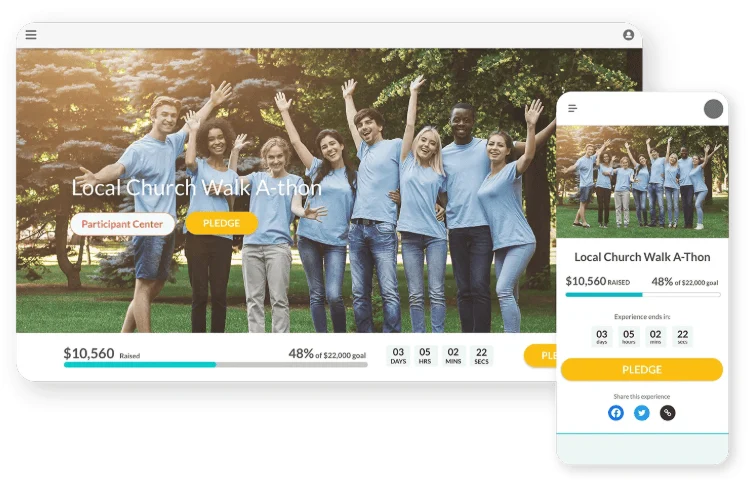
- What: The nature of the event (gala, walk-a-thon, auction).
- When: The specific date and time.
- Where: The physical location or digital link.
- Why: The mission-driven goal of the fundraising effort.
While marketers are often told to avoid redundancy, GEO favors it. Including a clear summary at the top of your page—even if the details are repeated later in the narrative—ensures that the AI captures the essential facts instantly.
Chronology: The Evolution of Search Discovery
The transition to AI-driven discovery did not happen overnight, but its impact on the nonprofit sector has been seismic.
- Phase 1 (The Keyword Era): Organizations focused on “keyword stuffing” and backlinks to climb the Google ladder. Success was defined by ranking on Page 1 for broad search terms.
- Phase 2 (The Social Era): Nonprofits moved toward social media integration, where engagement metrics became the primary signal of an event’s popularity.
- Phase 3 (The Generative Era): We are now in a phase where AI models evaluate “authoritative signals.” These models prioritize content that is verifiable, structured, and cited by multiple, connected sources.
For fundraisers, this means the days of a standalone campaign page are ending. To be found, your campaign must exist within a network of trust.
Supporting Data: Why Authenticity Drives Visibility
Many nonprofit leaders worry that optimizing for AI will strip their content of its human, emotional appeal. However, data suggests the opposite. AI models are trained to prioritize high-quality, verifiable, and authentic information.
A Princeton-led study on AI-generated search responses revealed a striking statistic: adding statistics, quotations, and citations boosted visibility in AI-generated answers by up to 40%.
This provides a clear path for fundraisers. Instead of vague claims such as, “Your support makes a huge difference,” nonprofits should pivot to data-driven impact statements:

- “100% of ticket sales go directly toward local food bank supplies.”
- “Your $50 donation provides school lunches for 1,200 local children annually.”
By embedding these hard statistics into your narrative, you provide the AI with the “verified facts” it needs to include your event in its summary.
Official Recommendations: Structuring for AI Success
To ensure your campaign is picked up by generative engines, consider these strategic implementations:
1. Include Attributed Expert Quotes
AI favors human authority. While your campaign page may technically be published by an anonymous web portal, you can build trust by including bolded, attributed quotes from your Executive Director, event chair, or a beneficiary.
Example: “The money raised through our silent auction goes directly toward equipping the underserved in our community with winter coats,” says Jane Smith, Executive Director. This creates a “named entity” that the AI can correlate with your organization.
2. The Power of Reciprocal Linking
AI engines look for “link networks” to confirm that your fundraising page is legitimate.
- Outside your platform: Link to your fundraising campaign from your primary nonprofit website, blog, and social media channels.
- Inside your platform: Link from your campaign back to a relevant page on your main site (e.g., a “results” page from last year’s event).
This creates a closed loop of trust that signals to the AI that the two entities belong to the same verified, reputable organization.
3. Implement a Conversational FAQ
AI models excel at Q&A. By placing a short, FAQ-style section at the bottom of your campaign page, you capture the specific questions users are asking AI tools:
- “Is parking provided for the Hope Gala?”
- “Are tickets tax-deductible?”
- “What is the dress code for this fundraiser?”
Answering these directly—in a question-and-answer format—makes it significantly easier for an AI to pull your content into a summary response.
Implications: The Risks of Inconsistency
Perhaps the most dangerous pitfall in the era of GEO is data fragmentation. If your Facebook event page lists the start time at 6:30 PM, but your fundraising platform says 6:00 PM, an AI model may flag the event as “unverified” or “unreliable.”
Because AI engines synthesize information from multiple sources to ensure accuracy, any discrepancy can cause the model to exclude your event entirely to avoid providing the user with incorrect information. Consistency is the bedrock of GEO. Ensure that the date, time, location, and ticket pricing are identical across every digital touchpoint, from your website to social media and your fundraising platform.
Final Perspective: The Human-AI Hybrid
The goal of GEO is not to replace the human element of fundraising; it is to ensure that the human element is discovered. Nonprofits should continue to lead with their mission, their storytelling, and their emotional impact.
However, imagine you are writing for two audiences simultaneously: the donor, who wants to be moved by your story, and the editor, who is unswayed by poetic language and demands rigorous clarity. By providing the facts first, incorporating validating quotes, and organizing your information into digestible, machine-readable formats, you can satisfy both.
The future of fundraising is not just about having a great cause—it’s about ensuring that when a potential supporter asks for help in finding a way to give back, the AI knows exactly where to point them. When your page is both genuine and optimized, the answer to “Can AI find our fundraising campaign?” becomes a resounding yes.
About the Sponsor
Eventgroove is a comprehensive, one-stop platform designed to help nonprofits amplify their impact. With integrated solutions for event management, online fundraising, ticketing, and e-commerce, Eventgroove empowers organizations to reach their goals by simplifying the digital donor experience. Whether you are hosting a walk-a-thon, a silent auction, or a gala, Eventgroove provides the tools necessary to keep your campaigns organized, professional, and optimized for discovery.
For more information on how to leverage the Eventgroove platform for your next fundraiser, visit Eventgroove.com.


 Reynand Wu
 Basiran