

 Nana Wu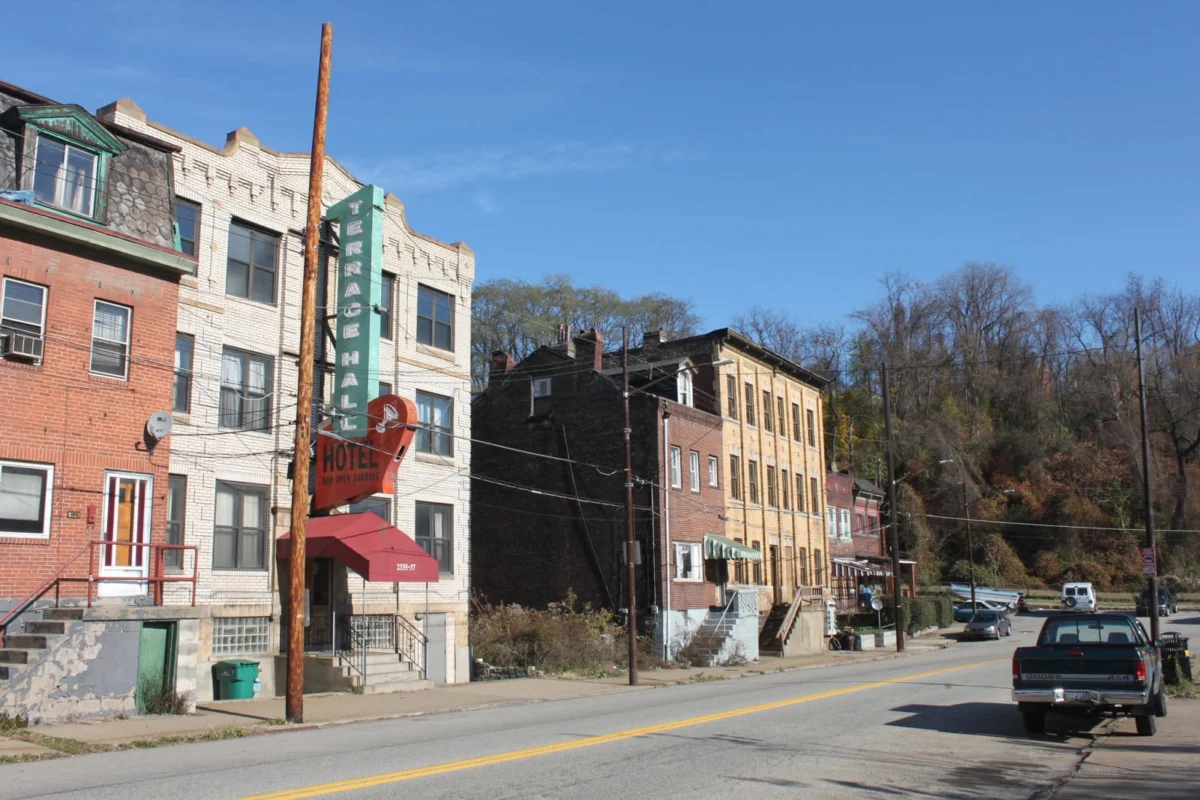
In the landscape of modern urban development, the Community Benefit Agreement (CBA) is often heralded as a shield for vulnerable neighborhoods. When developers arrive with promises of multi-million dollar projects—stadiums, corporate headquarters, or massive data centers—communities use these agreements to demand local jobs, affordable housing, and neighborhood investment in exchange for their support. However, as many historically Black neighborhoods have learned, a signed contract is not a guarantee of prosperity. When developers go bankrupt, corporations pull out, or projects languish in the planning phase, these hard-won agreements often vanish, leaving communities with nothing but broken promises.
The Hill District of Pittsburgh, a neighborhood with a traumatic history of displacement and systemic neglect, has bucked this trend. After a decade of legal battles, stalled construction, and political maneuvering, the community has successfully "failure-proofed" its community benefits. By decoupling its investment fund from the whims of specific developers and anchoring it instead to the land itself, the Greater Hill District Neighborhood Reinvestment Fund is finally beginning to pay out, providing a blueprint for grassroots economic empowerment.
A Legacy of "Root Shock"
To understand the significance of the current funding, one must look back to the mid-20th century. In the 1950s, the City of Pittsburgh wielded its urban renewal powers to dismantle the Lower Hill. Over 100 acres of a vibrant, predominantly African American community were razed, displacing more than 8,000 residents and shuttering 400 businesses. This mass displacement led to what social psychologist Mindy Fullilove termed "Root Shock"—the traumatic stress of losing one’s home, social networks, and cultural anchors.
The site of this destruction became the Civic Arena, and later, the parking lots surrounding the Pittsburgh Penguins’ former home. For decades, the land remained a scar on the urban fabric. When the arena was demolished in 2012, the promise of a revitalized "cultural district" remained unfulfilled, and the land sat largely vacant.
Chronology of a Struggle: From Lawsuit to Leverage
The path to the current payout was paved with "very hard labor," according to Marimba Milliones, executive director of the Hill Community Development Corporation (Hill CDC).
- 2011: The Greater Hill District Master Plan is drafted, setting the vision for the neighborhood’s future.
- 2014: The Hill CDC and the Pittsburgh Penguins sign a community benefit agreement. However, the agreement is left out of the city’s preliminary land development plan, rendering it effectively unenforceable.
- 2015: Realizing the agreement was being ignored, the Hill CDC files a lawsuit. Under pressure from the litigation, the city and the Penguins agree to a settlement that mandates the creation of a Local Economic Revitalization Tax Assistance (LERTA) district.
- 2015–2021: The project faces significant delays. The anchor tenant, U.S. Steel, pulls out, and the fund remains empty for years.
- 2021: The Penguins close a deal with First National Bank. The developers agree to a $7.2 million up-front lump sum payment into the Reinvestment Fund.
- 2025: The Penguins officially surrender exclusive development rights to the Urban Redevelopment Authority (URA).
- 2026: The first wave of grant recipients is announced, marking the tangible beginning of community-led reinvestment.
The LERTA Innovation: Tax Dollars for the People
The genius of the Hill District’s approach lies in its structural design. Unlike standard CBAs that rely on the benevolence of a developer, the Hill District utilized a LERTA structure. A LERTA is essentially a tax abatement designed to incentivize development in distressed areas.
Typically, the tax savings go directly into the developer’s pocket to help their project "pencil out." In this instance, however, the legislation was used to redirect property tax revenues from the 28-acre Lower Hill site into two separate buckets: one for infrastructure and one for the community. By attaching this mechanism to the land itself rather than a specific entity, the Hill District ensured that as long as development happens on the site, the community receives its share of the pie. Even if a developer goes bankrupt, the tax status of the land remains a vehicle for community wealth.
Supporting Data and the Development Review Panel
The fund does not operate in a vacuum. It is overseen by a 12-member community advisory council that ensures the money supports the goals outlined in the 2011 Master Plan. Beyond the fund, the community maintains control through the Development Review Panel (DRP).

The DRP is a coalition of seven neighborhood groups that reviews all proposed developments for alignment with community values. Since its inception, the panel has:
- Approved: 44 projects.
- Declined: 10 projects.
- Currently Reviewing: 16 projects.
This vetting process requires developers to score at least 80% on a rubric of community alignment. It is a rigorous process, as evidenced by architect Alicia Volcy’s experience with "Rhythm Square." Volcy’s project, which aims to convert a former lumber warehouse into artist studios and commercial retail, underwent months of scrutiny. The process was demanding—requiring renderings, capital stacks, and community engagement—but it resulted in a $250,000 grant from the fund, providing the necessary momentum to break ground.
Official Perspectives: Navigating the Complex Terrain
"There was no funding because there was no development," says Marimba Milliones. "Now everybody wants to act like the money just fell out of the sky, but it didn’t. It came from a lot of very, very hard labor and a very difficult period."
Milliones emphasizes that the success of the Hill District is not just about the dollars; it is about the assertion of agency. For decades, decisions in the Hill were made for residents, not by them. By forcing a seat at the table and using the legal system to hold powerful entities like the Pittsburgh Penguins and the City of Pittsburgh accountable, the community has changed the power dynamic.
The URA, now holding the development rights for the remaining parcels, must contend with this established framework. The era of "behind closed doors" deals is being systematically replaced by a process that requires transparent community support.
Implications for the Future of Urban Development
The Hill District’s success carries profound implications for cities across the United States. It offers a blueprint for what organizers call "community-wealth building." Key takeaways include:
- Decouple Benefits from Individual Developers: By anchoring benefits to the land (via LERTA or similar tax-capture mechanisms), communities are insulated from corporate bankruptcy or project failure.
- Codify Community Voice: The use of a formal Development Review Panel ensures that community input is not just a polite request, but a structural requirement for any project seeking public support or subsidies.
- Invest in Human Capital: The Hill District’s fund is not limited to bricks and mortar; it allocates resources toward workforce development, education, and youth programs, acknowledging that sustainable change requires investing in the people who live there.
- Acknowledge the "Real Story": As Milliones notes, it is vital that future generations understand the struggle. When the history of displacement and the labor of organizing are erased, the community’s power is diluted. Maintaining this institutional memory is part of the "failure-proofing" process.
Conclusion: A Model for Empowerment
As the first projects—including Rhythm Square—begin to take shape, the Hill District serves as a beacon for other neighborhoods fighting against the tide of displacement. It is a reminder that while the forces of large-scale capital are formidable, they are not invincible. Through persistence, legal strategy, and a commitment to democratic oversight, a community can force the system to work in its favor.
The $7.2 million in the Greater Hill District Neighborhood Reinvestment Fund is more than a financial asset; it is a monument to the resilience of a neighborhood that refused to be forgotten. By institutionalizing their power, the people of the Hill have ensured that the next wave of development will not be another chapter of displacement, but a foundation for a new, community-driven rhythm.

 Muslim
 Asro
Asro