


 Pevita Pearce
Main Facts: A Landmark Shift in Constitutional and Civil Protections
In a legal landscape historically focused on protection from the cold, a transformative shift is occurring: the right to remain cool is moving from a perceived luxury to a fundamental human right. This evolution reached a crescendo last month when Judge Robert Pitman issued a landmark ruling regarding the Texas carceral system. The court determined that subjecting incarcerated residents to extreme heat constitutes "cruel and unusual punishment," a direct violation of the Eighth Amendment of the U.S. Constitution. Consequently, Texas must now equip all state prisons with air-conditioning by the end of 2029.
While the Texas ruling applies specifically to the incarcerated, its ripples are being felt across the private housing market and municipal policy sectors. As climate change accelerates and heat waves become longer, more frequent, and more lethal, the legal framework governing "habitability" is being rewritten. From Maryland to Spokane, and from Houston to Los Angeles, jurisdictions are moving to mandate maximum indoor temperatures and the installation of cooling infrastructure.
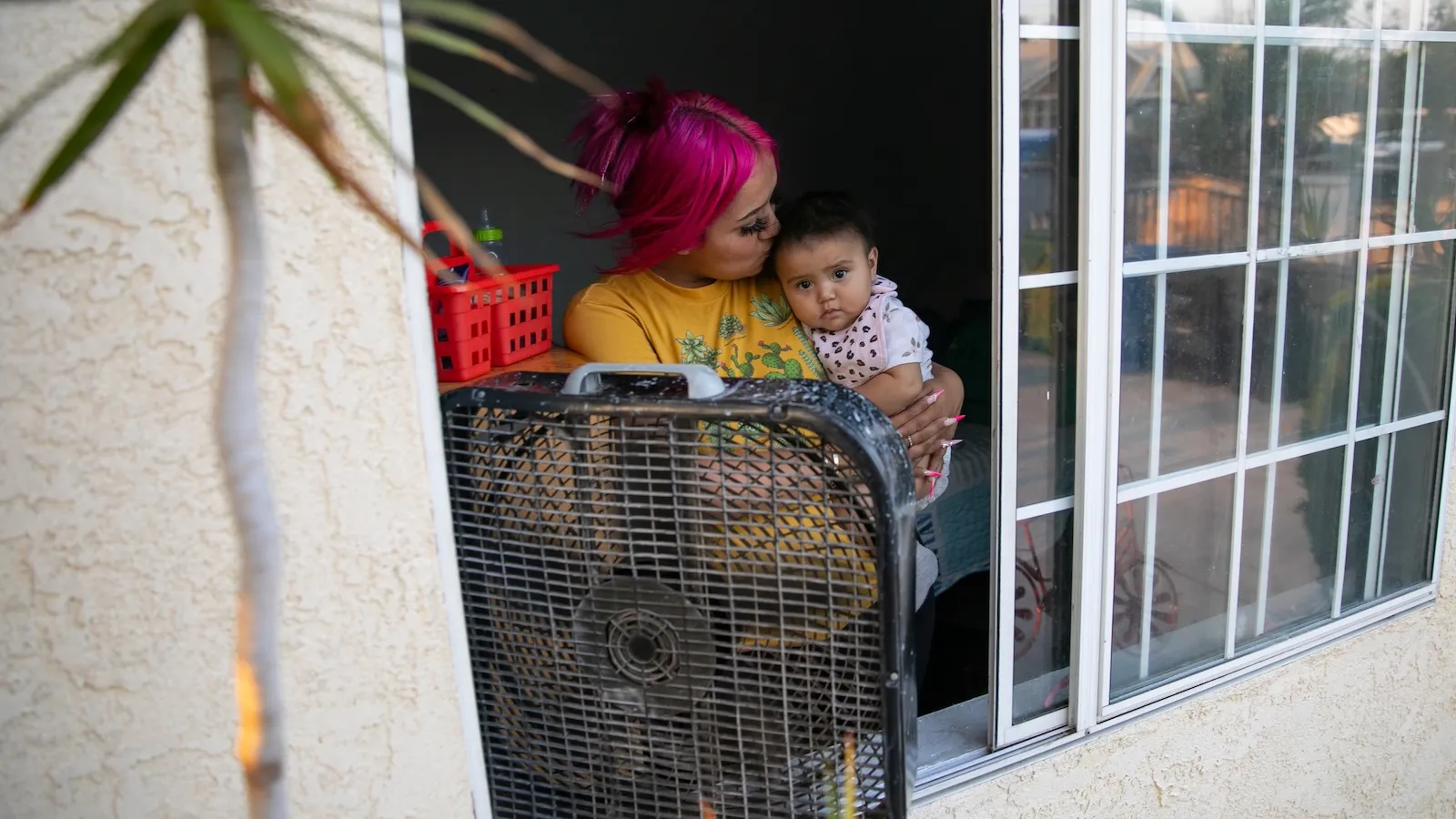
The core of this movement lies in the recognition that extreme heat is a silent mass killer. Unlike dramatic hurricanes or floods, heat waves often claim lives behind closed doors, particularly among vulnerable populations such as the elderly, the impoverished, and renters. Recent data indicates that renters are three times more likely than homeowners to require medical attention due to residential heat exposure. This disparity has fueled a burgeoning "right to cooling" movement that seeks to treat air conditioning with the same legal necessity as running water, electricity, and winter heating.
Chronology: From Luxury to Legal Necessity
The transition of cooling from an amenity to a requirement has followed a distinct timeline, accelerated by the "heat dome" events of the early 2020s.
The Historical Context: The Implied Warranty of Habitability
For decades, American landlord-tenant law has been rooted in the "implied warranty of habitability." This legal principle requires property owners to provide basic necessities for life, even if they are not explicitly mentioned in a lease. Historically, this has included structural integrity, running water, and—crucially—heating. Because legal standards were largely developed in Northern climates during the 20th century, the lack of heat was viewed as life-threatening, while the lack of cooling was merely seen as an inconvenience.
2020–2023: The Initial Wave of Ordinances
The tide began to turn as record-breaking summers hit the American South and West. In 2020, cities like New Orleans and New York City began strengthening cooling requirements for certain types of housing. Austin, Texas, followed suit by passing an ordinance requiring air conditioning in all rental homes, giving landlords a 90-day window to comply. During this period, Washington and Oregon passed laws prohibiting landlords from banning tenants from installing their own portable AC units—a response to previous restrictions that had left many renters defenseless during heat waves.
2024: The Year of Performance Standards
This year has seen a surge in sophisticated "performance-based" legislation. In July, Spokane, Washington, enacted a policy requiring landlords to provide "adequate cooling" in at least one room of every rental unit, a direct response to a heat wave that claimed 14 lives in the city. In August, Houston—a city synonymous with humidity—approved a right-to-cooling ordinance that closed long-standing loopholes, mandating working AC in all rental properties and removing exemptions for units with window screens.
2025–2029: The Implementation Horizon
The current legal trajectory points toward a standardized future. Los Angeles County’s performance standard for unincorporated communities is set to take effect on January 1, 2025, requiring indoor temperatures to remain at or below 82 degrees Fahrenheit. Meanwhile, the Texas prison system is now on a court-mandated countdown to 2029 to complete one of the largest cooling infrastructure overhauls in penal history.
Supporting Data: The Lethal Cost of Rising Temperatures
The push for legislative change is backed by grim statistical realities. Heat is now the leading cause of weather-related deaths in the United States, often outpacing floods, tornadoes, and hurricanes combined.
The Renter Vulnerability Gap
A 2024 study on housing and household characteristics highlighted a stark divide in heat risk. Renters often live in older buildings with poor insulation, "heat-trap" architectures, and a lack of control over structural upgrades. The study found that the risk of heat-related medical emergencies is 300% higher for renters than for homeowners. This is often compounded by "energy poverty," where tenants may have an AC unit but cannot afford the utility bills required to run it.
Global Mortality Trends
The scale of the crisis is perhaps best illustrated by the European experience. Researchers estimate that as many as 50,000 people died across Europe during five distinct heat waves this past summer. In the United States, Spokane’s 14 deaths in a single July week served as the catalyst for its "adequate cooling" mandate. These figures have transformed the debate from one of comfort to one of survival.
Defining "Too Hot": The Temperature Thresholds
Science and policy are currently clashing over what constitutes a "safe" indoor temperature. While some U.S. jurisdictions have settled on 82°F (27.7°C) as the maximum allowable limit, several Canadian cities and academic researchers are pushing for a lower threshold of 79°F (26.1°C). The variance is influenced by regional acclimatization; however, Stefano Schiavon of UC Berkeley notes that physiology has its limits, and once indoor temperatures consistently exceed 80°F, the body’s ability to cool itself through perspiration diminishes significantly, especially in humid environments.
Official Responses: The Debate Over Implementation
The movement to mandate cooling has met with a mix of enthusiastic support from health advocates and significant pushback from property owner associations and budget-conscious officials.
The "Passive vs. Active" Cooling Debate
Clinton Andrews, director of the Center for Urban Policy Research at Rutgers University, advocates for "performance standards" rather than equipment mandates. He argues that by setting a maximum temperature (like 82°F) rather than requiring an AC unit, landlords are encouraged to use passive, energy-efficient methods. This includes planting shade trees, installing high-reflectivity roofing, and utilizing advanced window shades.
However, Chelsea Kirk of the Los Angeles nonprofit Strategic Actions for a Just Economy (SAJE) argues that passive measures are insufficient during extreme events. "The only intervention that is going to protect people’s lives in a heat event is AC," Kirk stated, noting that "tree shade is not gonna get us there" when ambient temperatures soar past 100 degrees.
Landlord and Industry Concerns
Property owner groups have raised alarms regarding the cost of these mandates. They argue that requiring AC installations in older buildings—many of which require expensive electrical grid upgrades to handle the load—will inevitably lead to higher rents and the potential displacement of low-income tenants. In Spokane, the compromise was a requirement for landlords to reimburse tenants up to $500 if the tenant chooses to install their own cooling equipment.
Advocacy and Human Rights Perspectives
Brian Henning of Gonzaga University, a leading advocate for cooling rights, frames the issue as a fundamental responsibility of the modern landlord. "You can no longer responsibly rent a place if you don’t have a way of keeping it cool, because people will die," he said. This sentiment is echoed by Doug Ruley of the University of Miami School of Law, who believes the "rights framing" is essential to modernizing the implied warranty of habitability.
Implications: A Future Beyond "AC-ing the World"
The transition to a legally mandated right to cooling carries profound implications for urban planning, energy grids, and climate policy.
The Energy Burden and LIHEAP
One of the most significant hurdles is the "second cost" of cooling: the electricity bill. Tenant advocates worry that even if AC is installed, the poorest residents will be too afraid of the cost to use it. C.J. Gabbe of Santa Clara University suggests that the solution must involve expanding the federal Low Income Home Energy Assistance Program (LIHEAP). While the current administration recently released $3.6 billion in funding, the program’s future remains a point of political contention, with some proposing its elimination and others calling for its massive expansion to cover summer cooling as robustly as it covers winter heating.
Grid Stability and Urban Heat Islands
As thousands of buildings across major cities like Houston and Los Angeles add air conditioning, the strain on the electrical grid will intensify. This necessitates a dual-track approach: mandating cooling while simultaneously incentivizing energy efficiency to prevent grid failure during the very heat waves when cooling is most needed. Furthermore, the heat exhausted by millions of AC units into the streets can exacerbate the "urban heat island" effect, creating a feedback loop of rising temperatures.
The Limits of Adaptation
Perhaps the most sobering implication is that air conditioning is a reactive measure, not a solution. Experts like Brian Henning warn that society cannot simply "AC the world" to escape the consequences of a warming planet. Mandating cooling is a necessary life-saving adaptation, but it does not address the underlying cause of the crisis—the burning of fossil fuels.
As the Texas prison system begins its five-year journey to install air conditioning and cities across North America rewrite their housing codes, the legal definition of "habitable" has changed forever. In the 21st century, a home without cooling is increasingly being viewed by the courts and the law not just as an uncomfortable residence, but as a dangerous and legally deficient one. The "right to cool" is no longer a fringe concept; it is the new frontier of civil rights in a warming world.


 Nana
 Ammar Sabilarrohman