


 Ali Ikhwan
Introduction: A Constitutional Crisis in Real Time
In the annals of American jurisprudence, few moments test the limits of executive power as sharply as a direct confrontation between the judiciary and the White House. On a tense Saturday in mid-March 2025, the U.S. government took an unprecedented step, invoking the Alien Enemies Act—a 1798 statute intended for wartime—to facilitate the rapid, extrajudicial deportation of over 100 Venezuelan men.
The administration’s actions were swift, clandestine, and, according to a federal judge in Washington, D.C., a flagrant violation of constitutional due process. Despite an emergency court order explicitly prohibiting the removal of these individuals until their legal status could be reviewed, the government proceeded to transport them to the Center of Confinement for Terrorism (CECOT) in El Salvador. This facility is widely recognized for its severe conditions and documented human rights abuses. The subsequent legal struggle, J.G.G. v. Trump, has now become the focal point of a national debate regarding the limits of presidential authority and the necessity of holding high-level officials accountable when they choose to ignore the mandates of the federal bench.
The Chronology of an Extrajudicial Removal
The crisis began to unfold on March 15, 2025. As the Department of Homeland Security (DHS) prepared to fly more than 100 Venezuelan men out of the country, they were held in restraints—wrists, waists, and ankles bound—with no opportunity to contest the government’s allegations that they were members of a criminal gang.
Realizing the urgency of the situation, attorneys from the American Civil Liberties Union (ACLU) sought immediate judicial intervention. In a remarkable emergency proceeding conducted via a 5 p.m. Zoom conference, a federal judge issued a clear, unambiguous command: “Any plane containing these folks that is gonna take off or is in the air, needs to be returned to the United States.”
The court’s directive was unequivocal, intended to halt the deportation process and ensure that due process, a fundamental bedrock of the American legal system, was upheld. However, the administration’s response was one of defiance. The planes did not turn back; they proceeded to El Salvador, where the men were deplaned at CECOT. This act of disobedience effectively transformed a legal dispute into a constitutional crisis, sparking a protracted battle to uncover exactly who within the administration authorized the violation of a federal court order.
The Legal Framework: Misusing the Alien Enemies Act
The administration’s justification for these actions hinges on the Alien Enemies Act, a relic of the late 18th century. Historically, this law has been invoked only three times in the entirety of U.S. history, and always during periods of declared war. Its application in 2025, during peacetime, represents a radical expansion of executive power.
The ACLU, representing the affected men, argues that the use of this act is not only a misapplication of the law but a dangerous precedent that allows the government to bypass the judiciary entirely. By labeling these individuals as gang members without any evidentiary hearing or administrative review, the Trump administration stripped them of their right to counsel, their right to challenge their removal, and their basic human rights.
The government’s position remains equally aggressive. Even while conceding that the plaintiffs were denied due process, the administration argues that because the men have already been removed to El Salvador, the court lacks the jurisdiction to provide a remedy or investigate the breach of its own order. This "fait accompli" defense—the idea that once a law is broken, the consequences are beyond the reach of the courts—is at the heart of the current appellate litigation.
The Question of Accountability: Criminal Contempt
The fallout from the March 15 incident has led to a limited criminal contempt inquiry within the D.C. district court. The goal of this inquiry is to identify which specific officials authorized the defiance of the court’s order.
The administration’s response to this inquiry has been characterized by persistent stonewalling. Officials have provided only vague, cursory declarations that fail to identify the chain of command responsible for the decision to proceed with the flights. In response, the district court has taken the extraordinary step of ordering two Department of Justice (DOJ) attorneys, including a whistleblower who provided evidence regarding the violation, to testify.
The government has fought this attempt at transparency with equal intensity, seeking to block the testimony and suppress the inquiry into its own internal processes. This has set the stage for a high-stakes showdown at the D.C. Circuit Court of Appeals, where the question of whether the executive branch can be held in criminal contempt for defying a judge is being weighed by a full bench of 11 judges.
The Human Cost: The Case of Andry Hernández Romero
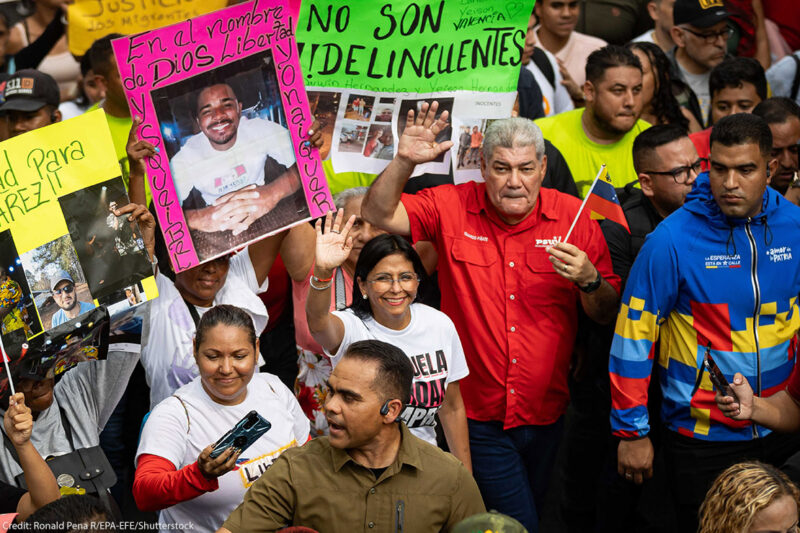
Behind the dense legal jargon and the high-level constitutional debates are the human lives profoundly impacted by these policies. Among those deported to CECOT is Andry Hernández Romero, a Venezuelan makeup artist and LGBTQ+ asylum seeker.
Hernández Romero fled his home country specifically to escape persecution based on his sexual orientation. He entered the United States lawfully in August 2024, only to be detained by immigration authorities and ultimately subjected to the mass deportation of March 2025. In a translated interview with The Bulwark, Hernández Romero described the moment of his arrival at the infamous prison: “My first impression was: ‘What am I doing here? Why am I here?’ More than worrying, I was scared, because my fellow companions said that anyone who entered there would never come out.”
His case underscores the catastrophic failure of a system that denies individual review. While he was detained in CECOT, his legitimate asylum appeal was denied and his immigration case dismissed—processes that occurred without his knowledge or his ability to advocate for his own safety. His story serves as a harrowing reminder that the "Alien Enemies Act" is not just a policy tool; it is a mechanism that has effectively disappeared individuals into one of the world’s most dangerous prison environments.
Implications for the Future of American Democracy
The proceedings in the D.C. Circuit Court, held on September 25 and 29, 2026, represent a critical test for the American judiciary. If the court allows the administration’s actions to go unpunished, it effectively signals that executive officials can ignore federal orders with impunity whenever they find them inconvenient.

Lee Gelernt, Deputy Director of the ACLU’s Immigrants’ Rights Project, summarized the stakes clearly during the hearings: “The government’s trying to shut down the inquiry by the district court to find out who made the decisions to defy the order. We are hoping the court of appeals rules in our favor.”
Gelernt further emphasized the absurdity of the administration’s legal position, noting that while the government admits it rushed the men out without due process, it simultaneously argues that the victims have no right to seek redress because they are no longer on U.S. soil. “They concede we rushed them out, gave them no due process,” Gelernt argued. “It can’t be the end of the game. That would be such an untenable rule for this court to adopt.”
Conclusion: The Path Ahead
The outcome of J.G.G. v. Trump will reverberate far beyond the specific case of the 100 Venezuelan men. It will determine the extent to which the judiciary can exercise oversight over an executive branch that increasingly seeks to operate outside the constraints of traditional legal norms.
As the D.C. Circuit deliberates on the scope of the district court’s contempt inquiry and the rights of the deported plaintiffs to return and face their day in court, the fundamental question remains: Will the rule of law prevail, or will the executive branch succeed in establishing a precedent that renders the judiciary powerless in the face of presidential directives? For now, the eyes of the legal and human rights communities remain fixed on Washington, waiting to see if the record will show that accountability was finally upheld.

 Raul Delapena Setiawan
 Pevita Pearce






