

 Pevita Pearce
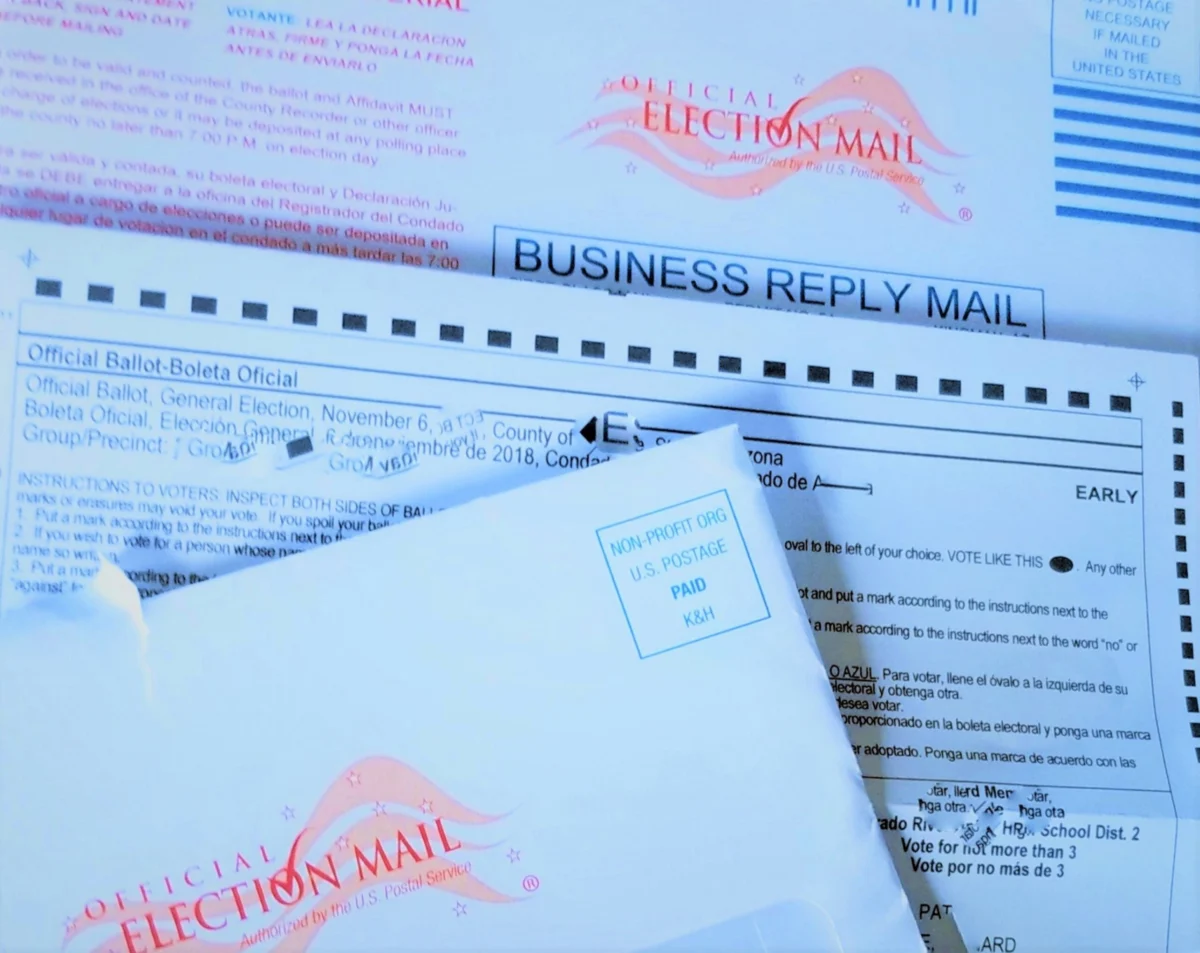
In a significant judicial victory for voting rights advocates, the Supreme Court of the United States has denied the Trump Administration’s emergency request to enforce sweeping new regulations governing the delivery of mail-in ballots. The ruling effectively halts a controversial initiative that critics argued would have created systemic chaos, led to the mass disenfranchisement of voters, and fundamentally undermined the reliability of the upcoming midterm elections.
By refusing to stay a preliminary injunction issued by the U.S. District Court for the District of Columbia, the Supreme Court has ensured that the U.S. Postal Service (USPS) must continue its standard operations for this election cycle. The Court’s decision, predicated on the determination that the government was unlikely to prevail on the legal merits of its case, preserves the status quo at a critical juncture when millions of Americans have already begun casting their ballots.
The Core of the Conflict: Ballot Regulations and Voter Access
The legal battle centered on a set of administrative mandates imposed by the Trump Administration that sought to alter how the USPS processed mail-in ballots. Under the proposed rules, states would have been forced to provide sensitive voter information through a centralized federal portal, while simultaneously adhering to rigid, new requirements regarding the physical composition and processing of ballot envelopes.
The implications for voters were stark. Under these mandates, any ballot that failed to meet the new, non-standardized envelope specifications would have been subject to summary rejection. Civil rights organizations—including the Lawyers’ Committee for Civil Rights Under Law, Common Cause, and Black Voters Matter—argued that these regulations were not mere administrative updates, but rather a calculated effort to create technical hurdles that would disqualify valid votes, particularly in marginalized communities where mail-in voting is a primary vehicle for participation.
By blocking these regulations, the judiciary has shielded the electoral process from last-minute changes that could have resulted in thousands of ballots being discarded due to minor technical non-compliance, effectively silencing the voices of countless citizens.
A Chronology of Legal Challenges
The Supreme Court’s decision is the culmination of a high-stakes, multi-front legal campaign. The roadmap to this victory involves a series of strategic filings across various federal jurisdictions.
The District of Columbia Injunction
The foundational victory occurred when the U.S. District Court for the District of Columbia issued a sweeping preliminary injunction in the case of NAACP v. Trump. This court recognized the irreparable harm that would befall the electoral process if the administration were permitted to unilaterally impose these restrictions on the USPS. The court’s decision to block the rules nationwide provided the bedrock upon which the Supreme Court’s recent denial of a stay was built.
The Massachusetts Precedent
Prior to the D.C. ruling, voting rights advocates secured a significant win in federal court in Massachusetts. That case specifically targeted the same "ballot-mail scheme" the administration sought to implement. By establishing that the regulations were legally indefensible in a regional context, advocates were able to create a snowball effect, eventually leading to the broader, nationwide injunction that now covers all states through the D.C. court’s intervention.
The Supreme Court’s Intervention
With the midterm elections imminent, the Trump Administration sought an emergency stay from the Supreme Court, hoping to bypass the lower court injunctions. The Court’s swift denial signals a judicial reluctance to permit fundamental changes to election administration mere weeks before ballots are counted. The Court’s assessment—that the government’s legal argument was fundamentally flawed—serves as a stern rebuke of the executive branch’s attempts to use administrative rulemaking as a tool for political maneuvering.
Supporting Data and the Pattern of Litigation
The litigation regarding mail-in ballots is not an isolated incident but rather part of a broader, sustained effort by the current administration to exert federal control over state election administration.
Data from recent legal filings indicates a consistent pattern: federal courts have repeatedly intervened to block Department of Justice initiatives aimed at gathering sensitive state voter data. Analysts point out that this is not merely a bureaucratic disagreement but a systemic tension between federal oversight and the decentralized nature of American election law.
The Lawyers’ Committee for Civil Rights Under Law has noted that this "long losing streak" for the administration highlights a disconnect between executive policy and constitutional protections. The persistent failure of these initiatives in court serves as evidence that current election norms—which have functioned reliably for decades—are robust and that unilateral attempts to "upend" them are legally untenable.
Official Responses and Perspectives
Following the Supreme Court’s decision, Damon Hewitt, president and executive director of the Lawyers’ Committee for Civil Rights Under Law, addressed the public and the legal community, framing the ruling as a victory for the democratic process.
"Tonight, at least for now, one avenue for sowing election chaos has been blocked," Hewitt stated. He emphasized that the ruling was not an end in itself but a necessary defensive action. "The Supreme Court has joined lower federal courts, which have consistently rejected the Trump Administration’s efforts to allow these last-minute Postal Service restrictions to take effect."
Hewitt also highlighted the scope of the victory: "Our injunction blocks the same dangerous ballot-mail scheme as in Massachusetts, while going further and halting USPS from implementing or enforcing the final rule nationwide and past 2026."
Despite the victory, the organization remains in a state of high alert. Hewitt urged voters not to become complacent. "We encourage Americans to check their voter registration status and to vote early," he advised. "All voters planning to vote by mail should mail in your ballot as soon as possible, track your ballot online where available, and contact the nonpartisan Election Protection hotline at 866-OUR-VOTE."
Implications for the Midterm Elections and Beyond
The immediate impact of this ruling is the preservation of stability. With voting already underway in several states, the removal of the threat of new USPS regulations provides a sense of certainty to local election officials. Had the restrictions remained in place, thousands of poll workers and election administrators would have been tasked with interpreting new, complex rules while simultaneously managing the standard high volume of mail-in ballots.
Safeguarding the Franchise
The primary implication is the protection of the individual franchise. In a polarized political environment, any regulation that adds friction to the voting process—especially one that targets the physical envelope or mailing procedure—risks disproportionately impacting elderly, disabled, and low-income voters who rely heavily on the mail. By striking down these rules, the Court has affirmed that administrative convenience cannot take precedence over the fundamental right to vote.
The Role of the Postal Service
The ruling also serves as a reaffirmation of the U.S. Postal Service’s role as a neutral arbiter in the delivery of democracy. By blocking the administration’s attempt to repurpose the USPS as a tool for electoral filtering, the courts have upheld the institution’s primary mandate: the efficient and impartial delivery of the mail.
Looking Toward 2026
While the immediate threat to the midterms has been neutralized, the broader legal implications extend into 2026 and beyond. The injunctions secured by civil rights groups have established a nationwide legal standard that will make it significantly more difficult for future administrations to impose similar restrictions. The legal precedents set in NAACP v. Trump and the associated Massachusetts litigation have created a blueprint for defending election integrity through proactive, collaborative legal advocacy.
Conclusion: A Vigilant Electorate
The Supreme Court’s refusal to permit the Trump Administration’s mail-in ballot restrictions is a milestone in the protection of civil rights. However, as the Lawyers’ Committee for Civil Rights Under Law notes, the fight for electoral access is ongoing.
The nonpartisan nature of the defense—led by organizations founded on the principles of the Civil Rights Movement—highlights the enduring necessity of legal oversight in protecting the democratic process. As the midterms progress, the focus now shifts to the voters themselves. By utilizing established tracking tools and nonpartisan resources like the Election Protection hotline, voters can ensure their participation remains secure, despite the attempts by political actors to inject uncertainty into the system.
Ultimately, the integrity of the election rests not only on the rulings of the highest court but on the active, informed participation of the American people. As the nation prepares for the final count, the resilience of the electoral system remains the primary safeguard against any attempt to curtail the voices of the citizenry.
About the Lawyers’ Committee for Civil Rights Under Law
The Lawyers’ Committee for Civil Rights Under Law is a nonpartisan, nonprofit organization, formed in 1963 at the request of President John F. Kennedy to mobilize the nation’s leading lawyers as agents for change in the Civil Rights Movement. Today, the organization remains at the forefront of the fight for racial justice, utilizing legal advocacy to ensure that Black people and other people of color have the voice, opportunity, and power to realize the promises of American democracy. Through litigation, public policy advocacy, and the mobilization of pro bono resources, the Committee continues to serve as a vital protector of civil rights in the 21st century.

 Raul Delapena Setiawan
 Reynand Wu






