



 Suro Senen
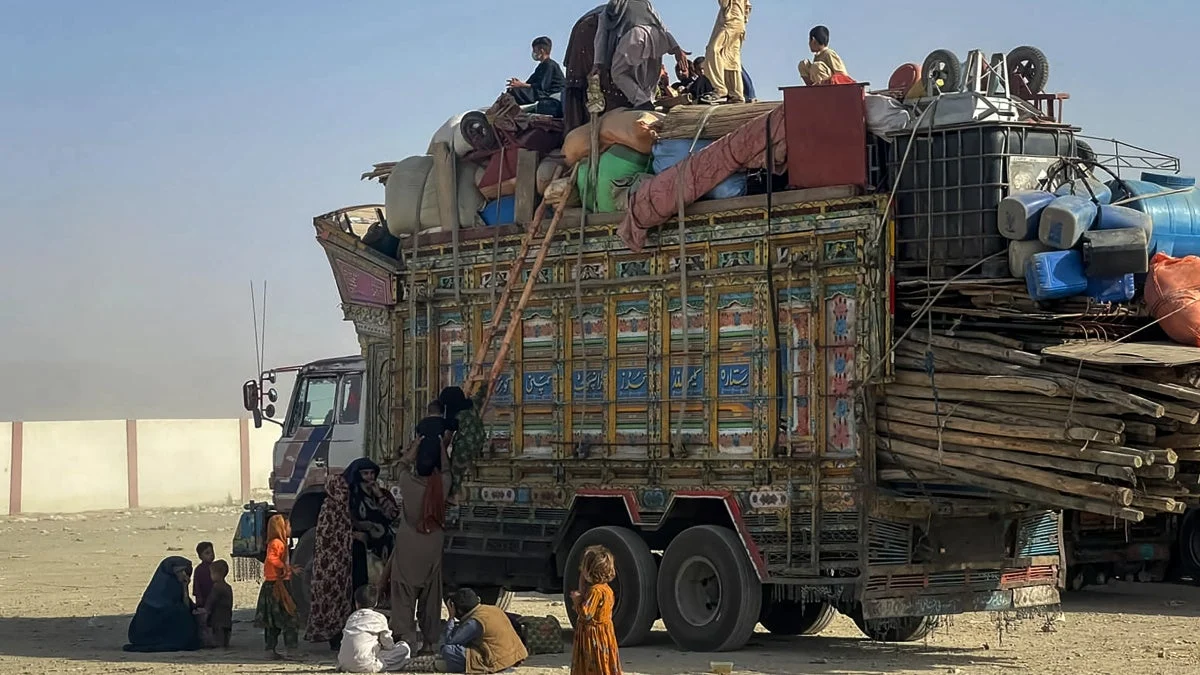
The French government has officially confirmed the commencement of "technical dialogues" with Taliban authorities regarding the forced return of Afghan nationals residing in France. This policy pivot marks a significant and contentious departure from previous diplomatic stances, sparking immediate alarm among human rights organizations and legal experts. While French officials frame these discussions as a narrow, security-focused initiative, critics argue that such engagement legitimizes a regime currently accused of crimes against humanity, while simultaneously endangering the lives of those slated for repatriation.
The Core Conflict: Security vs. Humanitarian Obligation
At the heart of the controversy is a fundamental clash between French national security interests and the country’s obligations under international human rights law. The French Ministry of Foreign Affairs has justified the talks by stating their intent is "to facilitate the removal of Afghan nationals who are illegally on the national territory and who represent a national security risk."
However, the international community has long operated on the principle of non-refoulement—the practice of not forcing refugees or asylum seekers to return to a country where they are liable to face persecution. By entering into a dialogue with the Taliban, an entity that is not internationally recognized as the legitimate government of Afghanistan, France is traversing a complex diplomatic minefield. The lack of transparency regarding the "narrow focus" of these talks has led to widespread speculation that this could be the first step toward broader, mass deportations of Afghans who have fled the Taliban’s oppressive rule.
Chronology of Escalation: From Brussels to Paris
The movement toward direct engagement with the Taliban regarding migration is not an isolated French phenomenon but part of a shifting European strategy.
- August 2021: The Taliban seize control of Kabul, leading to a mass exodus of Afghans fearing systemic retribution and the erasure of fundamental rights.
- 2025: The International Criminal Court (ICC) issues arrest warrants for Taliban Supreme Leader Haibatullah Akhundzada and other senior officials, citing crimes against humanity, specifically the systemic persecution of women and girls.
- June 2026: A Taliban delegation travels to Brussels to engage in discussions with European Union officials. This meeting signals a tacit shift in EU policy, prioritizing migration control and the return of rejected asylum seekers over the diplomatic isolation of the Taliban.
- Late 2026: Reports emerge that Germany has deported 263 Afghan nationals since the previous year, setting a precedent that other European nations are now emboldened to follow.
- October 2026: The French government confirms it has opened its own formal channel of "technical dialogue" with Taliban authorities to facilitate the removal of individuals identified as security risks.
Supporting Data: The Reality on the Ground in Afghanistan
The decision to open channels for return coincides with a period of unprecedented human rights decline within Afghanistan. Since their return to power, the Taliban have systematically dismantled the legal and social protections afforded to the Afghan populace, with women and girls bearing the brunt of these changes.
The Systematic Oppression of Women
The Taliban’s legislative record is one of total exclusion. Women have been barred from secondary and higher education, restricted from most employment sectors, and subjected to extreme limitations on their freedom of movement and expression. These policies are not merely social customs; they are codified mechanisms of gender-based apartheid. The ICC’s recent arrest warrants highlight that this is not just a domestic policy failure but a crime against humanity.
Risks to Returnees
Data from humanitarian organizations and international monitoring bodies provide a grim picture for those returned to Afghanistan. Reports indicate that individuals who have been forcibly repatriated, particularly those with perceived ties to the previous government or those who have lived in the West, face high risks of detention, interrogation, and torture by Taliban security forces. The "technical dialogue" currently being proposed by France lacks any mechanism for independent monitoring, leaving returnees vulnerable to the arbitrary violence that has become the hallmark of Taliban governance.
Official Responses and Diplomatic Fragility
The French government’s stance remains one of cautious, compartmentalized engagement. Ministry officials emphasize that the dialogue is strictly "technical," intended to streamline the logistics of deporting individuals who pose a tangible security threat. By framing the discourse as a matter of internal security, the government attempts to bypass the broader ethical concerns surrounding the recognition of Taliban authority.
However, international human rights groups have been scathing in their response. Organizations such as Human Rights Watch and various refugee advocacy groups have warned that any engagement with the Taliban creates a "normalization effect." By treating the Taliban as a functional state partner capable of receiving deportees, European governments are effectively providing a veneer of legitimacy to a regime that has been universally condemned for its human rights record.
Furthermore, the French administration has yet to provide public guarantees regarding the safety of vulnerable groups, such as women, ethnic minorities, and former members of the Afghan civil society, who are particularly at risk if returned. The absence of a clear framework for monitoring the welfare of these individuals after they arrive in Kabul suggests that the priority is the removal of the individual from French soil, rather than their long-term safety.
The Broader Implications: A Dangerous Precedent
The implications of the French-Taliban dialogue extend far beyond the borders of France.
Eroding International Norms
When stable democracies like France and Germany negotiate return deals with a group accused of crimes against humanity, the international consensus regarding the protection of refugees is fundamentally weakened. It signals to other nations that human rights concerns can be set aside in favor of migration management, potentially leading to a global "race to the bottom" in terms of asylum protections.
The Myth of "Technical" Dialogue
The French government’s assertion that the talks are purely "technical" is viewed by many as a diplomatic euphemism. There is no such thing as a "technical" interaction with a regime that does not adhere to the rule of law. Any agreement involving the transfer of people back to a territory controlled by the Taliban requires a level of trust and coordination that is inherently political. By engaging in these discussions, France is essentially conducting a "de facto" recognition of the Taliban’s administrative capacity.
The Risk of Domestic Political Pressure
It is impossible to view these developments in a vacuum. Across Europe, the rise of nationalist and anti-immigration sentiment has put significant pressure on centrist governments to deliver on promises of lower immigration and higher rates of deportation. The decision to prioritize "returns" to Afghanistan appears to be a response to this domestic political climate, even at the cost of sacrificing the country’s long-standing reputation as a bastion of human rights.
Conclusion: A Call for Re-evaluation
The path France is currently treading is fraught with moral and legal hazards. The government’s decision to enter into a dialogue with the Taliban for the purpose of repatriating Afghan nationals is not only a failure of humanitarian leadership but a potentially catastrophic policy for those forced to return.
As long as the Taliban continue their campaign of systemic oppression, persecution of women, and the suppression of basic freedoms, no country can claim to be "safely" returning refugees to Afghanistan. France must immediately suspend these deportation plans and pivot its strategy toward providing safe, legal pathways for those who cannot return. The current trajectory risks placing France on the wrong side of history, complicit in the suffering of those it was once committed to protecting. The international community, and the French public, must demand that human rights not be sacrificed at the altar of political convenience. A nation’s true strength is measured not by how effectively it can clear its streets of migrants, but by how steadfastly it upholds the values of humanity, even when it is difficult to do so.


 Evan Lee Salim

 Nila Kartika Wati