


 Asep Darmawan
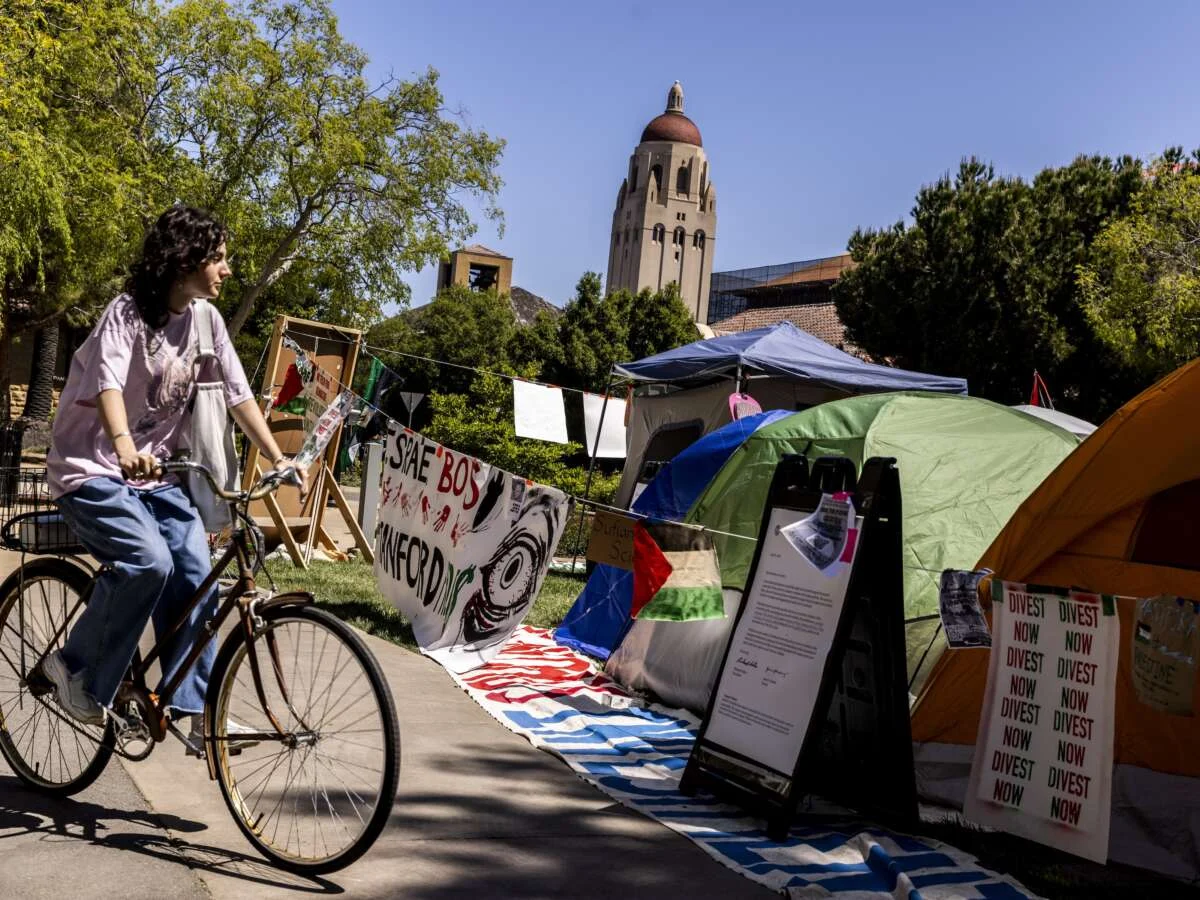
In a landmark conclusion to one of the most contentious legal battles in the history of American student activism, a California judge has dismissed all charges against a group of Stanford University students known as the "Stanford 11." These students were arrested in June 2024 following an occupation of the university president’s office, an act intended to protest the institution’s alleged complicity in Israel’s military actions in Gaza.
The dismissal, finalized in late September 2026, represents a significant setback for both the Stanford University administration and the Santa Clara County District Attorney’s Office, both of whom had pursued the case with unprecedented vigor. While the legal victory is being celebrated by free speech advocates and Palestinian solidarity movements, the case serves as a stark case study in the evolving tactics of institutional suppression and the politicization of campus discipline.
Main Facts: The Dismissal of the "Stanford 11" Case
On September 21, 2026, the California judicial system brought an end to the prosecution of the Stanford 11. The students had initially faced severe felony charges, including conspiracy and burglary, which legal experts noted were significantly harsher than penalties typically levied against student protesters for similar acts of civil disobedience.
Beyond the dismissal of criminal charges, the court also drastically reduced the university’s requested restitution. Stanford had initially claimed damages ranging from $10,000 to as high as $700,000, citing damage to a doorframe, stains from fake blood, and repairs to a grandfather clock. The judge eventually settled on a total of approximately $52,000. This amount was promptly settled by an anonymous donor, effectively closing the financial chapter of the dispute.
The dismissal followed a series of legal embarrassments for the prosecution. These included a hung jury in February 2026 and the subsequent recusal of the entire Santa Clara County District Attorney’s Office. The case was eventually handed to California Attorney General Rob Bonta, whose office determined that continuing the prosecution did not serve the interests of justice.
Chronology: From White Plaza to the President’s Office
The events leading to the June 2024 occupation were not spontaneous but were the culmination of nearly a year of escalating tension between the student body and the university administration.
October 2023 – February 2024: The Sit-In to Stop Genocide
Immediately following the events of October 7, 2023, and the subsequent Israeli military campaign in Gaza, Stanford students established the "Sit-In to Stop Genocide" in White Plaza. This outdoor space, designated as a free speech zone, became a 24/7 encampment. For over 120 days—the longest sit-in in Stanford history—students held rallies, teach-ins, and community meals. Despite pressure from the administration to disperse, the encampment remained until February 2024, when the university entered into negotiations with the students.
April 2024: The People’s University for Palestine
Negotiations between the administration and the activists stalled in the spring. Students argued that the university was "bad-faith bargaining," refusing to offer transparency regarding its investment portfolio. In response, a second encampment, dubbed the "People’s University for Palestine," was established. This site operated as an alternative educational space, hosting speakers and film screenings, and garnering significant support from the broader Palo Alto community.
June 5, 2024: The Occupation and Arrests
On the morning of June 5, the situation reached a breaking point. Frustrated by the Board of Trustees’ refusal to consider divestment despite overwhelming student government support, a group of activists entered the office of President Richard Saller. The occupation lasted only hours before law enforcement breached the building. In a move that drew condemnation from press freedom groups, the police also arrested a Stanford Daily reporter who was on-site to cover the event.
2025 – 2026: Trial and Recusal
The legal proceedings were marked by intensity. District Attorney Jeff Rosen pursued felony conspiracy charges, a move many viewed as an attempt to "make an example" of the activists. However, the prosecution began to unravel in February 2026 when a jury failed to reach a unanimous verdict. Shortly thereafter, it was revealed that Rosen had used the ongoing prosecution in his reelection campaign materials, framing the case as a personal crusade against antisemitism. This led to a court-ordered recusal of his office, eventually leading to the dismissal by the state.
Supporting Data: The Ethics of Investment and International Law
The Stanford 11 argued that their actions were a "last resort" necessitated by the university’s refusal to adhere to its own ethical investment guidelines.
Institutional Policy vs. Practice
Stanford’s "Statement on Investment Responsibility" explicitly notes that the university may dissociate from investments in companies involved in "abhorrent and ethically unjustifiable" actions, specifically citing genocide and apartheid as examples.
In April 2024, the undergraduate and graduate student governments passed divestment resolutions with 73% and 75% approval, respectively. Despite this clear mandate from the campus community, the Board of Trustees issued a statement in October 2024 declining to take action. The Board’s response was criticized for using "corporate-speak" to avoid addressing the specific legal definitions of genocide and apartheid currently being debated in international courts.
The International Legal Context
The students’ defense was bolstered by several international developments:
- The ICJ Ruling: The International Court of Justice (ICJ) ruled that Palestinians have a plausible right to protection from acts of genocide and ordered Israel to prevent such acts.
- The UN Special Rapporteur Report: In July 2025, UN Special Rapporteur Francesca Albanese released a report titled "Economy of Occupation," which detailed how certain corporate entities have seen market gains—sometimes exceeding 200%—linked to the conflict. Albanese argued that "for some, genocide is profitable," a sentiment that mirrored the students’ claims that Stanford’s endowment was benefiting from the violence.
Official Responses and Comparative Discipline
The severity of the response to the Stanford 11 stands in stark contrast to how the university has handled similar occupations in the past, suggesting a shift in institutional tolerance for Pro-Palestine speech.
Historical Precedents
- 1989 Occupation: In 1989, students occupied the president’s office to protest the lack of ethnic studies and racist incidents on campus. The university’s response was relatively lenient, requiring community service rather than pursuing felony charges.
- 2015 MLK Day Protest: When 68 students blocked the San Mateo-Hayward Bridge to protest police brutality, the university again opted for educational sanctions and community service.
The District Attorney’s Role
The prosecution of the Stanford 11 was unique due to the involvement of DA Jeff Rosen. The court’s decision to recuse his office was a rare rebuke. Judge Kelley Paul noted that while a DA has free speech rights, using an active litigation involving students to fundraise for a political campaign created a conflict of interest that undermined the integrity of the judicial process.
Stanford University, for its part, maintained that the severity of the charges was justified by the alleged property damage. However, critics pointed out that the university’s shifting estimates of that damage—from $10,000 to $700,000—appeared more like a punitive strategy than a factual accounting of loss.
Implications: The Future of Campus Activism
The dismissal of the charges against the Stanford 11 has profound implications for the landscape of American higher education and civil liberties.
The Chilling Effect and "Lawfare"
The use of felony conspiracy charges against student protesters represents a tactic often described as "lawfare"—the use of legal systems to intimidate and financially drain political opponents. Although the charges were ultimately dropped, the Stanford 11 spent two years in legal limbo, facing the potential for prison time and permanent criminal records. The "cost" of the protest included lost educational opportunities, mental health struggles, and professional setbacks.
The Legitimacy of the University
The case has sparked a crisis of legitimacy for Stanford’s administration. By refusing to engage with the ethical merits of the divestment petition and instead opting for maximum criminal prosecution, the university has been accused of abandoning its mission as a center for "thoughtful debate." The contrast between the university’s library exhibition celebrating the 1989 occupation and its actual prosecution of the 2024 occupation highlights a perceived hypocrisy in how institutions commodify past activism while suppressing current movements.
A New Era of Student Organizing
The resolution of this case is unlikely to signal an end to student protests. If anything, the legal victory has emboldened activists who see the dismissal as proof that institutional repression can be defeated through solidarity and rigorous legal defense. As the new academic year begins, the focus remains on the core issue that started the movement: the transparency and ethics of university endowments in an era of global conflict.
The story of the Stanford 11 is no longer just about a broken door or a grandfather clock; it is a landmark chapter in the struggle over the role of the American university in global human rights crises. While the court has cleared the students of their charges, the jury is still out on the ethical standing of the institutions they protested.


 Jia Lissa

 Suro Senen