


 Dwi Wanna
WASHINGTON, D.C. — In a landmark legal challenge that underscores a deepening constitutional crisis, the National Iranian American Council (NIAC) filed a comprehensive federal lawsuit on Thursday against President Donald Trump. The complaint seeks to immediately halt what the organization describes as an unconstitutional and catastrophic war against Iran—a conflict the administration has continued to wage despite congressional opposition and a nominal, though largely ignored, ceasefire.
The lawsuit, filed in the U.S. District Court for the District of Columbia, represents a "last recourse" for Iranian Americans who argue that the executive branch has bypassed the essential checks and balances of the U.S. Constitution. By seeking a declaratory judgment that the ongoing military campaign is an unauthorized war, NIAC aims to force the administration to terminate hostilities that have already claimed thousands of lives and destabilized the global economy.
The Main Facts: A Legal Challenge to Executive Overreach
The core of the NIAC’s complaint rests on Article I, Section 8 of the U.S. Constitution, which grants Congress the sole power to declare war. According to the filing, President Trump initiated and has sustained a large-scale military conflict without seeking or receiving such an authorization.
The lawsuit highlights a pattern of executive evasion. While the White House has characterized the conflict using euphemisms such as "limited military operations," "skirmishes," or "surgical strikes," NIAC argues that the scale of the violence—including the bombing of major metropolitan areas like Tehran—constitutes a state of war by any legal or historical definition.
"Billions have been taken out of our pockets to wage an illegal war that has no end in sight," stated Jamal Abdi, President of NIAC, during a press conference announcing the litigation. "We have explored every single recourse to enforce the Constitution, and yet the president has ignored acts of Congress and public opinion. Taking this to the courts is the only way left to uphold the rule of law."
The plaintiffs include eight specific Iranian Americans whose lives have been shattered by the conflict. Their testimonies serve as the emotional and legal "standing" for the case, detailing the deaths of family members, the destruction of ancestral homes, and the inability to evacuate vulnerable relatives due to the combination of active bombing and restrictive airline sanctions.
Chronology: The Road to an Undeclared War
The current conflict did not emerge in a vacuum, but rather through a rapid escalation that began in early 2026.
- February 2026: Following a series of maritime disputes in the Strait of Hormuz and escalating rhetoric regarding Iran’s nuclear program, the United States and Israel launched a coordinated aerial campaign. This marked the formal beginning of what NIAC identifies as the "War on Iran." Strikes targeted military installations, but quickly expanded to infrastructure near civilian centers.
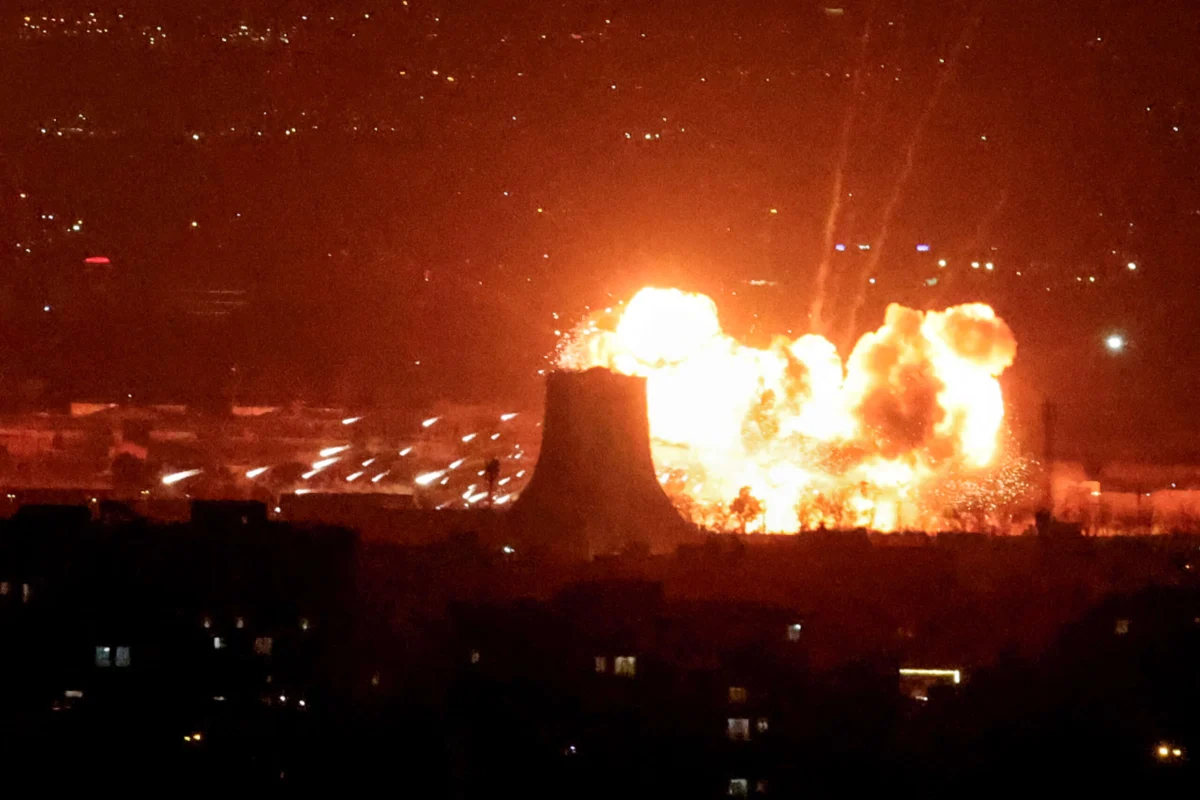
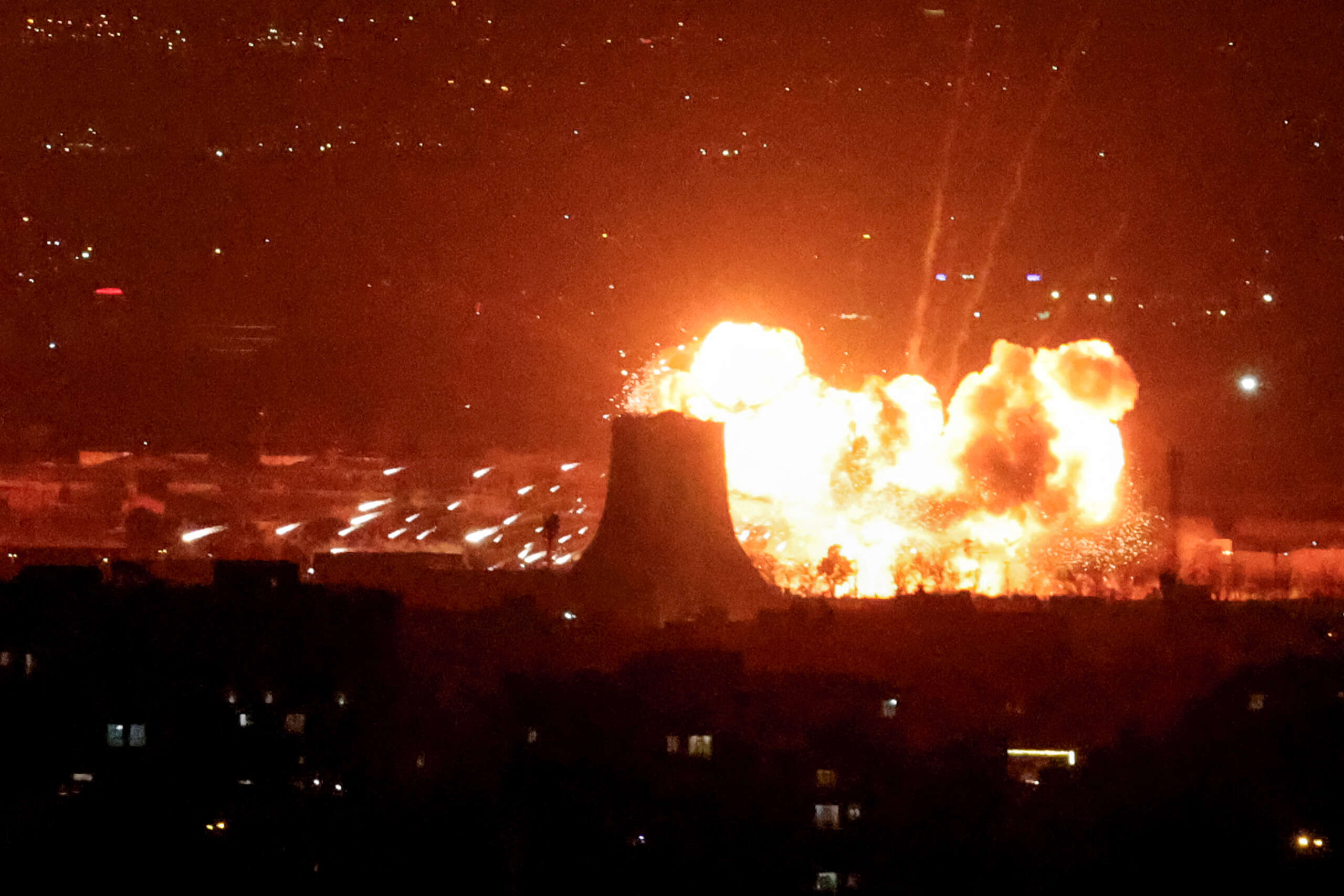
- March 7, 2026: A significant escalation occurred when strikes hit targets near the iconic Azadi Tower in Tehran, close to Mehrabad International Airport. Images of explosions lighting up the Tehran skyline became a symbol of the conflict’s intensity.
- April 2026: Under intense international pressure, the Trump administration announced a "ceasefire." However, NIAC and international observers note that this ceasefire was never fully realized. The administration used the declaration as a political shield to argue that the "war" had ended, even as low-intensity bombing and special operations continued.
- May–August 2026: The administration leveraged the "ceasefire" status to bypass the War Powers Resolution, arguing that ongoing military actions were merely "defensive maneuvers" or "counter-terrorism" efforts not requiring congressional approval.
- September 2026: President Trump addressed the UN General Assembly, where he shifted his rhetoric from "peace-seeking" back to overt aggression, threatening to "annihilate" Iran. This speech served as the catalyst for NIAC’s decision to file the lawsuit, fearing a "catastrophic" new phase of the war.
Supporting Data: The Human and Economic Toll
The NIAC lawsuit provides a grim statistical accounting of the conflict’s first seven months. The data suggests a scale of violence that far exceeds the "skirmishes" described by the Pentagon.
Casualty Figures:
- Iranian Fatalities: At least 3,600 Iranians have been confirmed killed. This includes a high percentage of civilians caught in the crossfire of urban strikes.
- U.S. Servicemembers: At least 18 U.S. servicemembers have lost their lives in the conflict. While small compared to previous Middle Eastern wars, these deaths occurred in a conflict that Congress never officially authorized.
Personal Affidavits:
The lawsuit includes harrowing accounts from NIAC members. One member detailed the plight of their grandmother in Tehran, who is dependent on an oxygen machine. Due to the destruction of local power grids and the impossibility of evacuation under fire, she remains trapped in a combat zone. Another member’s second cousin was killed in a missile strike that the administration categorized as a "precision hit on a command node," but which plaintiffs argue struck a residential area.
Economic Impact:
Beyond the human cost, the lawsuit points to the "billions of dollars" diverted from domestic priorities to fund the military operations. The conflict has caused volatility in global energy markets, contributing to inflationary pressures in the United States and abroad. The NIAC argues that the American public is being forced to subsidize a war they do not support and which their elected representatives have voted to end.
Official Responses: The Administration’s Defense
The White House has consistently pushed back against the label of "war." In legal briefings and public statements, the Trump administration has maintained that its actions are protected under Article II of the Constitution, which designates the President as Commander-in-Chief.
During his recent speech at the UN General Assembly, President Trump’s rhetoric was paradoxical. While he used the word "war" to describe the current state of affairs, he simultaneously argued that the U.S. was acting to "prevent a larger catastrophe" and "defend regional allies." His threat to "annihilate" Iran was framed as a deterrent, though critics and NIAC lawyers argue it serves as evidence of genocidal intent or, at the very least, an admission of total war.
"We expect the administration will fight this," Abdi told Truthout. "They will try to get it thrown out on ‘political question’ grounds, arguing that the courts have no business in foreign policy. But when a president ignores a formal declaration from Congress to end a war, it is no longer just a policy dispute; it is a constitutional breakdown."
Congressional response has been fractured. While a bipartisan majority in both the House and Senate passed a War Powers Resolution earlier this year demanding an end to hostilities, the administration’s refusal to comply has left lawmakers with few options other than withholding funding—a move that remains politically fraught.
Implications: The Future of War Powers and the Iranian-American Community
The outcome of NIAC v. Trump could have profound implications for the future of American democracy and global stability.
1. Legal Precedent:
If the court rules in favor of NIAC, it would represent a historic reassertion of the War Powers Act of 1973. It would signal that the judiciary is willing to step in when the executive branch operates in a "legal grey area" to bypass Congress. Conversely, a dismissal would essentially grant the presidency a "blank check" to engage in unilateral military action as long as they avoid the specific word "war" in formal legal filings.
2. Humanitarian Crisis:
The lawsuit warns of a "human catastrophe" if the courts do not intervene. With "catastrophic options" reportedly on the table—including potential strikes on nuclear facilities or broader infrastructure—the death toll could spiral from the thousands into the hundreds of thousands.
3. Domestic Impact:
For the Iranian-American community, the war has created a climate of fear and "limbo." The lawsuit highlights how the war affects the rights of U.S. citizens to associate with and support their families abroad. The "genocidal threats" mentioned in the complaint have also contributed to a rise in domestic discrimination and psychological trauma among the diaspora.
4. Geopolitical Stability:
The NIAC argues that the illegal nature of the war has undermined U.S. credibility and fueled regional instability. By operating outside of international and domestic law, the U.S. risks a total collapse of the rules-based international order, potentially drawing in other regional powers and escalating the conflict into a global confrontation.
As the case moves toward a preliminary hearing, the eyes of the world are on the D.C. District Court. The question at hand is not merely the fate of the war in Iran, but whether the U.S. Constitution’s mandate on war and peace still holds weight in an era of unchecked executive power.
"We can’t live in this state of limbo every time the president decides he wants to unilaterally start a war," Abdi concluded. "This is about this war, but it’s also about the next one. We are filing this to ensure that ‘We the People’ still have a say in when and where our country goes to battle."


 Nana
 Ammar Sabilarrohman






