



 Raul Delapena Setiawan
With the midterm elections now just one week away, the American electoral landscape is bracing for a transformation that could redefine how citizens express their preferences and how winners are declared. At the heart of this shift is Ranked Choice Voting (RCV), a system gaining significant momentum across the country. As voters prepare to head to the polls, RCV is moving from a niche reform to a national focal point, with high-stakes races in Alaska and Maine poised to potentially determine the balance of power in Congress.
Beyond these federal contests, RCV is being implemented across 14 cities and counties, while voters in several jurisdictions will decide whether to adopt the system for themselves. This article provides a comprehensive analysis of the RCV landscape, the mechanics of the system, and what the upcoming results could signal for the future of American governance.
Main Facts: What is Ranked Choice Voting?
Ranked Choice Voting is an electoral system that allows voters to rank candidates in order of preference rather than selecting just one. If a candidate receives a majority of first-choice votes, they win immediately. However, if no candidate secures a majority, the candidate with the fewest votes is eliminated, and the votes cast for that candidate are redistributed to those voters’ next-choice candidates. This process continues until a candidate achieves a majority.
The core objective of RCV is to eliminate the "spoiler effect," ensure that winners have broader support, and reduce the negative campaigning often incentivized by traditional plurality voting systems. With millions of voters interacting with RCV ballots this cycle, the system is no longer a theoretical exercise—it is a functional component of modern American democracy.
Chronology: The Evolution of the 2026 Midterm RCV Landscape
The lead-up to this year’s midterms has seen a steady build-up of RCV adoption and preparation.
- Early 2026: Election administrators across the U.S. began public education campaigns, specifically in Alaska and Maine, to familiarize voters with the nuance of ranking candidates.
- Summer 2026: Grassroots organizations pushed for ballot measures in major cities, including Honolulu, Irvine, and Longmont, successfully clearing the hurdles to get RCV on the November ballot.
- September 2026: Multnomah County, Oregon, finalized its preparations for its inaugural RCV election, marking a significant milestone for the Pacific Northwest.
- One Week Out: National attention has converged on the "RCV hotspots," with political analysts monitoring whether the system will lead to faster consensus or prolonged tabulations in tight races.
Supporting Data: Where RCV is Shaping the Map
The Alaska Crucible
Alaska remains the most high-profile theater for RCV. Voters in the Last Frontier are utilizing the system for a wide array of offices, including the U.S. Senate, the U.S. House of Representatives, the governorship, and various state legislative seats. Furthermore, Alaskans are faced with a pivotal ballot measure regarding the maintenance of their current election system. FairVote’s recent analysis suggests that the Alaska model has fundamentally changed the incentives for candidates, forcing them to appeal to a wider cross-section of the electorate rather than just their partisan base.
Maine and Beyond
Maine, a pioneer in RCV adoption, continues to lead by example. On November 3, Maine voters will again utilize the system in critical contests. Simultaneously, 12 cities and two counties across the nation are implementing RCV. Notably, Multnomah County, Oregon, will join the ranks of RCV jurisdictions for the first time, signaling a growing trend of adoption in urban centers.
The Ballot Measure Surge
The appetite for electoral reform is clearly visible in the ballot box. Three major jurisdictions—Honolulu, Hawaii; Irvine, California; and Longmont, Colorado—are voting on whether to adopt RCV. Combined, these cities represent a population of approximately 1.3 million people. Historical data provides a strong argument for proponents: RCV has been successful in 34 of its last 35 ballot measures at the city level, suggesting a high degree of voter comfort with the system once it is presented on the ballot.
Official Responses and Voter Resources
As the election approaches, FairVote has released a suite of resources to ensure that voters are not intimidated by the transition to ranked ballots.
Educational Initiatives
For voters unfamiliar with the process, the learning curve is intentionally shallow. A 30-second instructional video has been disseminated to show how to mark a ballot, emphasizing that the process is as simple as ranking candidates from "1" to "N."
Addressing Recount Concerns
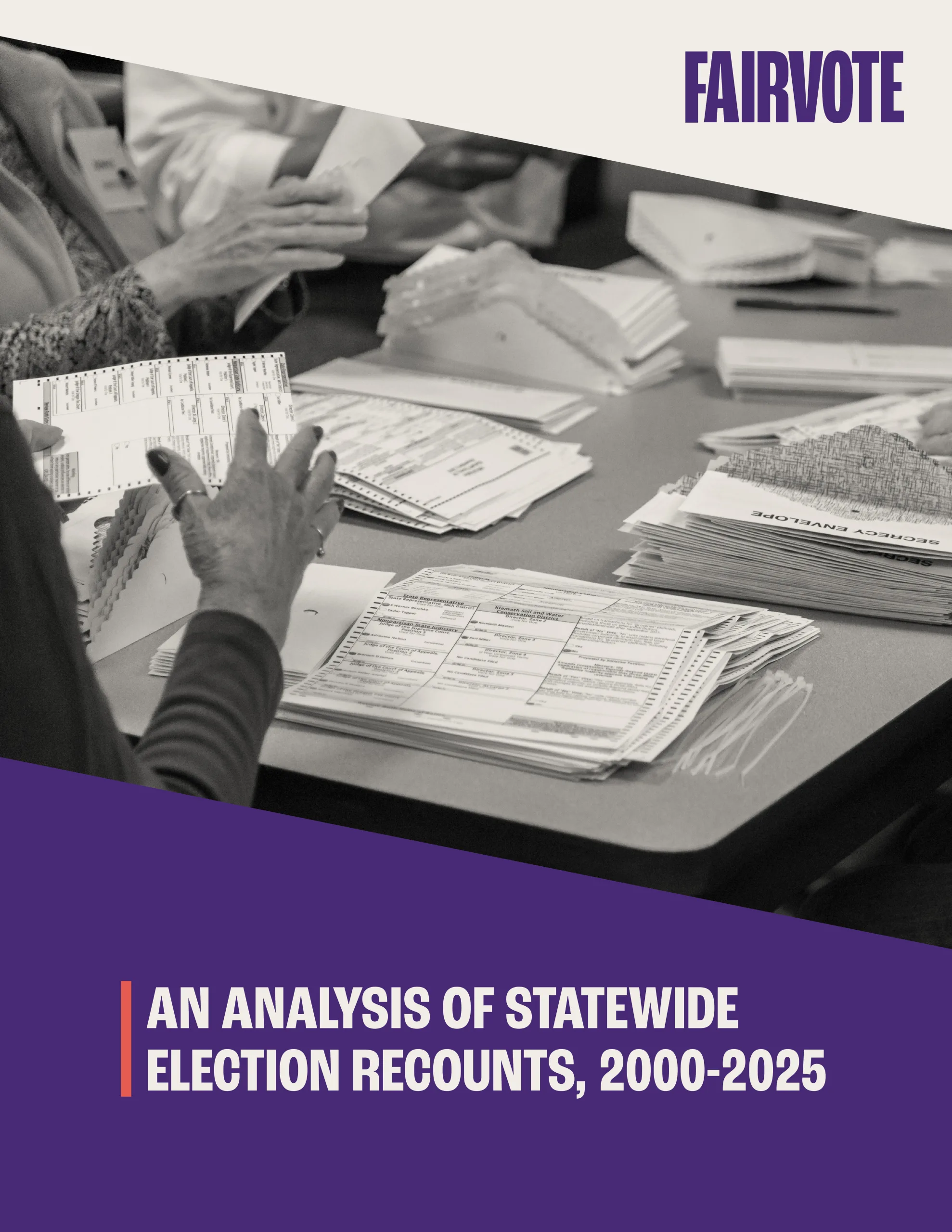
One of the most common questions regarding RCV involves the perceived complexity of the tabulation process and the potential for recounts. However, a landmark report released by FairVote—An Analysis of Statewide Election Recounts (2000-2025)—provides data-driven reassurance. The report concludes that recounts almost never change the outcomes of elections, regardless of the voting system used. This research serves as a vital counter-narrative to claims that RCV introduces instability or increases the likelihood of chaotic post-election challenges.
Implications: The Future of Competitive Elections
The broader implications of this year’s RCV usage extend far beyond the immediate electoral outcomes.
Reducing Polarization
Proponents of RCV argue that the system inherently favors candidates who build consensus. In a traditional "winner-take-all" primary, a candidate might win with a small, highly motivated base. Under RCV, a candidate often needs to appeal to the supporters of their opponents as a "second choice" to bridge the gap to 50%. This incentivizes civil discourse and coalition-building, which many political scientists view as an essential antidote to the current era of hyper-partisanship.
The "Competitive Race" Gap
FairVote has also published critical research regarding the lack of competitiveness in many American elections. A large portion of the American electorate currently resides in districts where the general election outcome is essentially decided during the primary. RCV, when paired with multi-member districts or open primaries, is often cited as a solution to this structural flaw, potentially bringing competitiveness back to districts that have long been considered "safe" for one party or the other.
The Long-Term Trajectory
If the 2026 midterms conclude with smooth tabulations and clear results, the momentum for RCV will likely accelerate. The success of the 34 out of 35 ballot measures at the local level serves as a "proof of concept" that citizens, when given the choice, prefer an electoral system that offers more options and greater accountability.
Conclusion: Democracy in Motion
As we look toward the final days of the 2026 midterms, the focus on RCV is a reminder that election systems are not static. They are dynamic tools of democracy that can be adjusted to better serve the needs of the electorate. Whether in the remote reaches of Alaska or the urban centers of California and Oregon, voters are signaling a desire for a system that reflects the nuance of their political preferences.
For those interested in the technical details, historical analysis, or simple "how-to" guides, organizations like FairVote, My Vote Counts Hawaii, and local advocacy groups in Irvine and Longmont provide the necessary data to navigate the ballot. As the results roll in, the nation will be watching not just who wins, but how the process of choosing those winners changes the very nature of American political competition.
The coming week is not merely an exercise in counting votes; it is a test of a new mechanism designed to make those votes count for more. Regardless of the outcome, the 2026 midterms will be remembered as the cycle where ranked choice voting truly entered the national mainstream.

 Sagoh
 Lina Irawan