

 Reynand Wu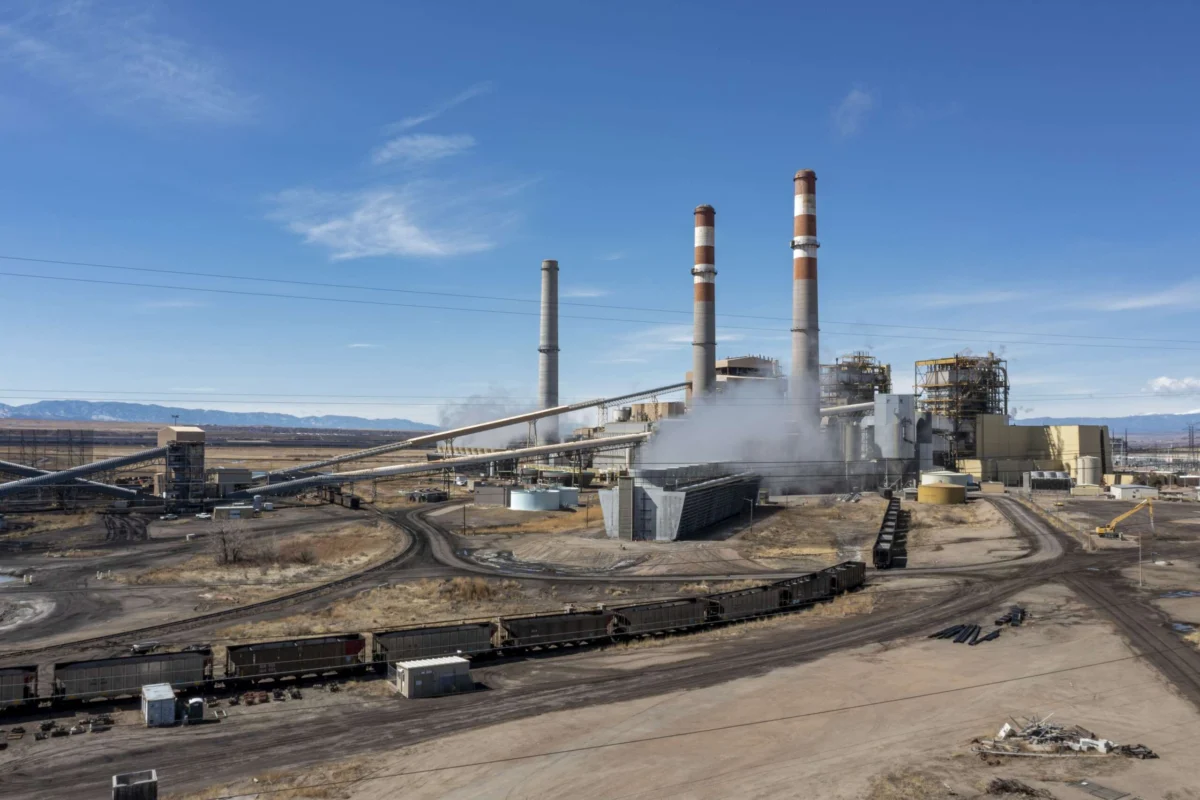
COLORADO SPRINGS, CO — For Jane Ard-Smith, a resident of Colorado Springs, the promise of a coal-free future was more than a political milestone; it was a matter of basic biological function. In April, she stood before the Colorado Senate’s Transportation & Energy Committee to deliver a plea for her health. Granting a request to keep the Ray D. Nixon Power Plant running three years past its 2029 retirement date, she argued, would exacerbate the respiratory ailments that have long dictated the quality of her life.
“Folks with breathing-related ailments like me—we looked forward to breathing a little bit easier,” Ard-Smith testified. “I’m concerned that the progress we’ve made as a state and as a city will be thwarted.”
Ard-Smith’s concern is reflected in a broader, state-wide trend. Across Colorado, the aggressive timeline to phase out coal-fired power is hitting a wall of federal intervention, infrastructure failure, and skyrocketing energy demand. Despite a 2019 state law requiring utilities to replace coal with cleaner alternatives like wind and solar, three major plants—located in Craig, Pueblo, and Colorado Springs—remain operational past their scheduled sunsets.
Main Facts: A State at a Crossroad
The current energy landscape in Colorado is defined by a clash between ambitious state climate goals and the pragmatic, often harsh, realities of grid reliability. Colorado’s landmark House Bill 19-1261 set the stage for a dramatic reduction in greenhouse gas emissions, targeting a 100% renewable energy grid by 2040. However, the path to that future has been obstructed by three primary facilities:
- The Craig Generating Station (Craig, CO): Located on the Western Slope, this facility was slated for a phased shutdown. However, emergency orders from the federal government have kept Unit 1 online.
- The Comanche Generating Station (Pueblo, CO): Operated by Xcel Energy, the state’s largest utility, Unit 2 of this plant has seen its retirement postponed to 2026 to compensate for mechanical failures in other parts of the system.
- The Ray D. Nixon Power Plant (Fountain, CO): A municipal utility plant that has now been granted a life extension until 2032 due to transmission grid constraints and the inability to bring new renewable projects online fast enough.
The consequences of these delays are multi-faceted. Economically, keeping older coal plants online is a massive drain; the Craig Generating Station alone costs approximately $85 million annually to maintain. Environmentally, these plants are the primary drivers of the "toxic haze" that obscures the views in Rocky Mountain National Park and contributes to Colorado’s failure to meet federal ozone standards.
Chronology: From Ambition to Obstruction
The timeline of Colorado’s energy pivot has shifted from a steady march toward renewables to a series of reactive maneuvers.
- 2019: Colorado passes HB 19-1261, mandating a transition away from coal. Utilities begin drafting Clean Energy Plans to shutter plants by 2029 or earlier.
- December 31, 2024: The original deadline for several coal units to cease operations. However, as the date approaches, regional grid operators express concern over "grid uncertainty" and potential blackouts.
- January 2025: Following the inauguration of the second Trump administration, the federal tone regarding fossil fuels shifts dramatically. The Department of Energy (DOE) begins issuing emergency orders to keep "at-risk" coal plants operational to meet national security and energy demand needs.
- December 2025 & March 2026: The DOE issues back-to-back 90-day emergency orders for the Craig Generating Station. Despite needing repairs, Unit 1 is forced to remain in a state of readiness.
- May 2026: Governor Jared Polis admits that the state’s 100% renewable goal for 2040 is no longer feasible due to these delays, though he maintains that an 80% reduction by 2030 remains the legal requirement.
- June 2026: Governor Polis signs HB 26-1226, a compromise bill that institutes a strict cap on greenhouse gas emissions for any coal plant operating past its planned retirement date. Meanwhile, the State Attorney General files a lawsuit against the federal government to challenge the emergency energy orders.
Supporting Data: The Cost of "Clean, Beautiful Coal"
The decision to prolong coal’s lifespan is not merely a logistical one; it carries measurable costs to public health and the economy.
The Epidemiological Toll
A 2019 study by Colorado State University (CSU) published in GeoHealth provided a grim forecast: the continued operation of coal plants is directly linked to increased mortality rates in surrounding communities. These areas are often populated by lower-income residents and people of color, who experience higher rates of emergency room visits for respiratory distress.
Dr. Sara Carpenter, a pediatrician and executive director of Healthy Air and Water Colorado, uses a biological analogy to describe the impact: “If we think about our three core functions, we have lungs that keep us breathing, a heart that keeps our blood circulating, and a brain that is the circuit board that runs the body. Air pollution, and coal in particular, are lethal to all three of those systems.”
In Southern California, a longitudinal study found that as air pollution decreased between 1994 and 2011, adolescent lung development significantly improved. Conversely, the "ozone season" in Colorado (May 31 to August 31) remains a period of high risk. Ground-level smog, formed when sunlight reacts with gases from coal plants and vehicles, routinely triggers air quality alerts that keep children and the elderly indoors.
Economic Realities
While coal was once the cheapest form of power, it has been surpassed by the plummeting costs of wind and solar. However, the "transition cost" is proving prohibitive for some. Colorado Springs Utilities recently implemented a 6.5% annual rate hike. Travas Deal, the utility’s CEO, testified that their customers—many of whom lead the state in applications for low-income energy assistance—cannot absorb the further costs required to accelerate transmission infrastructure for renewables.
Official Responses: A Jurisdictional Battle
The tension between state autonomy and federal oversight has reached a fever pitch. The Trump administration has doubled down on its support for coal, recently announcing $700 million in federal funding to build new coal plants in Alaska and West Virginia—the first such projects in over a decade.
The Federal Perspective
The White House argues that coal is essential for the "new economy." The administration points to the massive energy consumption of data centers required to fuel artificial intelligence (AI) as a reason to keep traditional power plants online. According to the DOE, the rapid expansion of AI infrastructure has created a "baseload demand" that intermittent renewables like wind and solar cannot yet reliably meet.
The State Perspective
Governor Polis has attempted to navigate a middle path. While signing extensions for the Nixon plant, he has also tightened the regulatory screws. “We will hit our 80% target by 2030,” Polis stated, emphasizing that the state would not let federal orders completely derail its climate trajectory.
The Colorado Attorney General’s office is more combative, alleging in its petition for review that the federal government’s emergency orders are an overreach that "threatens to unwind hard-fought progress toward a clean-energy economy." The state argues that the "emergency" cited by the DOE is a manufactured crisis resulting from a lack of investment in modern grid technology.
The Utility Perspective
For providers like Tri-State Generation and Transmission Association, the situation is a logistical nightmare. CEO Duane Highley noted that being forced to keep the Craig plant open requires passing on repair and maintenance costs to ratepayers for a facility they intended to abandon. “We are caught between a federal mandate to operate and a state mandate to decarbonize,” Highley remarked during a request for a rehearing on the DOE orders.
Implications: The Global and Local Fallout
The situation in Colorado is a microcosm of a global trend. A May report from Global Energy Monitor revealed that more than 70% of coal units slated for shutdown worldwide last year were kept online. This resurgence contributed to a 2.4% increase in U.S. planet-warming emissions last year, reversing two years of steady decline.
Environmental Justice
The implications for environmental justice are profound. The American Lung Association has given Rio Blanco County—near the Craig station—a “D” grade for air quality. Other regions, such as Moffat County, lack the monitoring equipment to even provide a grade, leaving residents in a data vacuum regarding the air they breathe.
The AI Shadow
The role of data centers cannot be overstated. As the U.S. races to lead in the AI sector, the energy required to cool and power massive server farms is giving "old, dirty power plants a new lease on life," according to the Frontier Group. This creates a paradox where the technology of the future is being powered by the fuels of the past.
Long-term Health
For pediatricians like Dr. Carpenter, the concern is the permanent "stunting" of a generation’s health. “Puberty has such big growth spurts and the lungs really increase in size,” she said. Delaying the closure of these plants, even by a few years, overlaps with critical developmental windows for thousands of Colorado children.
As Colorado continues to grapple with these competing pressures, the story of Jane Ard-Smith remains a poignant reminder of the stakes. The transition to clean energy is no longer just a matter of hitting targets on a spreadsheet; it is a race against time for the state’s air, its climate, and the literal breath of its citizens. For now, the "clean, beautiful coal" touted by Washington remains a heavy cloud over the Rockies.

 Azzam Bilal Chamdy