



 Laily UPN
In an era where organic reach on social media platforms is plummeting—often falling into the low single digits for many organizations—nonprofits are facing a critical bottleneck in digital fundraising and advocacy. While the digital landscape is increasingly crowded, a new opportunity is emerging that leverages the most valuable asset a nonprofit possesses: its existing community.
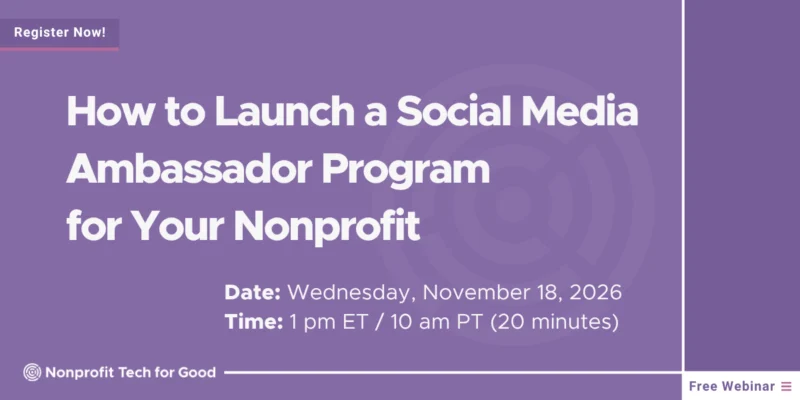
On Wednesday, November 18, 2026, Heather Mansfield, the founder of Nonprofit Tech for Good, will host a pivotal 20-minute mini-webinar designed to address this challenge head-on. The session, titled "How to Launch a Social Media Ambassador Program for Your Nonprofit," promises to provide a roadmap for organizations looking to convert passive followers into active, high-impact digital advocates.
The Core Facts: A Missed Opportunity
The premise of the upcoming webinar is grounded in a stark reality: there is a massive disconnect between donor willingness and nonprofit mobilization. Recent data suggests that 52% of online donors are not only willing but eager to serve as social media ambassadors, committing 1-2 hours per month to champion their favorite causes.
Despite this overwhelming appetite for engagement, the sector is lagging significantly. Current industry metrics indicate that only 9% of nonprofits have successfully implemented a formal social media ambassador program. This 43-percentage-point gap represents millions of potential impressions, thousands of new donor leads, and an untapped well of grassroots fundraising power. The webinar aims to bridge this divide by providing actionable, high-efficiency strategies that fit into the lean operational models of modern nonprofits.
Chronology: The Evolution of Digital Advocacy
To understand why this webinar is timely, one must look at the evolution of social media in the nonprofit sector:
- 2010–2015 (The Era of Organic Growth): Nonprofits viewed social media as a "free" megaphone. Posting content was enough to reach a significant portion of a follower base.
- 2016–2020 (The Algorithm Shift): Platforms began prioritizing paid content and personal connections over organizational posts, forcing nonprofits to pay for reach or watch their engagement levels crater.
- 2021–2025 (The Rise of Influencer Culture): The sector saw the success of "micro-influencers." Nonprofits began to realize that peer-to-peer recommendations carry significantly more weight than official brand messaging.
- 2026 (The Strategic Pivot): We have entered the era of the "Ambassador Model." Recognizing that algorithms favor individual accounts over corporate pages, the most successful organizations are now formalizing the process of turning donors into digital representatives.
The upcoming session on November 18 is the culmination of these trends, serving as a tactical manual for an industry that has moved past the experimental phase and into the implementation phase of social ambassador programs.
Supporting Data: Why Ambassador Programs Work
The math behind the ambassador model is compelling. When an organization shares a post on its official page, it is subjected to the rigid filtering of platform algorithms. When a trusted volunteer or donor shares that same content, it bypasses the "corporate" filter and appears in the feed of their personal network—a space governed by social trust rather than paid promotion.
Key Metrics for Success:
- Trust Conversion: Studies consistently show that consumers trust peer recommendations 92% more than traditional advertising. For nonprofits, this translates to higher click-through rates on donation links.
- The "1-2 Hour" Threshold: The data shows that donors are willing to commit 1-2 hours per month. This is a "low-lift" commitment that prevents volunteer burnout while maintaining consistent brand presence.
- Cost-Efficiency: Unlike paid advertising campaigns that require significant ad spend and technical management, ambassador programs rely on existing human capital. The primary investment is in training and relationship management, not media buying.
Official Perspective: Insights from Heather Mansfield
Heather Mansfield, a globally recognized expert in nonprofit technology, has long advocated for a shift toward more human-centric digital strategies. Her approach is rooted in the idea that nonprofits often over-complicate their digital presence while ignoring the simple power of their supporters’ voices.
"The goal of this webinar," Mansfield notes, "is to demystify the process. Many nonprofits think they need a sophisticated, high-tech platform to manage ambassadors. In reality, the most successful programs are built on strong communication, clear guidelines, and a genuine appreciation for the volunteer’s time."
Mansfield’s methodology focuses on three pillars:
- Recruitment: Identifying the "super-donors" who are already engaged.
- Enablement: Providing ambassadors with a "toolkit"—pre-written copy, graphics, and messaging—that makes sharing easy.
- Recognition: Creating a feedback loop that makes ambassadors feel like partners in the mission, not just social media tools.
The Strategic Implications for Nonprofits
The decision to launch an ambassador program has profound implications for a nonprofit’s long-term digital health.
1. Diversification of Reach
By relying on a network of ambassadors, a nonprofit creates a decentralized digital footprint. If one ambassador’s account gains traction, the organization benefits. This creates a "network effect" where the organization’s reach is limited only by the size and activity of its ambassador pool, rather than the arbitrary constraints of an algorithm.
2. Resilience Against Algorithm Changes
Social media platforms are volatile. A single update can render a year’s worth of organic reach strategy obsolete. However, a decentralized network of human advocates is platform-agnostic. Whether followers are on LinkedIn, Instagram, or emerging platforms, ambassadors can pivot their messaging where it is most effective, providing the organization with a layer of insulation against platform instability.
3. Deepening Donor Relationships
Moving a donor from a "transactional" relationship (giving money) to a "relational" relationship (acting as a champion) increases donor retention rates. When someone advocates for a cause, they become emotionally and socially invested in its success. The ambassador program is, therefore, not just a marketing tool; it is a donor cultivation strategy.
Practical Details for Participants
The session is scheduled for Wednesday, November 18, 2026, at 1:00 PM ET (10:00 AM PT). The brevity of the webinar—strictly 20 minutes—is a nod to the busy schedules of nonprofit professionals. It is designed to be a high-impact, low-friction learning experience.
Registration and Attendance:
The webinar is free to attend, but registration via the GoToWebinar platform is required. Prospective attendees are encouraged to visit the official registration page as soon as possible.
For those unable to attend the live broadcast, a recording will be provided. The organization ensures that all registrants will receive a link to the session playback within 24 hours of its conclusion. To avoid technical issues, attendees are advised to use the GoToWebinar System Check in advance of the start time.
Conclusion: A Call to Action
The data is clear: the audience is ready, the strategy is proven, and the resources to execute are available. For the 91% of nonprofits that have yet to formalize an ambassador program, the challenge is not one of feasibility, but of prioritization.
In a digital landscape that increasingly favors the individual over the institution, the nonprofits that thrive will be those that empower their supporters to lead the conversation. By joining Heather Mansfield on November 18, nonprofit leaders can take the first step toward reclaiming their organic reach and building a sustainable, community-led digital future. Whether you are a small local charity or a large international NGO, the lesson remains the same: the most effective way to share your mission is to invite others to share it for you.


 Pevita Pearce

 Reynand Wu






