
 Evan Lee Salim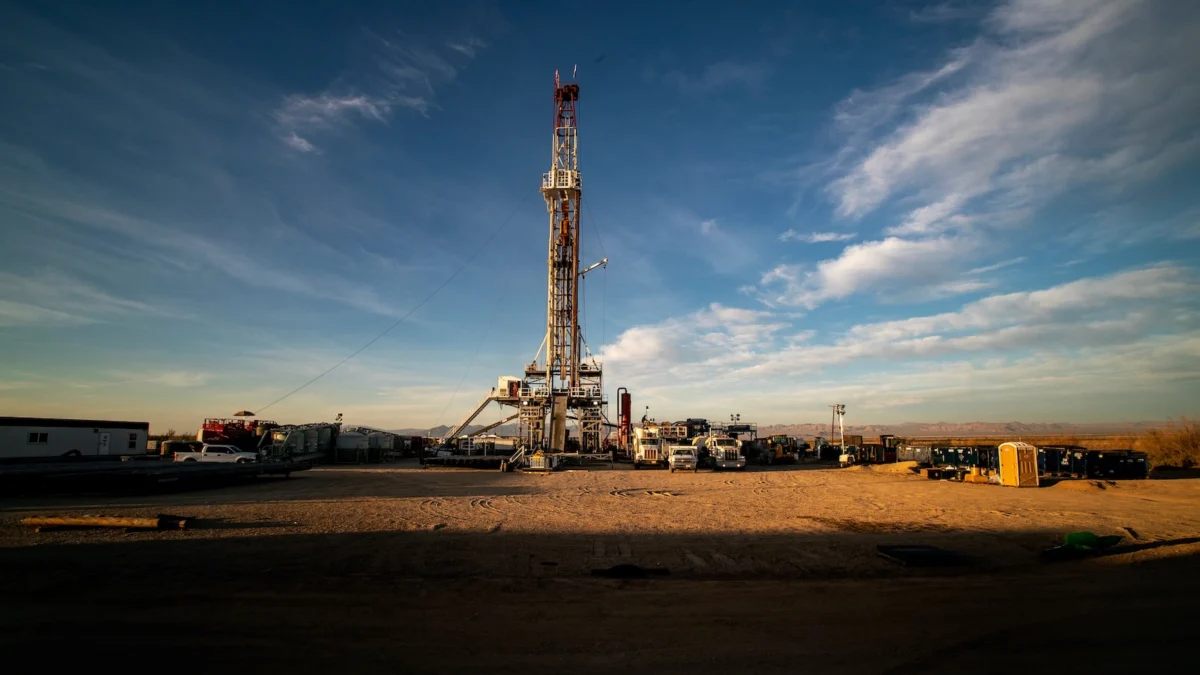
When the NASDAQ bell rings this Wednesday morning, a new ticker symbol—FRVO—will officially enter the lexicon of Wall Street. The arrival of Fervo Energy, a pioneering force in the next generation of geothermal power, is more than just another listing; it is a $7.4 billion bet on the earth’s ability to provide the "holy grail" of clean energy: constant, carbon-free, baseload power.
As Fervo prepares to raise $1.8 billion in an upsized initial public offering (IPO), the market is witnessing one of the largest renewable energy debuts in U.S. history. In a landscape characterized by shifting political winds and an insatiable demand for electricity, Fervo’s entry represents a pivotal moment for clean technology.
Main Facts: The Anatomy of a Clean Tech Giant
Fervo Energy is not your traditional utility. While conventional geothermal energy relies on finding rare, naturally occurring pockets of steam or hot water, Fervo is an engineering company at its core. By leveraging horizontal drilling and fiber-optic sensing—techniques perfected by the oil and gas industry—Fervo creates its own reservoirs where none previously existed.
The company’s IPO is a testament to the surging confidence in "advanced geothermal." Originally eyeing a smaller valuation, Fervo surged to a proposed $7.4 billion valuation after increasing its offering to 70 million shares, priced between $25 and $26. The move follows a successful pilot in Nevada, where the company demonstrated its ability to power roughly 2,600 homes with carbon-free heat, and paves the way for the massive Cape Station facility in Utah, which is expected to go online later this year.
"This is a very, very big deal," said Gernot Wagner, a climate economist at Columbia Business School. "Money speaks."
Chronology: From Concept to Public Market
The path to the NASDAQ has been defined by rapid technological maturation and high-profile backing:
- 2020–2023: Technological Validation: Fervo successfully deploys its proprietary drilling techniques in Nevada, proving that geothermal heat can be tapped in non-traditional geological settings.
- 2024: Corporate Partnerships: The company secures major contracts with industry titans, most notably Alphabet (Google), which identifies Fervo as a key partner to decarbonize its energy-hungry data centers.
- Early 2026: The Public Filing: Fervo announces its intent to go public, initially targeting a more conservative share count.
- April 2026: The Sector Momentum: Nuclear startup X-Energy, backed by Amazon, executes a successful $1 billion IPO, signaling a wider market appetite for "firm" clean energy—power that stays on when the sun isn’t shining and the wind isn’t blowing.
- May 2026: Upsizing the IPO: Faced with overwhelming institutional demand, Fervo increases its share offering to 70 million units, setting the stage for one of the most anticipated debuts of the year.
Supporting Data: The Economics of Heat
Geothermal energy has historically been hampered by high upfront costs and the geographical lottery of finding the right site. Fervo’s business model is explicitly designed to disrupt this narrative by applying the economies of scale found in shale drilling.
- Cost Reduction Goals: Fervo aims to drive the cost of geothermal power down from the current industry average of $7,000 per kilowatt to $3,000 per kilowatt.
- Scaling Capacity: While the Nevada pilot serves as a proof of concept, the Cape Station project in Utah is designed to produce over 100 times the electricity of its predecessor, marking the transition from "pilot" to "utility-scale" operations.
- Market Demand: The surge in data center construction, driven by the artificial intelligence boom, has placed unprecedented pressure on the U.S. grid. With global energy prices remaining volatile due to international conflicts, such as the war in Iran, utilities are desperate for stable, domestic, and weather-independent energy sources.
Official Responses and Expert Analysis
The industry reaction to Fervo’s move has been largely optimistic, though seasoned observers urge a degree of tempered expectations.
"Innovation is allowing these technologies to cover a wider variety of sites," noted Zainab Gilani, a geothermal analyst with the Cleantech Group. "Fervo is effectively repurposing the infrastructure and expertise of the oil and gas sector to serve the transition, which is a pragmatic and powerful strategy."
However, not all analysts believe the sector is ready for widespread deployment. Rob Gramlich, president of the consultancy Grid Strategies, offers a cautionary note. "They are just not here yet on any large scale," Gramlich said. "They are great 2040 and 2050 options."
Despite the skepticism, the financial sector remains bullish. Jigar Shah, a former Department of Energy official under the Biden administration and current managing partner at the investment firm Multiplier, argues that the "alternative" label is becoming obsolete. "For a long time, our space has acted as if we’re alternative energy," Shah said. "But when you’re 90 percent of everything that gets added to the grid every year, you’re no longer alternative."
Implications: A Bellwether for Clean Tech
The Fervo IPO arrives at a moment of significant political volatility. The Inflation Reduction Act (IRA), signed by President Joe Biden in 2022, was once hailed as the bedrock of American climate policy. However, the subsequent reversal of these policies under the current administration has left many projects in limbo.
The Political Whiplash
The dismantling of federal climate subsidies and the pivot toward fossil fuel expansion have created a "wait-and-see" environment for many renewables. Yet, Fervo’s ability to secure massive private financing—including from Bill Gates’ Breakthrough Energy Ventures—suggests that the market is beginning to decouple clean energy success from federal policy.
If Fervo succeeds, it will prove that geothermal can stand on its own merits as a profitable, scalable asset class. This would draw investment far beyond the "narrow advanced geothermal community" and into the broader infrastructure market.
Energy Security in an Uncertain World
The current energy crisis, fueled by geopolitical instability in the Middle East, has highlighted the vulnerability of the U.S. grid. By tapping into the literal bedrock of the United States, Fervo offers a solution that is inherently domestic and immune to the supply chain disruptions that affect solar panels or wind turbines.
The AI-Energy Nexus
Perhaps the most significant implication is the intersection of artificial intelligence and electricity. The immense power requirements of modern data centers have forced technology companies to become energy providers themselves. By signing long-term power purchase agreements (PPAs) with companies like Fervo, tech giants are ensuring that their growth is not throttled by grid capacity. This corporate demand creates a floor for pricing and provides the long-term revenue certainty that investors crave.
Conclusion: The Long Road Ahead
As the ticker FRVO flashes on screens across the globe this Wednesday, the eyes of the energy sector will be fixed on the opening price. Whether the stock sails or sinks in the short term, the company’s ability to reach this stage is a landmark achievement.
Fervo is not merely selling energy; it is selling the promise of a modernized grid that can handle the rigors of the 21st century. The road to deep-crust energy extraction is fraught with technical hurdles and high capital expenditures, and critics like Gramlich are correct that true ubiquity is still years, if not decades, away.
Nevertheless, the "insatiable appetite" for reliable power is currently the primary driver of the energy markets. As the world pivots toward AI-driven economies and seeks to shed its dependence on volatile fossil fuel markets, Fervo represents a clear, strategic vision of the future. The public, it seems, is ready to buy into the heat beneath their feet.


 Dwi Wanna
 Asep Darmawan