
 Siti Muinah
WASHINGTON, D.C. — In a development that has sent shockwaves through the landscape of American election law, the U.S. Supreme Court has issued orders to vacate and remand two high-profile voting rights cases originating from Mississippi and North Dakota. The move forces lower courts to re-examine these redistricting challenges in the shadow of the Court’s recent, controversial ruling in Callais, a decision that civil rights advocates argue has fundamentally undermined the enforcement mechanisms of the Voting Rights Act (VRA).
The Supreme Court’s intervention targets cases that were initially hailed as landmark victories for minority representation. By compelling lower courts to reconsider these matters, the justices have effectively injected a new layer of legal instability into state legislative maps, potentially jeopardizing the voting strength of Black and Native American communities across the country.
The Core Conflict: Section 2 and the Callais Precedent
At the heart of the legal controversy is Section 2 of the Voting Rights Act, which prohibits voting practices or procedures that discriminate on the basis of race or color. For decades, Section 2 served as the primary tool for private citizens to challenge redistricting plans that diluted their voting power.
However, the Supreme Court’s recent decision in Callais significantly weakened this provision, casting doubt on the ability of private individuals—rather than the Department of Justice—to bring lawsuits under the Act. The Court’s decision to apply the Callais framework to the Mississippi and North Dakota cases suggests a concerted effort to narrow the scope of the VRA, effectively inviting states to challenge existing remedial maps that were designed to ensure equitable representation for marginalized groups.
Chronology: From Trial Court Victory to Supreme Court Intervention
The Mississippi Redistricting Battle
The Mississippi litigation, led by the Lawyers’ Committee for Civil Rights Under Law, began as a challenge to state legislative maps that critics argued systematically disenfranchised Black voters. Following an extensive trial and years of legal maneuvering, the state was ordered to implement new district boundaries. These remedial maps led to the creation of three new majority-Black districts in 2025, a shift that fundamentally altered the legislative balance and saw the election of candidates who better represented the state’s diverse population.
The North Dakota Native American Challenge
Parallel to the Mississippi case, the Turtle Mountain Band of Chippewa Indians and the Spirit Lake Nation launched a vigorous challenge against North Dakota’s redistricting plan. The plaintiffs argued that the state’s map intentionally diminished the voting strength of Native American communities by "packing" or "cracking" their populations across district lines. The lower courts had initially provided relief to these communities, recognizing that the existing maps violated the principles of fair representation.
The Supreme Court’s Intervention
In a move that caught many legal scholars by surprise, the Supreme Court nullified the lower court rulings in both states. By vacating these decisions and remanding them for "further consideration," the justices have effectively erased the current legal standing of these remedial maps. The cases now return to the lower courts, which are mandated to apply the restrictive standards set forth in Callais.
Supporting Data: The Impact of Redistricting on Representation
The implications of these remands extend far beyond the courtroom. In Mississippi, the 2025 redistricting cycle was heralded as a moment of historic progress. Data from the post-remedy elections showed a significant increase in the electoral participation and success of Black candidates, validating the lower court’s finding that the previous maps were intentionally diluting voting power.
In North Dakota, the challenges were rooted in the specific geographical and demographic realities of Native American reservations. For the Turtle Mountain Band and Spirit Lake Nation, the redistricting process was not merely a matter of lines on a map but a struggle for the fundamental ability to influence policy on issues such as healthcare, education, and tribal sovereignty.
Legal experts point out that by dismantling these established remedial districts, the Supreme Court is not merely resetting the clock; it is potentially reverting states to maps that have already been adjudicated as discriminatory.
Official Responses: A Sharp Rebuke from Advocates
The legal community, particularly those representing the plaintiffs, has responded with profound indignation.
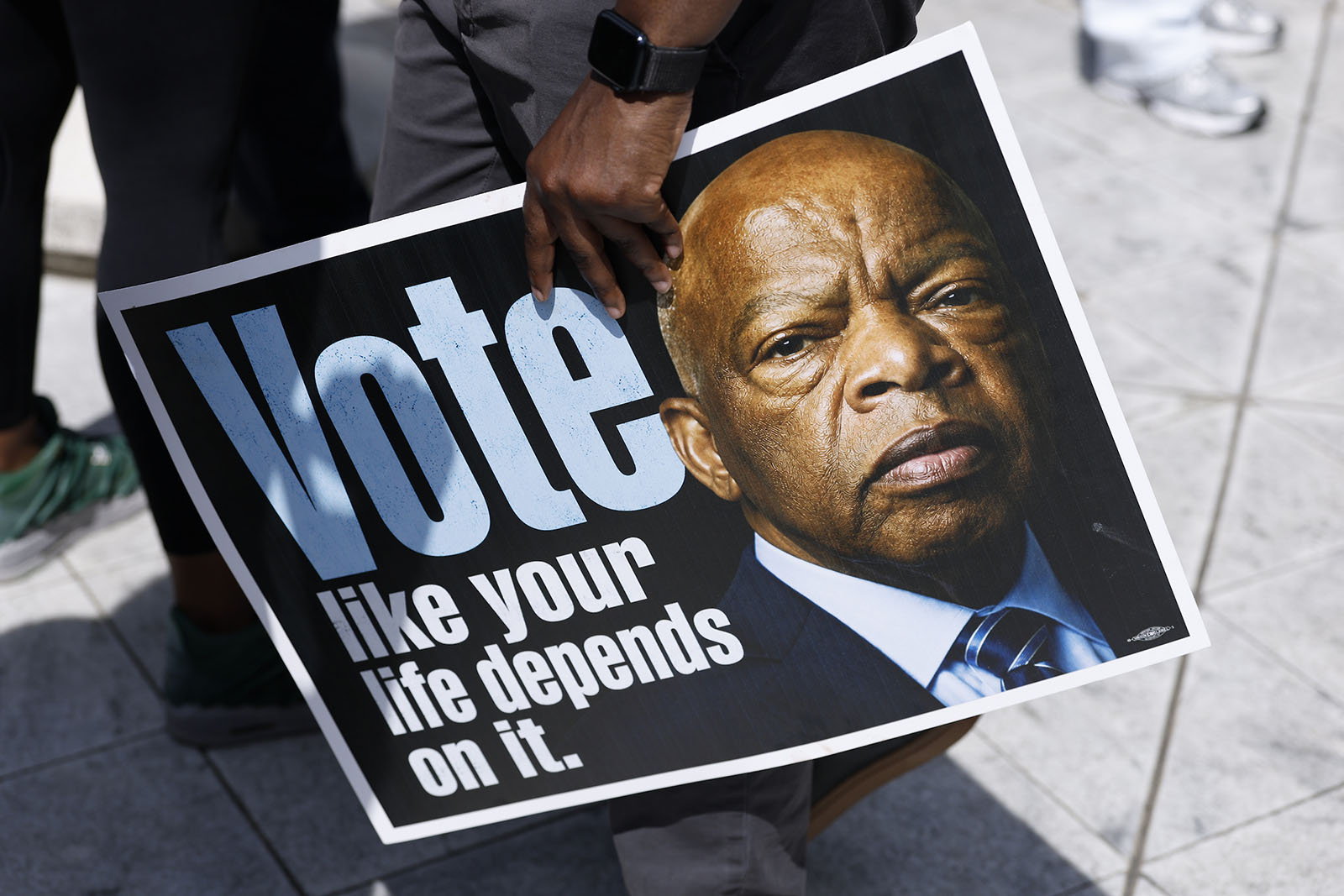
Damon Todd Hewitt, president and executive director of the Lawyers’ Committee for Civil Rights Under Law, did not mince words regarding the Court’s directive. "On the heels of one of the most devastating voting rights rulings in decades, the Supreme Court has reached a new low," Hewitt stated.
He emphasized that the Court’s action was not only legally questionable but strategically unnecessary. "By vacating a lower court ruling which found that Mississippi’s prior redistricting plan diluted the voice and power of Black voters, the Supreme Court not only did something bad—it did something that was entirely unnecessary. As Justice Ketanji Brown Jackson noted in her dissent, the majority ignored the issue that was actually presented in the case and instead went out of its way to once again punish Black voters."
Hewitt further warned of the broader, national consequences of this shift. "The impact of Callais is not limited to congressional races. As the Mississippi case shows, Callais has unleashed a race to discriminate nationwide, injecting chaos into elections at every level across the country."
Rob Weiner, director of the Voting Rights Project at the Lawyers’ Committee, highlighted the procedural irregularities of the Court’s decision. "In remanding this case for further consideration in light of Callais, the Court gives Mississippi relief it did not even request," Weiner noted. "The only issue the State presented for the Court’s review was whether private parties can sue for violations of the Voting Rights Act. In sending the case to the lower court for further review of other issues, the Supreme Court confirms once again that the normal rules do not apply when it considers voting rights cases."
Implications: A New Era of Legal Uncertainty
The Supreme Court’s decision to remand these cases marks a turning point in American electoral jurisprudence. By signaling that the Callais standard is the new benchmark for all redistricting litigation, the Court has effectively shifted the burden of proof back onto minority voters.
1. The Erosion of Private Enforcement
The most significant implication is the potential death knell for private litigation under Section 2. If private individuals lose the standing to challenge discriminatory maps, the enforcement of the VRA becomes entirely dependent on the Department of Justice—an office that is inherently subject to the political priorities of the sitting administration. This creates a "feast or famine" cycle for voting rights, where protections are guaranteed only when the federal government chooses to prioritize them.
2. Destabilizing Local Elections
The ripple effects of this decision will likely be felt in school board, city council, and county commission elections. These local bodies, which have long been the primary targets of redistricting litigation, are now left in a state of administrative limbo. Local election boards, often under-resourced, will struggle to determine which maps to use for upcoming election cycles while the courts deliberate on the remand orders.
3. A "Race to Discriminate"
As Hewitt observed, the Callais ruling has seemingly emboldened state legislatures to push the boundaries of map-drawing. With the Supreme Court appearing to favor a more permissive stance toward state redistricting, legislators in other jurisdictions may feel empowered to enact maps that were previously considered "too risky" or clearly in violation of the VRA.
4. The Future of Judicial Legitimacy
Finally, the decision raises urgent questions about the role of the Supreme Court as a neutral arbiter. By "ignoring facts and precedent," as Hewitt alleged, the Court risks further alienating the public. When the highest court in the land is perceived as "making up the rules as it goes along" to achieve specific political outcomes, the perceived legitimacy of the entire democratic process is diminished.
Conclusion: What Lies Ahead
As these cases head back to the lower courts, the future of representative democracy in Mississippi and North Dakota hangs in the balance. Plaintiffs and civil rights organizations are now bracing for a protracted legal battle, one that will test the very limits of the remaining protections afforded by the Voting Rights Act.
For the voters in the newly created majority-Black districts of Mississippi and the Native American nations in North Dakota, the Supreme Court’s order is more than a legal setback—it is a direct threat to the power they have worked for years to build. As the legal community watches, one thing remains clear: the fight for the right to vote is no longer just about winning cases; it is about defending the right to exist in the democratic process at all.

 Lina Hope
 Neng Nana