




 Ali Ikhwan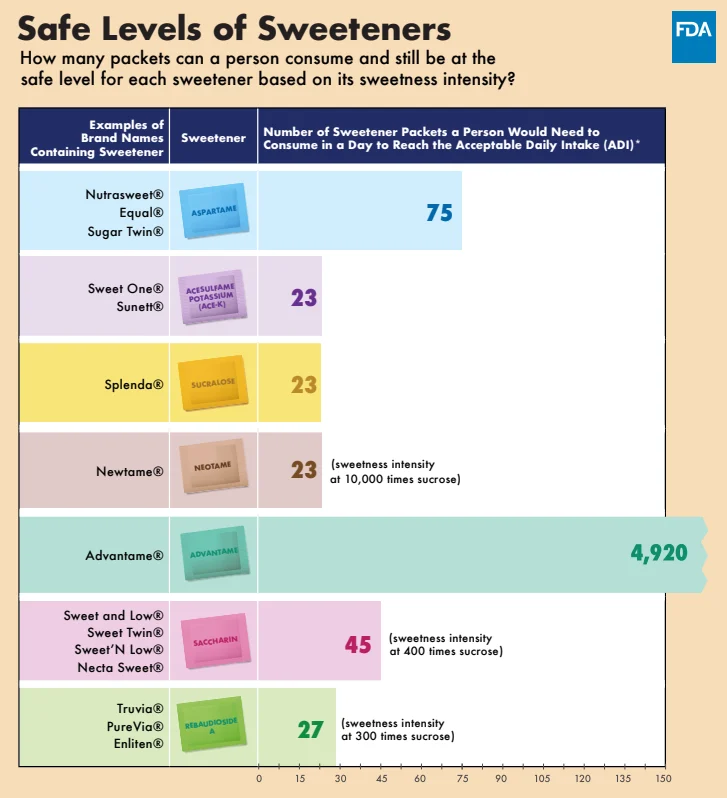
In the modern dietary landscape, few ingredients have sparked as much controversy, scientific inquiry, and consumer confusion as artificial sweeteners. From the ubiquitous packets of aspartame in coffee shops to the proprietary blends masking the bitterness of stevia in “zero-sugar” sodas, these compounds are woven into the fabric of the global food supply. While the U.S. Food and Drug Administration (FDA) maintains a firm stance on their safety, a growing chorus of nutritionists, researchers, and skeptical consumers continues to challenge the status quo.
Main Facts: The Regulatory Stance
The FDA’s position is rooted in the concept of the Acceptable Daily Intake (ADI). An ADI is defined as the amount of a food additive that can be consumed daily over a lifetime without appreciable health risk. According to federal regulators, the artificial sweeteners currently approved for use—including aspartame, saccharin, sucralose, and acesulfame-potassium—are safe when consumed within these established limits.
The FDA’s safety assessments are based on extensive toxicological testing, primarily conducted on animal models to determine the “No-Observed-Adverse-Effect Level” (NOAEL). By applying a generous safety factor—typically a 100-fold buffer—the agency sets the ADI. For most individuals, hitting these limits would require an almost impossible daily intake of diet beverages or sugar-free snacks. For instance, an average-sized adult would likely need to consume over a dozen cans of diet soda every day for their entire life to approach the ADI for aspartame.
However, the regulatory green light does not equate to a nutritional endorsement. While the FDA deems these substances “safe,” they do not necessarily deem them “beneficial.” This distinction is at the heart of the ongoing public debate.
A Chronology of Controversy
The history of artificial sweeteners is a multi-generational saga of chemical innovation meeting public health anxiety.
- 1879: The accidental discovery of saccharin by Constantin Fahlberg at Johns Hopkins University marks the birth of the industry. It quickly becomes a staple during wartime sugar shortages.
- 1965: James M. Schlatter discovers aspartame while researching anti-ulcer drugs. It would go on to become one of the most widely used—and debated—additives in history.
- 1970s: The “Saccharin Scare” occurs when studies link the sweetener to bladder cancer in laboratory rats. Public outcry leads to a warning label mandate, which was eventually repealed in 2000 after further research clarified that the cancer mechanism was specific to rats, not humans.
- 1980s–1990s: The proliferation of diet culture drives the mass adoption of aspartame and sucralose (Splenda). These sweeteners become the cornerstone of the “low-fat/low-sugar” diet craze.
- 2010s–Present: Research shifts focus from acute toxicity (is it poisonous?) to chronic metabolic impact (does it alter gut health or insulin sensitivity?). This era also sees the rise of “natural” high-intensity sweeteners like Stevia and Monk Fruit, which are often marketed as cleaner alternatives despite undergoing significant industrial processing.
Supporting Data: The Science of Ambiguity
The fundamental challenge in studying artificial sweeteners lies in the sheer difficulty of isolating their effects. Because these substances are consumed in trace amounts and are almost always present in ultra-processed foods, epidemiological studies often struggle to separate the health impacts of the sweetener from the health impacts of the food matrix itself.
The Gut Microbiome Hypothesis
Recent studies have suggested that some non-nutritive sweeteners may disrupt the composition and function of the human gut microbiome. Research published in journals like Nature has indicated that certain sweeteners can alter the gut bacteria of mice and human subjects, potentially leading to glucose intolerance—a paradoxical outcome for a product intended to help manage blood sugar.
Metabolic Confusion
Another theory posits that artificial sweeteners may disrupt the body’s innate ability to associate sweetness with caloric density. Under normal conditions, the brain receives a signal that “sweet” equals “energy.” When the tongue tastes sweetness but the gut receives no corresponding caloric influx, the body’s metabolic signaling pathways may become dysregulated. Some researchers argue this leads to increased cravings and a compensatory drive to consume more calories later in the day.
Official Responses and Regulatory Nuance
The FDA remains largely unmoved by these emerging studies, arguing that the evidence is inconsistent or lacks the clinical significance required to change safety standards. The agency maintains that until a study provides clear, reproducible evidence of harm in humans at realistic levels of consumption, their current classifications remain in place.
However, international bodies are sometimes more cautious. The World Health Organization (WHO), in its 2023 guidance, advised against using non-sugar sweeteners for weight control, citing potential long-term risks such as increased risk of type 2 diabetes and cardiovascular diseases. This highlights a significant disconnect: the FDA evaluates sweeteners based on toxicity (can it kill you?), whereas the WHO evaluates them based on nutritional efficacy (is it actually good for your health?).
Implications: The Ultra-Processed Problem
For the average consumer, the most critical takeaway is that artificial sweeteners are the hallmark of ultra-processed foods. These products are engineered for hyper-palatability, shelf-stability, and mass-market appeal.
When we consume products laden with sweeteners, we are rarely consuming whole, nutrient-dense foods. We are consuming highly refined mixtures of stabilizers, emulsifiers, artificial flavors, and preservatives. The danger may not lie in the aspartame molecule itself, but in the dietary pattern that accompanies its consumption. Relying on sweeteners to bypass the need for sugar often reinforces a preference for intensely sweet flavors, making it harder to appreciate the subtle, natural sweetness of whole fruits and vegetables.
Expert Perspective and Practical Advice
The debate is ultimately about the philosophy of nutrition. For those who view health through a reductionist lens, the safety of a single additive is a manageable data point. For those who prioritize a “whole-foods” approach, the focus is on avoiding the chemical architecture of modern processed diets entirely.
Avoiding artificial sweeteners is not merely a matter of dodging a specific chemical; it is a commitment to a different way of eating. If one wants to reduce sugar intake, the most effective strategy is not to replace it with a chemical surrogate, but to gradually reduce the overall threshold for sweetness in the diet.
Recommendations for Consumers:
- Prioritize Whole Foods: If it has an ingredient label, read it. If it contains artificial sweeteners, recognize it as an ultra-processed product.
- Audit Your Intake: Many people consume sweeteners unconsciously through flavored waters, yogurts, and protein bars. Track your intake for one week to see just how often these additives appear in your diet.
- The Substitution Trap: If you find you cannot enjoy a beverage without an artificial sweetener, consider that the problem may be your dependence on high-intensity sweetness. Try diluting your usual beverage with water or opting for unsweetened alternatives to “reset” your palate.
- Embrace Variety: The best nutritional defense is a diverse diet. By eating a wide range of minimally processed, whole foods, you naturally reduce your reliance on additives and ensure a broad spectrum of micronutrients that synthetic products cannot replicate.
Conclusion
The scientific community is unlikely to reach a definitive consensus on the long-term health effects of artificial sweeteners in the near future. The variables are too numerous, and the industry influence is too significant. As with many aspects of nutrition, the burden of decision-making falls on the individual. While federal regulators may deem these substances safe for consumption, “safe” is a low bar to clear. When it comes to long-term vitality, prioritizing whole, unprocessed foods remains the most scientifically sound—and historically proven—path forward. If you must consume sweeteners, do so with the awareness that you are participating in a grand, ongoing nutritional experiment. Keep your intake infrequent, your awareness high, and your diet focused on the bounty of nature rather than the laboratory.


 Dwi Wanna
 Asep Darmawan