
 Lina Hope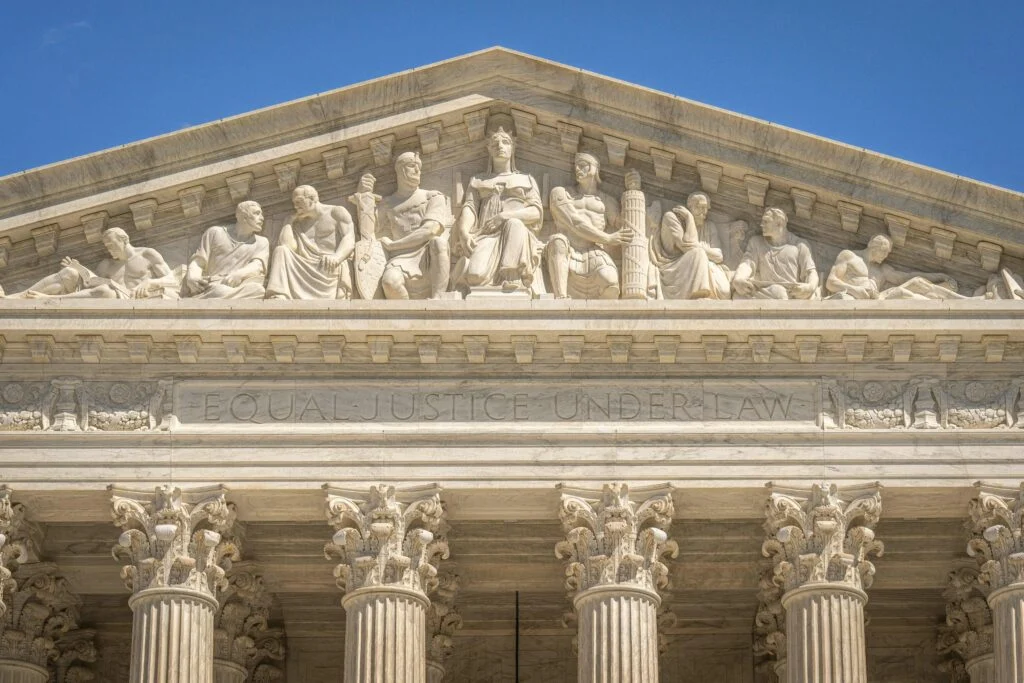
WASHINGTON — In a ruling that civil rights advocates are describing as a “defining moment for our democracy,” the U.S. Supreme Court has issued a decision in Louisiana v. Callais that significantly weakens the protections afforded by Section 2 of the Voting Rights Act (VRA) of 1965. By effectively undermining the legal mechanisms used to challenge racially discriminatory congressional maps, the Court has ignited a firestorm of criticism from a broad coalition of advocacy groups, legal experts, and community leaders who warn that the decision signals a perilous retreat toward the disenfranchisement tactics of the pre-civil rights era.
The Case: A Struggle for Fair Representation
At the heart of Louisiana v. Callais is the fundamental question of political representation. Following the 2020 Census, Louisiana’s congressional redistricting process became the subject of intense litigation. Black voters, who comprise approximately one-third of the state’s population, argued that the state’s maps failed to provide them with an equal opportunity to elect candidates of their choice, in direct violation of Section 2 of the Voting Rights Act.
After a federal court initially found the state’s congressional map to be discriminatory, Louisiana enacted a remedial map that included a second majority-Black district. This remedy was designed to ensure that the electoral process was reflective of the state’s demographic reality. However, the Callais case challenged that remedy, arguing against the necessity of such race-conscious map-drawing. By siding with the challengers, the Supreme Court has effectively placed a significant hurdle in front of plaintiffs seeking to prove that electoral maps are racially gerrymandered or dilute the voting power of minority communities.
A Chronology of Declining Protections
To understand the weight of the Callais decision, one must view it as the latest chapter in a long-standing pattern of judicial erosion.
- 1965: The Voting Rights Act is signed into law, providing the federal government with the power to intervene in jurisdictions with a history of discriminatory voting practices.
- 2013: In Shelby County v. Holder, the Supreme Court gutted the “preclearance” formula of the VRA, which had previously required jurisdictions with a history of discrimination to seek federal approval before changing election laws.
- 2021: The Court’s decision in Brnovich v. Democratic National Committee further restricted the ability of plaintiffs to challenge voting laws under Section 2, raising the bar for proving discriminatory intent or effect.
- 2023: While Allen v. Milligan briefly offered a glimmer of hope by upholding the VRA in an Alabama redistricting case, critics argue that Callais effectively reverses the progress made in that decision.
- 2024: The Louisiana v. Callais ruling is finalized, marking a perceived “death knell” for the efficacy of Section 2 as a tool for protecting minority political power.
Supporting Data: The Impact of Redistricting on Minority Communities
The implications of this ruling are not theoretical; they are grounded in the demographic reality of modern America. Data from the U.S. Census Bureau underscores that communities of color are the fastest-growing segments of the American population. Yet, as these groups gain political potential, the practice of redistricting—often referred to as “packing” and “cracking”—has become a primary tool to mitigate their influence.
“Packing” involves concentrating members of a specific minority group into a single district to dilute their influence in neighboring districts, while “cracking” spreads minority voters across multiple districts to ensure they never constitute a majority. The Leadership Conference on Civil and Human Rights notes that when these practices are shielded from judicial oversight, the political voices of Black, Latino, and Asian American voters are systematically silenced. The result is a legislative body that does not reflect the diverse needs of its constituents, leading to disparities in funding for healthcare, education, and infrastructure.
Official Responses: A Unified Front of Outrage
The coalition of organizations responding to the decision includes some of the most influential civil rights entities in the country. Their consensus is clear: the Court has abandoned its constitutional duty to protect the right to vote.
Maya Wiley, President and CEO of The Leadership Conference:
“For as long as Black people have lived in this country, our right to vote and power to decide who leads have been attacked. Today, a majority of this Supreme Court has once again made clear its hostility to the rights this country fought a civil war to win. It has put its foot on the scale of partisan politicians’ ability to discriminate freely.”
Derrick Johnson, President and CEO of the NAACP:
“Today’s decision is a devastating blow to what remains of the Voting Rights Act. The Supreme Court betrayed Black voters, they betrayed America, and they betrayed our democracy.”
Wendy Weiser, Vice President for Democracy at the Brennan Center for Justice:
“The Roberts Court has essentially completed its decades-long project to demolish the landmark Voting Rights Act. It has effectively blessed racial discrimination and encouraged partisan gerrymandering.”
Leaders of Asian American advocacy, including John C. Yang of AAJC and Bethany Li of AALDEF, noted:
“The ruling further entrenches the long-standing barriers to fair representation for Asian people, who have been too often excluded through redistricting tactics despite being the fastest-growing racial group in the country.”
Implications for the Future of Democracy
The repercussions of Louisiana v. Callais extend far beyond the borders of Louisiana. Legal experts and activists fear that the decision will embolden state legislatures across the South and the country to pursue aggressive gerrymandering, confident that federal courts will no longer serve as a backstop against discriminatory maps.
1. The Normalization of Racial Gerrymandering
By making it infinitely more difficult to prove that a map violates the VRA, the Court has effectively provided a “green light” for partisan mapmakers to use race as a proxy for political control. The burden of proof placed upon plaintiffs is now so high that it may render Section 2 functionally obsolete in many redistricting challenges.
2. A Call to Legislative Action
With the judicial path narrowed, many organizations are calling for urgent congressional intervention. Common Cause and other advocacy groups are pushing for the passage of a new, strengthened Voting Rights Act that would codify protections against racial gerrymandering and restore the federal government’s oversight powers. There is also a growing movement calling for structural reform of the Supreme Court itself, including the implementation of ethics codes and term limits for justices.
3. The Shift to Grassroots Mobilization
Perhaps the most significant implication is the shift in strategy among civil rights groups. Organizations like Black Voters Matter and Fair Fight Action have emphasized that if the courts will not protect the democratic process, the burden must fall on the electorate. These groups are pivoting toward massive voter turnout initiatives, ranked-choice voting advocacy, and state-level legislative fights to bypass the federal judicial barrier.
“We cannot continue to allow the powerful who are threatened by a multi-racial democracy to cherry-pick cases,” said Omar Noureldin of Common Cause. “Congress is a co-equal branch of government and it must act.”
Conclusion: The Long Road Ahead
The Louisiana v. Callais decision is not merely a legal ruling; it is a profound societal pivot. It reflects a widening chasm between the judiciary and the multiracial reality of the American electorate. As civil rights organizations vow to continue the fight through every available channel—from local advocacy to the ballot box—the message remains consistent: the struggle for equal representation is a fundamental test of the American experiment.
While the Court may have weakened the legal protections that once guarded against voter suppression, the coalition of advocates across the country maintains that their resolve is only strengthened. As Maya Wiley noted, “We haven’t just come this far by faith as a civil rights community. We have come this far by fighting for voting rights. This is not over.” The upcoming election cycles will serve as the next true referendum on the health of American democracy, as voters are faced with the challenge of organizing, mobilizing, and reclaiming their voices in a system that seems increasingly intent on silencing them.

 Azzam Bilal Chamdy