

 Azzam Bilal Chamdy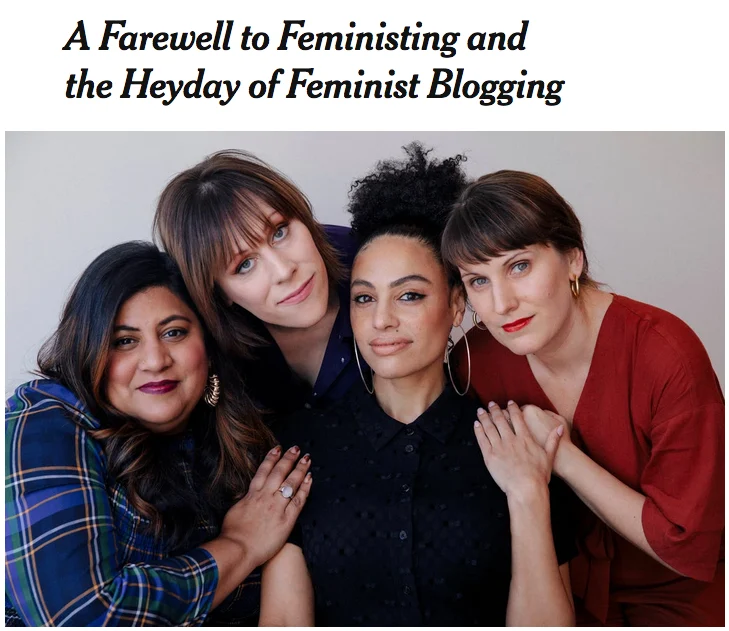
After a transformative 15-year run that reshaped the landscape of digital discourse, Feministing—the pioneering intersectional feminist blog—has officially announced it is ceasing operations. The site, which served as a digital hearth for generations of activists, writers, and organizers, leaves behind a legacy of uncompromising, anti-racist, and anti-capitalist analysis that helped push feminist issues into the mainstream consciousness.
The closure marks the end of a chapter for the "blogosphere" era of the internet, signaling a broader shift in how independent media organizations navigate an increasingly corporatized digital landscape.
The Facts: A Pioneer Ceases Publication
The announcement, posted by the editorial team, confirms that Feministing will no longer produce new content. Despite achieving significant milestones, including reaching 1.2 million unique monthly visitors at its peak, the platform struggled to reconcile its grassroots, independent ethos with the harsh economic realities of 21st-century digital media.
The decision was not one of waning relevance, but of structural sustainability. In an era where traffic is increasingly funneled through the walled gardens of major social media conglomerates and independent outlets are pressured to sacrifice editorial independence for venture capital, Feministing chose to remain independent until the very end. The editorial team noted that while they achieved financial sustainability through reader support, they could not build a model that allowed them to provide the fair, professional compensation their staff deserved.
A Chronology: From Garage Blog to Cultural Force
Founded in 2004, Feministing emerged during the infancy of the modern blogosphere. It was a time when the internet was still largely perceived as a novelty, yet the founders recognized it as a potent tool for movement-building.
- 2004–2008: The Formative Years. Feministing quickly distinguished itself by providing a space for young feminists to discuss issues that traditional, mainstream media outlets ignored. It became a hub for early digital activism, providing a platform for voices that were consistently marginalized in legacy media.
- 2009–2014: The Peak of Influence. During this period, the site cemented its status as a cultural powerhouse. It bridged the gap between academic theory and pop-culture critique, dissecting everything from presidential politics to the intricacies of sex advice. It was during these years that the site’s unique traffic hit its record high of 1.2 million unique visitors per month.
- 2015–2019: The Struggle for Independence. As digital advertising models shifted toward programmatic ads and clickbait-driven metrics, independent sites faced severe existential pressure. Feministing navigated this by maintaining a strictly reader-supported model, resisting corporate buyouts or mergers with non-profits that might have diluted their radical editorial voice.
- December 2019: The Final Hurrah. The site announced its closure, framing the decision as a bittersweet end to a "labor of love" that had persisted for over a decade and a half.
Supporting Data: The Digital Media Landscape
To understand why Feministing shuttered, one must examine the broader economic trends in media. Since 2010, the "independent" internet has been rapidly consolidated.
According to industry data, the rise of the "duopoly" (Google and Facebook) has effectively vacuumed up the majority of digital advertising revenue, leaving independent publishers with razor-thin margins. While Feministing was successful in cultivating a fiercely loyal reader base, the cost of labor—ensuring writers and editors are paid professional, living wages—became unsustainable under a donation-based model.
The site stands in a long line of influential digital platforms that have shuttered or pivoted, including Jezebel, The Hairpin, The Toast, and Bitch Media. Each of these outlets played a role in defining the 2000s and 2010s internet, yet many found that the cost of editorial integrity in a corporate-dominated market was eventually too high to pay.
Official Responses and The "Alumni" Legacy
The closure of Feministing has triggered an outpouring of tributes from the media and activist communities. The New York Times noted the significance of the site’s influence, marking the end of an era for feminist blogs that paved the way for modern social justice movements.
Perhaps the most tangible evidence of Feministing’s impact is not found on its archived pages, but in the careers of its alumni. The site served as a "pipeline" for talent that now occupies the highest echelons of media and policy. Former contributors to Feministing now serve as:
- Executive Editors at major fashion and lifestyle publications like Teen Vogue.
- Award-winning podcasters who have redefined the audio landscape.
- Policy experts and activists who have led national conversations on sexual violence, reproductive rights, and racial justice.
The influence of these alumni is undeniable; their work has been cited in the Washington Post, CNN, MSNBC, and has even appeared in high-stakes political contexts, such as the Hillary Clinton email disclosures. By fostering this community, Feministing ensured that its DNA would continue to circulate in the veins of modern journalism and advocacy.
The Implications: What Happens When the Pioneers Leave?
The closure of Feministing raises critical questions about the sustainability of independent, progressive journalism. If a platform with over a million monthly readers cannot sustain itself, what does that mean for smaller, emerging voices?
The Loss of Institutional Memory
One of the most immediate concerns is the preservation of the site’s archives. Feministing served as a record of a decade and a half of feminist activism. The team has stated that plans are in the works to keep these archives available, recognizing that this history is vital for future generations. The loss of such an archive would be a significant blow to the history of the #MeToo era and the digital feminist movement.
The Corporate Consolidation of Ideas
The exit of Feministing marks a win for the corporatization of the internet. Without independent platforms, the "feminist lens" is increasingly curated by venture-backed media companies whose primary goal is the maximization of shareholder value rather than the advancement of social change. The loss of independent outlets means there are fewer spaces where "controversial" but necessary topics can be explored without the filter of corporate safety guidelines or advertiser sensitivities.
The Shift to Grassroots Organizing
Despite the sadness surrounding the closure, the Feministing team remains defiant. Their final message—"We’ll see you in the streets"—underscores the fact that while the blog is ending, the movement is not.
The transition from digital publication to real-world organizing is a natural evolution for a community that spent 15 years using the internet as a means to an end, not the end itself. The site functioned as a gateway; it introduced thousands of young people to the concepts of intersectionality, systemic racism, and reproductive justice. These readers have now taken those lessons into their local communities, workplaces, and political spheres.
Conclusion: A Legacy of "Unapologetic" Work
Feministing leaves behind a legacy that is rare in the ephemeral world of the internet. They proved that a blog could be more than just a place to post opinions—it could be a training ground for future leaders, a catalyst for real-world policy changes, and a source of solidarity for those feeling isolated by a patriarchal status quo.
As the team prepares for their final "(B)logging Off" party in New York City, they leave with their heads held high, having never compromised their principles for a payout. In an era of "selling out," Feministing chose to bow out on their own terms. While the screen may be turning black for the site, the ripples of their 15-year contribution to feminism are only beginning to settle. The "Feministing family" continues, now dispersed into the wider world, carrying the lessons of a decade and a half of independent, bold, and unapologetic work.


 Siti Muinah
 Sagoh
Sagoh