
 Jia Lissa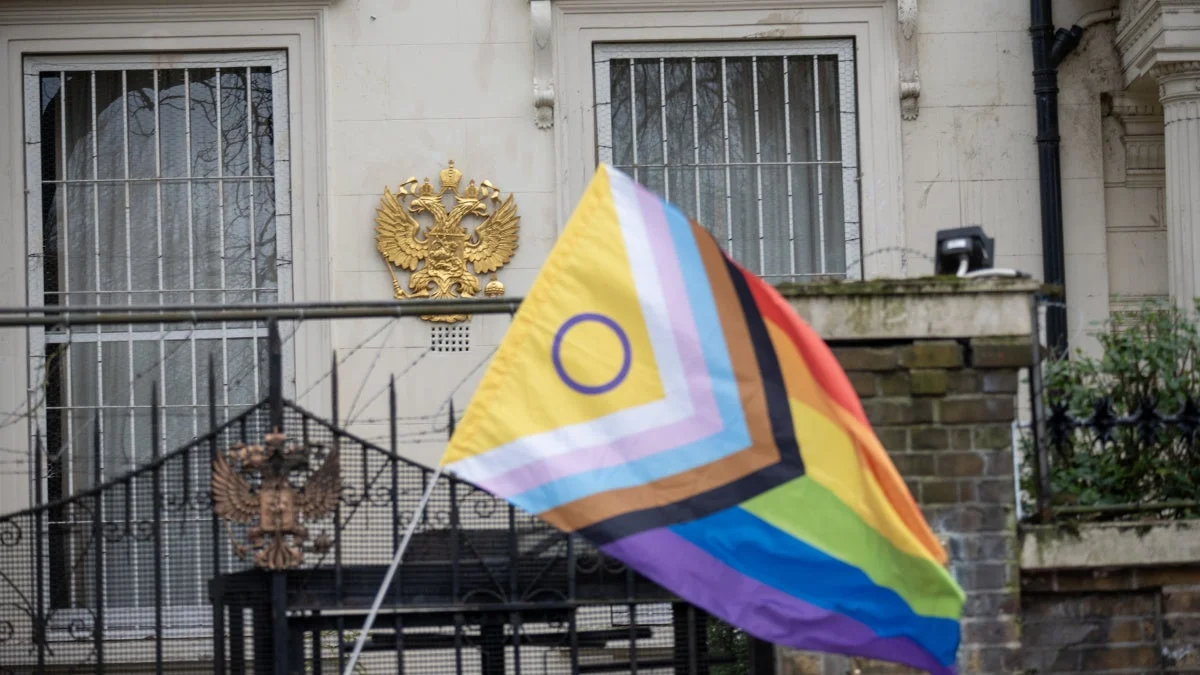
BERLIN, May 28, 2026 — In a move described by international observers as a calculated effort to render the Russian LGBTQ+ community invisible, authorities have accelerated a nationwide campaign of suppression. Over the past three months, Russian courts have designated nine prominent LGBT advocacy and support groups as "extremist," effectively criminalizing the provision of essential legal, medical, and psychological aid to one of the country’s most vulnerable populations.
This latest wave of judicial repression follows the 2023 Russian Supreme Court ruling that outlawed the so-called "International LGBT Movement." Legal experts and human rights monitors have long characterized that ruling as a sweeping mischaracterization of a decentralized, diverse global human rights cause, intentionally designed to provide a legal pretext for the total dismantling of queer civil society.
The Anatomy of the Crackdown: A Chronology of Suppression
The judicial onslaught against civil society organizations between March and May 2026 has been both swift and geographically widespread, touching regions from Moscow and Saint Petersburg to the Orel and Novosibirsk territories.
March: The Onset of Systematic De-legitimization
The campaign intensified in early March, when the Saint Petersburg City Court banned Coming Out, a long-standing organization dedicated to supporting LGBT individuals. The court’s decision was viewed by observers as a signal that no level of advocacy would be tolerated. Coming Out issued a defiant statement following the ruling, noting that the authorities are systematically expanding the definition of "extremism" to include any form of independent activity or solidarity. By labeling human rights work as "extremist," the state seeks to isolate individuals and intimidate those who offer a lifeline to the marginalized.
April: Expanding the Net
Throughout April, the pace of litigation quickened. On April 7, the Sverdlovsk Region Court outlawed the LGBT Resource Centre, accusing it of spreading "propaganda" that contradicted state policy. On April 22, a court in Orel banned the media outlet Parni Plus. This case was particularly alarming, as it relied on an "expert assessment" provided by the Nizhny Novgorod Academy of the Internal Affairs Ministry—a law enforcement university. The assessment argued that the group "belittled Russian spiritual values" and showed "contempt" for President Vladimir Putin.
On April 23, the Moscow City Court followed suit by banning the Moscow Community Center for LGBT+ Initiatives. On April 27, the Saint Petersburg City Court delivered a similar verdict against the Russian LGBT Network. By the end of the month, on April 29, the Yaroslavl Region Court banned the Kallisto movement, claiming the group’s existence was a threat to "traditional family values."
May: The Final Squeeze
The momentum continued into May. On May 4, the Moscow City Court banned Centre T, a vital organization providing support to transgender and nonbinary individuals. On May 19, a Novosibirsk court banned T9 NSK. As of late May, a lawsuit against the Alliance of Straights and LGBT for Equality remains pending in Saint Petersburg. This series of closures represents a concerted effort to sever the ties of support that have sustained Russia’s queer community for decades.
The Legal Architecture of Persecution
The Russian state has utilized specific articles of its criminal code to ensure the total incapacitation of these organizations. Under Article 282.2, participation in an organization labeled "extremist" can result in up to six years of imprisonment, while leaders of such groups face up to 12 years.
The financial and symbolic reach of these laws is equally draconian. Article 282.3 mandates up to eight years in prison for providing financial support or donations to these groups. Furthermore, the mere act of displaying symbols associated with these organizations—including the rainbow flag—is now punishable by up to four years in prison under Article 282.4.
This legislative framework has already yielded its first casualties. In March 2026, Artyom Fokin, leader of the Samara-based group Irida, was convicted of leading an "extremist" organization and violating "foreign agent" legislation. He was fined 450,000 rubles (approximately US$6,000), and his organization was subsequently liquidated by the court.
Official Justifications vs. Human Rights Realities
The state’s rationale for these bans consistently centers on the protection of "spiritual and moral values." Courts across the country have echoed the Kremlin’s narrative that LGBTQ+ visibility is part of an "anti-state hierarchy of values" designed to destabilize Russia.
However, international human rights bodies have sharply contested this framing. Volker Türk, the United Nations High Commissioner for Human Rights, has repeatedly condemned the "LGBT-extremism" ruling, warning that such designations enable arbitrary and abusive law enforcement. Independent UN experts have emphasized that these laws jeopardize a wide range of activities that are explicitly protected under international human rights treaties to which Russia remains nominally committed.
Hugh Williamson, Europe and Central Asia director at Human Rights Watch, summarized the absurdity of the current state of affairs: "Russian authorities are intensifying their criminalization of those who provide critical support to the very LGBT people they have systematically persecuted. Authorities should vacate all court decisions and criminal convictions based on these spurious ‘extremism’ charges."
Implications for the Future of Russian Civil Society
The impact of these closures extends far beyond the administrative loss of office space or legal status. By forcing groups like T9 NSK to shutter their websites and social media presence, the government is effectively creating a digital and social vacuum. The removal of psychological, legal, and medical assistance networks leaves thousands of individuals in a state of heightened risk, unable to access the resources necessary to navigate a society that has institutionalized their discrimination.
Despite the extreme danger, several organizations have pledged to continue their operations underground or in modified forms. The Moscow Community Center for LGBT+ Initiatives declared that it "cannot ignore the fact that queer people have not ceased to exist and require support." Similarly, Centre T and the Russian LGBT Network have stated that their commitment to their constituents remains unshaken, even in the face of imminent prison time.
A Call for International Solidarity
The situation in Russia presents a profound challenge to the global community. As these organizations are forced to operate in the shadows—or relocate entirely to continue their advocacy from abroad—the need for international support has never been greater.
Human Rights Watch and other advocacy groups are calling on the international community to move beyond rhetorical condemnation. They argue that rights-respecting governments must provide concrete pathways for Russian LGBT activists to continue their work from outside the country. This includes facilitating digital security, providing humanitarian support for those forced into exile, and maintaining pressure on the Russian government through diplomatic and legal channels.
As the Russian state continues its project of total ideological conformity, the future of its LGBTQ+ population remains precarious. The ongoing trial of the Alliance of Straights and LGBT for Equality serves as a stark reminder that the state’s appetite for control is not yet sated. For now, the resilience of these activists stands as the final barrier against the complete erasure of queer existence in Russia, highlighting a struggle that is as much about the preservation of basic human dignity as it is about the survival of civil society itself.

 Siti Muinah
 Sagoh
Sagoh