


 Pevita Pearce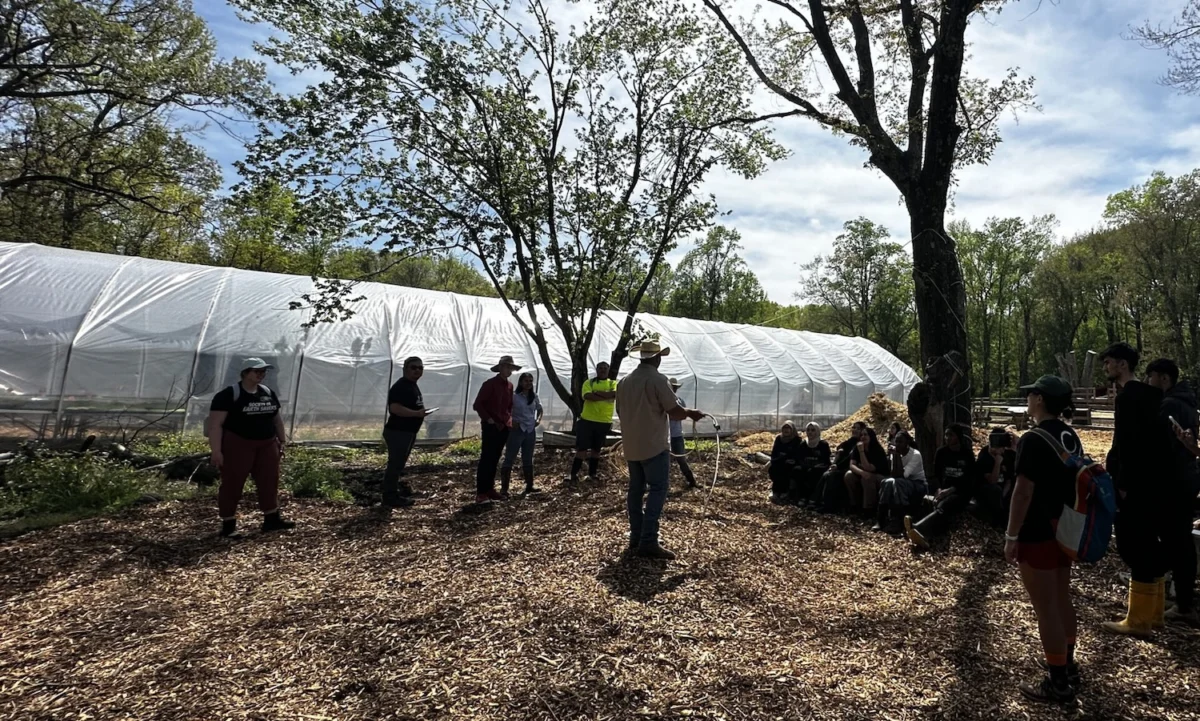
In the heart of Maryland, a profound transformation has taken place on a plot of land once relegated to the status of a local dumping ground. Today, that same soil—nurtured through regenerative practices—serves as the foundation for Wild Kid Acres, a thriving agricultural hub that welcomes tens of thousands of visitors annually. Under the stewardship of Marine Corps veteran Gerardo Martinez, the farm has transcended the traditional role of food production to become a vital center for community healing, youth education, and animal therapy.
This story is not merely about farming; it is about the reclamation of space and the restoration of human connection. By blending environmental stewardship with a social mission, Martinez is redefining what it means to be a modern farmer, proving that when we invest in the land, we inevitably invest in the people who walk upon it.
A Vision Rooted in Global Lessons
The philosophy underpinning Wild Kid Acres was not born in a boardroom, but rather in the remote villages of Cameroon. Following his military service, Martinez participated in leadership development work that brought him into contact with local farming communities. There, he witnessed an integrated model of existence that contrasted sharply with the often-isolated nature of American agriculture.
"It was not just where they grew food," Martinez reflects. "It’s also where they went for community. It’s where the church was; it’s where the school was. It’s where you went if you felt bad; it’s where you went if you felt good. It was everything to them."
This observation fundamentally shifted Martinez’s perspective on the role of a farm. He began to view agriculture as a form of community care—a "third place" that sits between the home and the workplace, providing a sanctuary for social, emotional, and physical well-being. Upon returning to the United States in 2019, he became determined to replicate this holistic model. Together with his wife, he purchased a neglected, abandoned property—a site marred by trash and disregard—and moved into an RV on the premises to begin the grueling, years-long process of restoration.
Chronology: The Rebirth of the Land
The journey of Wild Kid Acres can be charted through a series of intentional, incremental shifts:
- 2019: The Reclamation: Martinez begins the process of clearing the land, removing years of accumulated debris, and implementing regenerative soil management techniques to revive the depleted earth.
- Late 2020: The Pivot to Openness: Initially operating in isolation, Martinez experiences a turning point when a distraught neighbor arrives at his driveway. This moment of shared vulnerability convinces him that the land should serve a public purpose, marking the transition from a private farm to a community resource.
- 2021: The Opening: The farm begins opening its gates to the public for two hours on Saturdays. The response is immediate and overwhelming, with 6,000 visitors passing through the gates in the first year alone.
- 2022-2023: Infrastructure and Expansion: Volunteers and local youth begin collaborating on infrastructure projects, including the construction of a communal barn. The farm cements its status as a gathering place.
- 2024: A National Outlook: The farm reaches a milestone of 50,000 annual visitors and launches a national initiative to provide marketing, capital, and market access to youth-led farming ventures.
Supporting Data and the Regenerative Impact
The growth of Wild Kid Acres is not just measured in visitor numbers, but in the qualitative impact on the surrounding region. The farm functions as a living laboratory for regenerative agriculture—a system of farming principles and practices that increases biodiversity, enriches soils, improves watersheds, and enhances ecosystem services.
By restoring the soil, Martinez has created an environment where agricultural education becomes tactile. Youth programs on the farm teach children the complexities of the food system, from the ethics of land use to the environmental costs of industrial farming. The data suggests that this hands-on approach is working; the farm has evolved from a small-scale operation into a regional destination that bridges the gap between urban dwellers and the rural roots of their food.
The "infrastructure of care" built at Wild Kid Acres—including animal therapy programs and food distribution networks—addresses systemic gaps in the local food system. By giving away food and providing a physical space for communal healing, the farm has become a vital piece of the local social safety net.
Official Perspectives: Redefining the Farmer’s Role
When asked about his motivations, Martinez is quick to move the conversation away from himself and toward the next generation. He posits that the future of the food system rests on the shoulders of the youth, who are often more perceptive about systemic inequities than their adult counterparts.
"How do we grow food ethically and still care for the planet?" Martinez recalls children asking. "Why isn’t anyone helping the farmers? Why aren’t there farmers that look like me? How can I become a farmer?"
These inquiries from the children who visit the farm have forced a shift in the farm’s strategic direction. Martinez now views his role not just as a producer of food, but as a mentor and an advocate. He is actively creating pathways for young people to enter the agricultural sector, providing them with the tools—both literal and professional—to overcome the barriers to entry that have historically plagued small-scale, independent farmers.
"My farm doesn’t matter unless my grandkids can take it over," Martinez asserts. This sentiment highlights the long-term, intergenerational focus of his work. He argues that if we do not prioritize the needs of young, diverse, and aspiring farmers today, we are effectively compromising the food security of tomorrow.
The Implications for Agriculture and Community
The success of Wild Kid Acres has significant implications for how we think about land use and agricultural policy. It challenges the prevailing industrial model, which often prioritizes efficiency and output over community resilience and environmental health.
1. Agriculture as Social Infrastructure
The model established by Martinez demonstrates that farms can serve as essential community infrastructure. By providing spaces for education, mental health support, and intergenerational interaction, farms like Wild Kid Acres can combat the isolation often found in modern society.
2. The Urgency of Youth Engagement
The barriers to entry for new farmers—including access to land, capital, and technical expertise—are well-documented. By creating a support structure for youth-led ventures, Martinez is addressing these structural hurdles. His initiative provides a blueprint that could be scaled or replicated by other independent farmers across the country.
3. Regenerative Practice as Restoration
The transformation of a trash-filled dumping ground into a flourishing ecosystem serves as a powerful metaphor for the potential of regenerative agriculture. It suggests that land degradation is not a permanent state; with proper stewardship, damaged landscapes can be rehabilitated to provide food, habitat, and community connection.
4. Diversity in the Fields
Martinez’s focus on fostering a more diverse generation of farmers is critical. As the average age of the American farmer continues to rise, the need for new, diverse voices to take up the mantle is urgent. By explicitly addressing the question, "Why aren’t there farmers that look like me?", Martinez is helping to dismantle the cultural barriers that have kept many demographics away from the agricultural sector.
Conclusion: Planting Seeds for the Future
Wild Kid Acres stands as a testament to the idea that the most profound changes often begin on a small, local scale. What started as one man’s desire to restore a neglected piece of land has blossomed into a movement that empowers youth, heals the land, and nourishes the community.
As the agricultural sector faces the dual challenges of climate change and an aging workforce, the model pioneered by Martinez offers a glimpse of a more resilient future. It is a future where the farm is not merely a factory for commodities, but a vibrant, living center of education, equity, and human connection. In the end, the success of Wild Kid Acres will be measured not by the yield of its crops, but by the strength of the community it has cultivated and the next generation of farmers it has inspired to take up the plow.
This article is part of Food Tank’s ongoing Farmer Friday series, produced in partnership with Niman Ranch, a champion for independent U.S. family farmers. The series highlights the stories of farmers working toward a more sustainable, equitable food system. Niman Ranch partners with over 500 small-scale U.S. family farmers and is committed to preserving rural agricultural communities and their way of life.
Articles like the one you just read are made possible through the generosity of Food Tank members. Can we please count on you to be part of our growing movement? Become a member today by visiting the Food Tank website.


 Dwi Wanna
 Asep Darmawan