



 Nana
Nana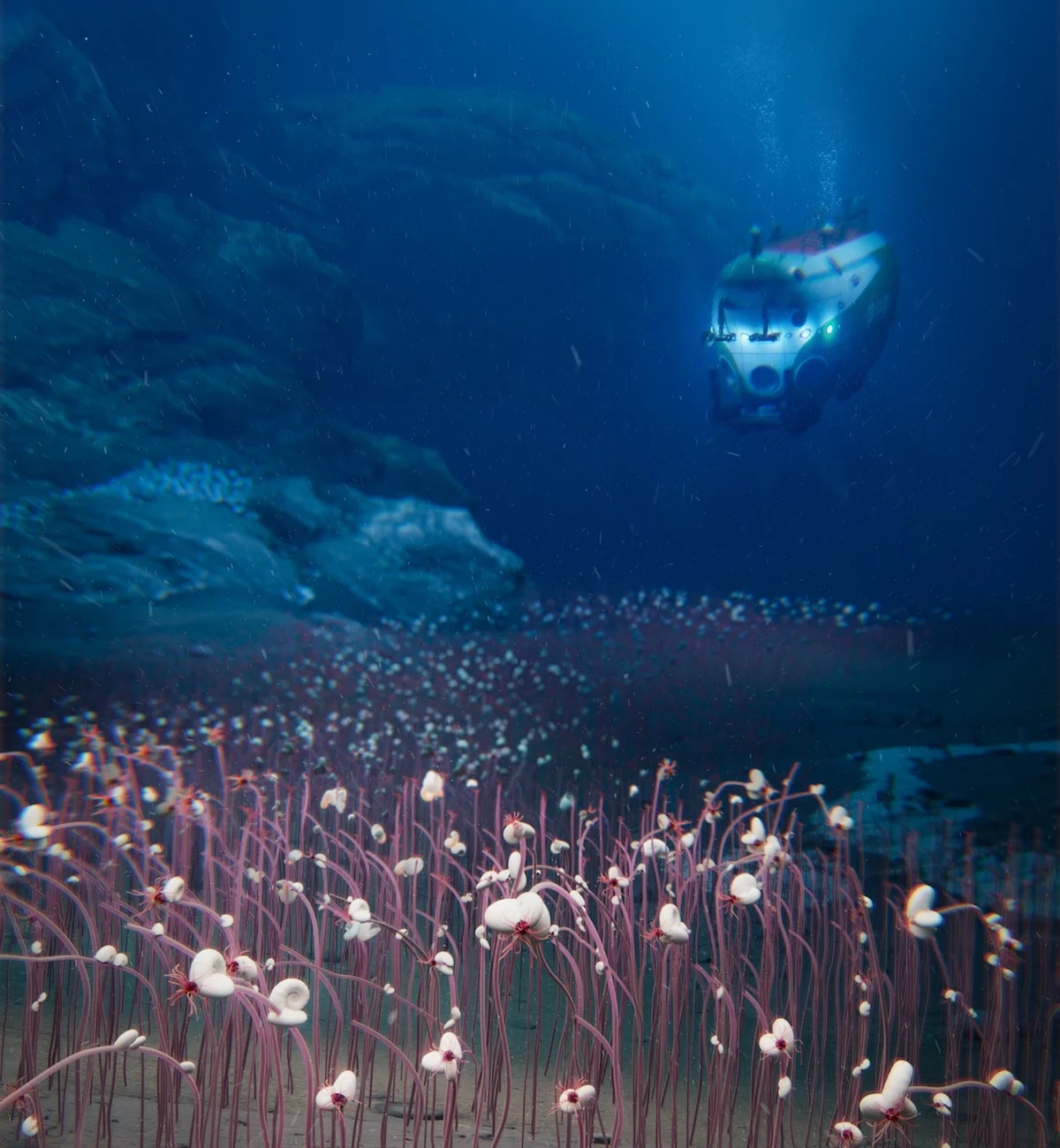
In a discovery that redefines our understanding of life’s resilience in extreme environments, a Chinese submersible has documented the deepest and most extensive animal colonies ever observed, thriving nearly six miles below the ocean’s surface in the Mariana Trench. This groundbreaking finding, detailed in a recent study published in the prestigious journal Nature, reveals a vibrant ecosystem powered not by sunlight, but by chemical reactions, challenging existing models of deep-ocean carbon cycling and the very limits of life on Earth.
The expedition, utilizing the advanced manned submersible Fendouzhe, has provided unprecedented insights into the hadal zone – the deepest and least explored regions of our planet’s oceans. Researchers encountered thousands of mollusks and worms, forming extensive communities that stretch across hundreds of miles, painting a picture of a flourishing biological landscape where none was previously thought to exist.
Unveiling the Deepest Frontier: A Landmark Discovery
The research team, led by scientists from the Institute of Deep-sea Science and Engineering, part of the Chinese Academy of Sciences, has reported the discovery of "the deepest and the most extensive chemosynthesis-based communities known to exist on Earth." This finding emerged from a series of dives conducted in the Kuril-Kamchatka Trench and the western Aleutian Trench, and most notably, in the Mariana Trench, the planet’s deepest oceanic valley.
"Hadal trenches, some of the Earth’s least explored and understood environments, have long been proposed to harbour chemosynthesis-based communities," the authors stated in their findings. "Despite increasing attention, actual documentation of such communities has been exceptionally rare."
The implications of this discovery are profound, suggesting that life may be far more widespread and tenacious in hostile, deep-ocean conditions than previously anticipated. "Given geological similarities with other hadal trenches, such chemosynthesis-based communities might be more widespread than previously anticipated," commented lead author Xiatong Peng, as reported by Oceanographic.
The newly identified communities are dominated by siboglinid Polychaeta (tube worms) and Bivalvia (mollusks), extending over an astonishing 1,553.4 miles. These remarkable organisms were found at depths ranging from 3.6 to 5.92 miles below sea level, a testament to their ability to survive under immense pressure and in complete darkness.
The Science of Survival: Chemosynthesis in the Abyss
Unlike life on the surface, which relies on photosynthesis to convert sunlight into energy, these deep-sea inhabitants have evolved a remarkable alternative. At these extreme depths, sunlight is non-existent. Instead, the organisms thrive on a process known as chemosynthesis.
"These communities are sustained by hydrogen sulfide-rich and methane-rich fluids that are transported along faults traversing deep sediment layers in trenches, where methane is produced microbially from deposited organic matter, as indicated by isotopic analysis," the study’s authors explained.
Essentially, these creatures are "chemical eaters." They derive their nourishment from chemicals like hydrogen sulfide and methane that seep through cracks in the ocean floor. This process forms the base of a food web that supports a diverse array of life in an environment that would be utterly inhospitable to most known organisms.
The study’s findings challenge current models of deep-ocean carbon cycling, which have often underestimated the capacity for life to flourish in such extreme conditions. The discovery suggests that these chemosynthetic communities may play a more significant role in the global carbon cycle than previously understood.
A Vibrant Oasis in the Deep: A Visual Revelation
The Fendouzhe submersible made 23 dives into the western Pacific’s Mariana Trench last year, a feat that allowed researchers to witness this hidden world firsthand. The depth of the Mariana Trench is so profound that it extends farther than the height of Mount Everest.

The scientists observed not just isolated pockets of life, but vast, thriving communities. "What makes our discovery groundbreaking is not just its greater depth – it’s the astonishing abundance and diversity of chemosynthetic life we observed," said study co-author Mengran Du, a marine geochemist with the Institute of Deep-sea Science and Engineering. As reported by Reuters, Du described the scene as "Unlike isolated pockets of organisms, this community thrives like a vibrant oasis in the vast desert of the deep sea."
Video footage released with the study offers a captivating glimpse into this alien landscape. It showcases fields of tubeworms, some reaching up to a foot in length, alongside dense mounds of clams and mollusks. The researchers also documented free-floating marine worms, spiky crustaceans, sea lilies, sea cucumbers, and a variety of other invertebrates, painting a picture of a surprisingly complex and active ecosystem.
The scientists also found "compelling evidence" that microbes are actively producing methane, with tubeworms congregating around snow-like microbial mats, further elucidating the intricate relationships within this chemosynthetic community.
A Chronicle of Exploration: From Early Expeditions to Modern Marvels
The exploration of the Mariana Trench has a storied history, marked by a series of daring expeditions that have pushed the boundaries of human endeavor. While the first human explorers reached the bottom of the crescent-shaped trench in a brief expedition in 1960, only a handful have ventured into its crushing depths since.
Notable among these was Hollywood director James Cameron, who undertook a solo dive in 2012. He famously described the environment as "desolate" and "alien," highlighting the stark contrast with the vibrant oasis now revealed by modern research.
The current discovery by the Fendouzhe submersible represents a significant leap forward in our understanding of these deep-sea environments. Du reflected on the experience, stating, "Diving in the submersible was an extraordinary experience – like traveling through time. Each descent transported me to a new deep-sea realm, as if unveiling a hidden world and unraveling its mysteries."
Broader Implications: Deep-Sea Mining and the Future of Ocean Conservation
The timing of this discovery is particularly significant, coinciding with ongoing international debates surrounding deep-sea mining. As countries consider the controversial prospect of extracting valuable minerals from the ocean floor, scientists are raising urgent warnings about the potential destruction of these fragile, poorly understood marine ecosystems.
The newly discovered chemosynthetic communities, thriving in one of the planet’s last wild frontiers, serve as a potent reminder of the invaluable biodiversity that exists in the deep ocean. The International Seabed Authority is still in the process of establishing rules governing deep-sea mining, underscoring the need for a cautious and scientifically informed approach.
This research emphasizes that the deep sea is not a barren void, but a dynamic and complex environment teeming with unique life forms. The extensive nature of these chemosynthetic communities suggests that similar ecosystems may exist in other hadal trenches, further highlighting the vast unknowns that still lie beneath the waves.
A Glimpse into the Unknown: The Future of Deep-Sea Research
The study, titled "Flourishing chemosynthetic life at the greatest depths of hadal trenches," published in Nature, represents a pivotal moment in deep-sea exploration. It not only expands our knowledge of where life can exist but also challenges our fundamental understanding of Earth’s biogeochemical cycles.
As technology continues to advance, allowing for deeper and more sustained exploration, scientists anticipate further revelations from the planet’s hidden depths. The discoveries made by the Fendouzhe submersible in the Mariana Trench are a testament to human curiosity and our relentless pursuit of understanding the extraordinary world we inhabit, from its sunlit surfaces to its darkest, most mysterious abysses. The vibrant oases found nearly six miles below the sea are a powerful reminder of the planet’s enduring capacity for life and the critical importance of protecting these unique and fragile ecosystems.


 Iffa Jayyana
 Azzam Bilal Chamdy