



 Basiran
By: Editorial Desk
Date: May 21, 2026
In an era defined by the hardening of borders and the resurgence of xenophobic rhetoric, a new coalition of Jewish university students across the United Kingdom is emerging as a formidable force for humanitarian advocacy. Through the Student Refugee Ambassador Program (SRAP)—a joint venture between HIAS+JCORE and the Union of Jewish Students (UJS)—the next generation of Jewish leaders is challenging the prevailing negative discourse surrounding asylum seekers, grounding their activism in the historical memory of the Jewish experience and the moral imperative of tikkun olam (repairing the world).
The Context: A Climate of Rising Hostility
The United Kingdom, like many nations globally, has seen a marked uptick in anti-immigrant sentiment and antisemitism. As political debates intensify over asylum policies, the human cost of displacement is often obscured by bureaucratic jargon and inflammatory rhetoric. For many young Jewish adults, this environment is not merely a political issue; it is a moral crisis that echoes the historical trauma of their own ancestors.
The launch of the Student Refugee Ambassador Program comes at a critical juncture. As the program concludes its inaugural year, it has succeeded in bridging the gap between theoretical advocacy and on-the-ground action. By equipping students with evidence-based information and rhetorical strategies, the program aims to shift the narrative on university campuses from one of suspicion to one of welcome.
Chronology of an Initiative: From Concept to Campus Advocacy
The seeds for SRAP were sown during the summer of 2025, following a series of HIAS+JCORE events where students were given the rare opportunity to hear firsthand testimonies from refugees and asylum seekers. Among those moved by these narratives was Samantha Lewkowicz, then the Sabbatical Officer for Social Action and Holocaust Education at UJS and a recent graduate of the University of East Anglia.
"We developed this program with a degree of uncertainty regarding interest," Lewkowicz recalls. "Students today are stretched thin by academic and financial pressures. Asking them to dedicate their precious free time to the complex, emotionally taxing world of refugee advocacy was a significant request."
The response, however, was overwhelming. Fifty students signed up for the pilot year, demonstrating a profound appetite for engagement.
The First Year Milestones:
- Summer 2025: Conceptualization of the program based on student feedback and the desire for more structured humanitarian action.
- Autumn 2025: Recruitment phase, exceeding initial targets for student interest.
- Winter 2025–2026: Educational workshops commenced, focusing on the realities of the UK asylum system, the history of Jewish migration, and media literacy.
- March 12, 2026: SRAP participants played a central role in the London launch of Refugee Shabbat, a global movement of solidarity.
- Spring 2026: Students engaged in direct lobbying, meeting with Members of Parliament (MPs) to discuss the implications of proposed asylum policies.
Supporting Data: Addressing the Information Gap
A primary objective of SRAP is the debunking of pervasive myths regarding those seeking safety. The program provides ambassadors with rigorous, fact-based training to counter the disinformation that dominates mainstream media cycles.
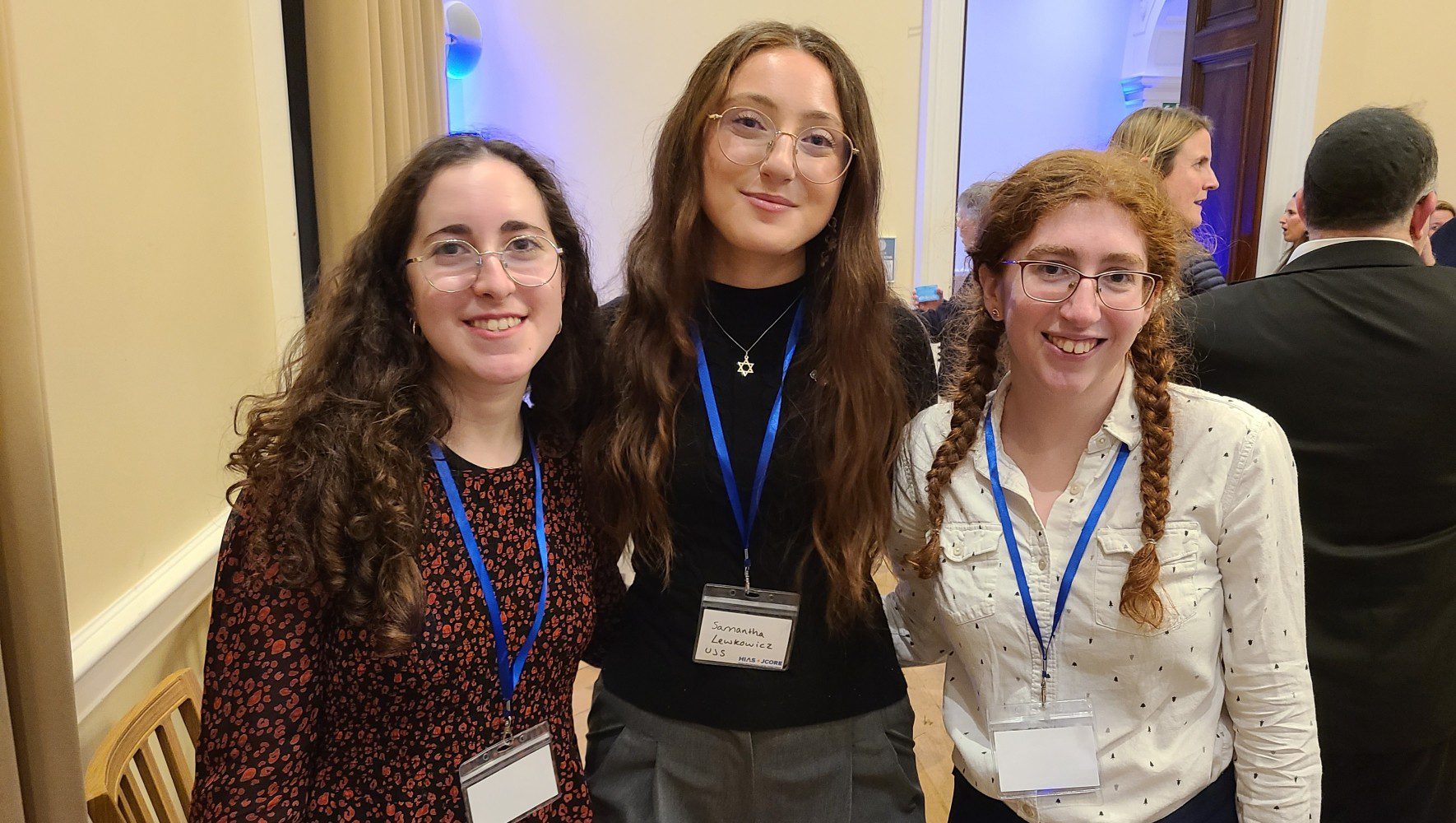
"There is so much misinformation about refugees and asylum seekers," says Lewkowicz. "It can be daunting to advocate when the media landscape is so overwhelmingly negative. However, when students are armed with facts—when they understand the legal framework of asylum and the reality of life in displacement—they gain the courage to speak up in their personal and professional circles."
The data surrounding these issues is clear: the global refugee population is at an all-time high, and the UK’s asylum backlog presents a humanitarian challenge that demands nuanced solutions rather than political scapegoating. By focusing on the human stories behind the statistics, SRAP participants are humanizing a debate that has become increasingly dehumanized.
Voices from the Frontline: The Personal Connection
The motivation for these students is deeply personal. For Phoebe, a master’s student at King’s College London originally from Maryland, USA, the work is an extension of her family history.
"It’s important to me that we, as the Jewish community, reach out because so many of us are descended from refugees ourselves," Phoebe explains. "My great-grandparents fled the Russian Empire to escape persecution. Growing up in a diverse area of the U.S., I witnessed the impact of anti-immigrant policies firsthand. When I see my father working with Afghan families in Maryland, struggling against bureaucratic hurdles and the constant fear of deportation, I see the same patterns repeating in the U.K."
Phoebe highlights the alarming correlation between the rise of xenophobia and the uptick in antisemitism, noting that both are fueled by the same "us versus them" ideology. For her, the work is global. By participating in SRAP, she is attempting to foster a transnational dialogue that addresses these issues at their roots, recognizing that the safety of the Jewish community is intrinsically linked to the safety of all marginalized populations.
Official Perspectives: The Role of Mentorship
Yael Peleg, Community Engagement Director at HIAS+JCORE, views the program as a vital development in Jewish communal life. "With this program, we provide students with knowledge, but we also teach them to be proud of being Jewish," Peleg notes. "They come to understand our collective responsibility as Jews to create communities of welcome. Our history is one of movement, survival, and integration, and that heritage is a powerful engine for social change."
Peleg emphasizes that the program is not designed to be a temporary project, but a long-term strategy for leadership development. The goal is to create a sustainable pipeline of grassroots advocates who can influence policy and public opinion long after their graduation.
The Implications: A Shift in Social Action
The success of SRAP suggests a potential paradigm shift in how Jewish student organizations approach social justice. Rather than engaging in sporadic, one-off charity events, these students are moving toward systemic advocacy. They are meeting with lawmakers, learning to analyze legislation, and forming coalitions with other student groups—a sophisticated approach that signals a maturing of student activism.

The Challenges Ahead
Despite the program’s successes, the road ahead is fraught with difficulty. The UK’s current political climate regarding immigration is increasingly restrictive, and the prospect of advocating for more humane policies in such an environment is inherently polarizing. Furthermore, the students must balance their activism with the realities of the current rise in antisemitism on campuses, which can sometimes isolate them from other progressive movements.
Yet, this isolation has, in many ways, strengthened the program. By grounding their advocacy in Jewish values, these students are reclaiming their agency. They are demonstrating that being a vocal advocate for refugees is not antithetical to being a proud Jew; rather, it is a fundamental expression of it.
Looking Forward: The Future of SRAP
As SRAP prepares to expand over the next two academic years, the vision is clear: to increase the volume of the Jewish voice in the humanitarian sector.
"My hope is that our graduates will take their knowledge and share it with others," says Peleg. "Our voices aren’t loud enough at the moment. We need advocates for refugees, and my aspiration is that SRAP will grow in numbers, creating a robust, student-led grassroots movement that spans campuses across the country."
The conclusion of the first year is merely a starting point. The students involved have demonstrated that even in the face of widespread cynicism, it is possible to maintain a commitment to compassion. As Sam Lewkowicz aptly concludes, "People fleeing war and persecution just want an opportunity to start over. They are regular people, just like us, who want a normal life. They deserve the same respect and dignity as everyone else."
In a world that often turns its back on the displaced, this group of Jewish university students is choosing to face them—and in doing so, they are challenging the rest of society to do the same.
To support the efforts of HIAS+JCORE and the Student Refugee Ambassador Program, consider donating to their ongoing initiatives. Your support provides the resources necessary to train the next generation of humanitarian leaders and to provide direct assistance to those seeking safety and a fresh start.

 Rifan Muazin
 Asep Darmawan