


 Sagoh
Sagoh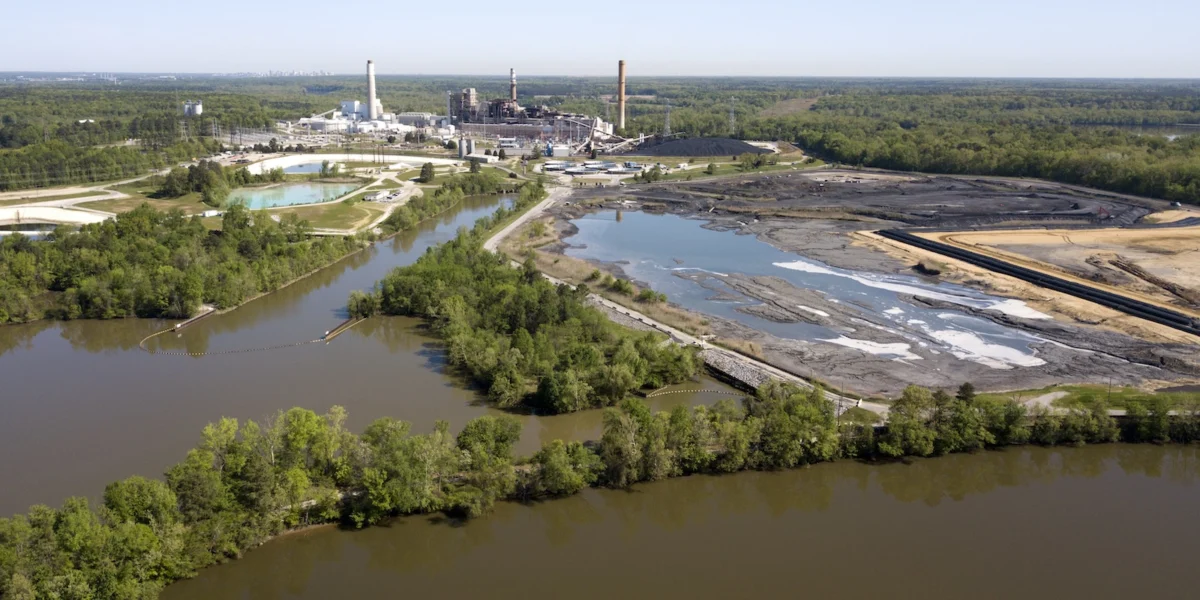
Across the American landscape, from the banks of Georgia’s Coosa and Chattahoochee rivers to the rural basins of the Midwest, millions of tons of "toxic stew" sit in precarious impoundments. These coal ash lagoons—the hazardous byproduct of decades of coal-fired electricity generation—represent one of the most significant, yet often invisible, environmental crises in the United States. As heavy metals like arsenic, mercury, and lead quietly leach into groundwater, the nation is embroiled in a high-stakes debate over who should hold the reins of oversight: federal regulators in Washington or state agencies on the front lines.
The current trajectory, spearheaded by the Trump administration, signals a massive shift in environmental governance. By transferring regulatory authority to the states and simultaneously proposing to roll back federal protections, the federal government is fundamentally altering the "backstop" that has long served as the final line of defense for public health.
The Anatomy of the Crisis: A Persistent Threat
Coal ash is the material remaining after coal is burned in power plants. While it contains traces of toxic heavy metals, for decades, it was treated as industrial waste and stored in unlined ponds, often located near riverbeds. According to Environmental Protection Agency (EPA) data, there are more than 670 of these coal ash ponds nationwide, ranging from small, innocuous-looking lagoons to massive reservoirs spanning over a thousand acres.
The danger of these sites is not merely theoretical. History is replete with catastrophic failures, such as the 2008 Tennessee Valley Authority disaster, where a dike breach released over a billion gallons of coal ash, burying homes and poisoning waterways. Similar incidents have scarred the Dan River in North Carolina and regions of Kentucky. Even without spectacular breaches, the constant, low-level leaching of toxins into groundwater supplies poses a persistent, systemic threat to communities—particularly those in rural areas where residents rely on private wells.
A Chronology of Oversight and Evolving Rules
The federal government’s involvement in coal ash management is a relatively recent development.
- 2015: Following the catastrophic spills of the previous decade, the Obama administration issued the first-ever federal coal ash rule. This regulation mandated that utilities monitor groundwater for contamination and required new ponds to be lined. Crucially, it empowered the EPA to act as the primary overseer, while allowing states to seek "primacy"—the authority to implement their own programs, provided they met or exceeded federal standards.
- 2019: Georgia became one of the first states to receive EPA approval for its own coal ash permitting program. However, this approval was almost immediately marred by controversy when state regulators authorized a permit for Georgia Power that allowed ash to remain partially submerged in groundwater—a move that drew a rare public rebuke from the EPA.
- 2024: The Biden-era EPA sought to tighten the "loophole-ridden" 2015 rules, specifically targeting "legacy ponds" and inactive sites that had previously escaped regulation.
- Present Day: The Trump administration is now aggressively pivoting toward "cooperative federalism." By streamlining the approval of state programs and proposing to exempt older, inactive disposal sites from federal oversight, the current administration is dismantling the regulatory framework established just months prior.
Supporting Data: The Funding Gap
The debate over state-led regulation is inextricably linked to the fiscal health of the agencies tasked with enforcement. A report by the Environmental Integrity Project, a nonprofit founded by former EPA officials, paints a grim picture: more than half of U.S. states have significantly cut funding for environmental agencies over the last 15 years.
In Mississippi, environmental budgets have plummeted by over 70%, while South Dakota has seen a 61% reduction. Even in states currently managing coal ash programs, the trend is concerning. Texas, Georgia, and Wyoming—all of which have received federal approval for their coal ash programs—have endured budget cuts exceeding 20% over the same period. In Georgia, this fiscal austerity has been accompanied by a 16% reduction in agency staffing.
Critics argue that these funding cuts, when coupled with the immense political power of utility companies, create an environment where rigorous enforcement is nearly impossible. "The utilities are often the most powerful entity in the state and call the shots," says Nick Torrey, a senior attorney with the Southern Environmental Law Center. "We’ve seen, unfortunately, that state agencies have not been rigorous in enforcing standards."
The Human Cost: Case Study at Plant Scherer
The impact of this regulatory friction is felt most acutely in communities like those surrounding Plant Scherer in Monroe County, Georgia. Six years ago, the local nonprofit Altamaha Riverkeeper began testing groundwater, finding alarming levels of coal ash-related compounds in private wells.
While the county eventually extended municipal water lines to the area, the solution was not universal. "This is an area where the median household income is $30,000," explains Fletcher Sams, executive director of the Altamaha Riverkeeper. "Some people can’t afford the cost of hooking up to the water line or the monthly fees." Consequently, many low-income residents remain dependent on church-run water-filling stations, a stark illustration of the human cost of industrial pollution and the limitations of local infrastructure responses.
Official Responses and the "Backstop" Philosophy
The EPA maintains that its current policy of devolving power to the states is not an abdication of responsibility. A spokesperson for the agency emphasized that the EPA retains "backstop authority." According to this view, state programs are only approved if they are as protective as federal law, and the agency stands ready to intervene if state programs fail to meet these requirements.
"State environmental agencies know their communities, their geology, their utilities, and their facilities better than any federal regulator in Washington," the EPA spokesperson stated. "Empowering them to run their own permit programs… delivers stronger, faster, and more accountable results."
Georgia’s Environmental Protection Division (EPD) echoed this sentiment. Sara Lips, a spokesperson for the Georgia EPD, argued that the state’s long history of oversight allows for a "timelier permitting process" and "quicker response to compliance issues." Lips defended the controversial Plant Hammond permit, noting that Georgia Power’s installation of a cover system effectively prevents future infiltration, arguing that the state’s standards are, in some respects, more stringent than those of the federal government.
Implications: The Retreat from Federal Oversight
The move to hand over coal ash permitting is part of a broader, administration-wide strategy. During his first term, President Trump oversaw the transfer of wetlands permitting to Florida—the first such transfer in 25 years. More recently, the administration has expanded state authority over underground carbon sequestration in West Virginia, Arizona, and Texas, and has signaled a willingness to revisit "Good Neighbor Plans" that regulate cross-state air pollution.
For environmental advocates, the pattern is clear: a systemic withdrawal of the federal government from its role as the ultimate enforcer of environmental law. The rejection of Alabama’s coal ash permit application in 2024 serves as a rare counter-example, where the EPA stepped in to block a state program that failed to address groundwater contamination adequately. However, skeptics like Nick Torrey fear that such interventions will become increasingly rare.
"There’s a real retreat from the EPA doing the job it was created to do," Torrey warns. "When you combine that with the weakening and choking of funds for state agencies, it means that people are getting dramatically less protection from pollution."
As the Trump administration continues to push for "cooperative federalism," the battle over coal ash serves as the ultimate bellwether. The outcome will not only determine the safety of the water tables near power plants across the country but will also define the role of the federal government in protecting the environment for generations to come. In the tug-of-war between local autonomy and national standards, the residents of towns like Monroe County, Georgia, find themselves caught in the middle—waiting to see if the promised "stronger, faster, and more accountable" results will ever materialize, or if they are simply being left to fend for themselves against a toxic legacy.

 Rifan Muazin
 Layla Zulfa