



 Suro Senen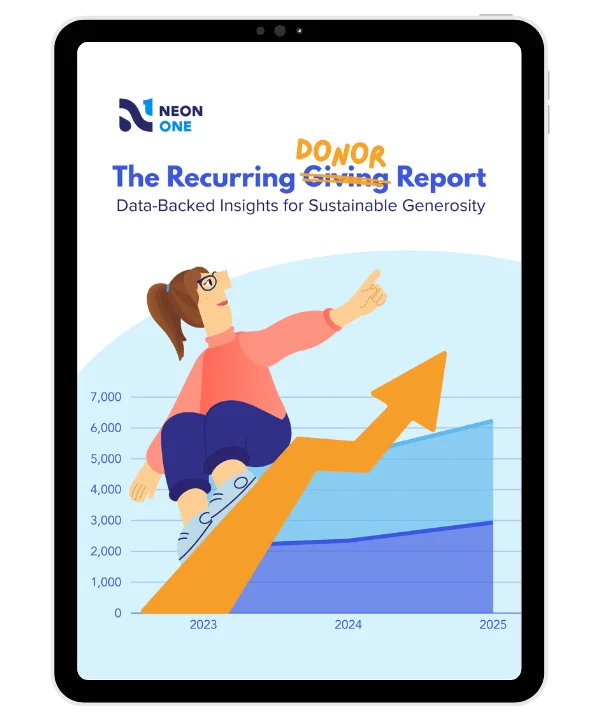
By Abby Jarvis, Head of Research at Neon One
In the rapidly evolving landscape of nonprofit fundraising, the "holy grail" for many organizations is the stability provided by recurring giving programs. As nonprofits pivot toward sustainable revenue models, understanding the behavior of the monthly donor has shifted from a "nice-to-have" strategy to an operational imperative. While quantitative data has long tracked the what—how many donors, average gift size, and retention rates—the why has remained elusive.
To bridge this knowledge gap, the team at Neon One recently conducted a comprehensive study, surveying 2,006 donors to dissect the motivations, preferences, and triggers that drive individuals to commit to ongoing, automated financial support. The results offer a blueprint for organizations aiming to cultivate long-term, high-impact donor relationships.
Main Facts: The Anatomy of a Recurring Donor
The data reveals a striking profile of the modern recurring donor. Far from being passive contributors, these individuals are deeply intentional, mission-driven, and proactive. The survey of 718 recurring donors indicates that the decision to give on a recurring basis is rarely an accidental byproduct of a marketing funnel; rather, it is a deliberate act of philanthropy.
Key takeaways from the research include:
- Proactivity over Persuasion: Nearly 59% of recurring donors established their gifts without a direct, specific solicitation from a nonprofit.
- The Power of Visibility: A significant plurality of donors (41.6%) initiated their support simply after observing a nonprofit executing high-impact work in their community.
- Mission-Alignment: Over 77% of recurring donors explicitly cited the desire to provide ongoing support for a cause they personally value as their primary motivation.
These facts challenge the traditional "ask-first" paradigm. While direct solicitation remains a vital tool, the data suggests that for the recurring donor, the relationship is built on a foundation of organizational visibility and demonstrated impact long before the recurring button is ever clicked.
A Chronological Shift in Donor Behavior
The journey of a recurring donor has evolved significantly over the last decade. Historically, recurring giving was a niche segment, often relegated to legacy programs or specific "sponsor-a-child" models. Today, the ubiquity of subscription-based services—from streaming platforms to software-as-a-service (SaaS)—has normalized the concept of monthly billing in the consumer consciousness.
- Pre-2020: Recurring giving was largely reactive. Nonprofits would "upsell" one-time donors via phone or mail to convert them into monthly sustainers.
- 2020–2023: The rapid digital transformation forced by the pandemic accelerated the adoption of online giving tools. Donors became accustomed to one-click digital transactions, lowering the barrier to entry for recurring giving.
- 2025–2026: We are currently in an era of "proactive philanthropy." Donors are now researching organizations independently, assessing their impact via social media and web presence, and self-selecting into recurring programs without waiting for an official invitation.
This chronology illustrates a fundamental shift: the nonprofit is no longer the sole driver of the donor journey. The donor is now an active participant, seeking out organizations that align with their personal values.
Supporting Data: By the Numbers
To understand the scope of the findings, it is essential to look at the metrics derived from our survey of 2,006 respondents.
Motivations for Giving
When asked about their general motivation for supporting any nonprofit, the responses were clear:
- Personal Connection to Mission: 71.2%
- Desire to Make a Positive Community Impact: 60.3%
- Moral or Religious Duty: 31.8%
Triggers for Recurring Giving
When we isolated the subset of recurring donors, the data on how they arrived at their decision was equally illuminating:
- Organic Discovery (Noticed nonprofit doing good work): 41.6%
- Social Media Appeal: 26.4%
- Self-Initiated Search: 18.2%
- Direct Solicitation: 25%
The disparity between organic discovery and direct solicitation is the most critical data point for modern fundraisers. It suggests that while asking is necessary, it is not the primary driver of donor acquisition in the recurring space.

Implications for Nonprofit Strategy
The implications for the nonprofit sector are profound. If the majority of your recurring donors are coming to you, rather than you coming to them, how should you adjust your strategy?
H3: The "Visibility First" Strategy
Organizations must transition from a "campaign-centric" mindset to a "visibility-centric" mindset. This means that your social media presence, your website’s impact page, and your community outreach are actually your most effective donor acquisition tools. If 41.6% of your future monthly donors are watching you work from the sidelines, your ability to tell your story effectively determines your growth.
H3: The Necessity of the "Soft Ask"
While the data shows that people give without being asked, this is not an excuse to cease all appeals. It is, however, an argument for diversifying your calls to action. A "hard ask" (e.g., "Donate $20 now") works for the transactional donor. But for the prospective recurring donor, the ask should be framed as an invitation to partnership: "Join our community of sustainers and make a lasting difference."
H3: Elevating the Donor Experience
Because these donors are driven by mission-alignment, their retention depends on your ability to report back on that impact. Once they sign up, the donor’s need for "proof of impact" only intensifies. Nonprofits that fail to communicate the outcomes of their recurring gifts will face higher churn rates, regardless of how successfully they acquired the donor in the first place.
Official Responses and Expert Perspective
Industry leaders have noted that the 2026 data confirms a long-held suspicion: the "subscriber economy" has fundamentally changed donor expectations.
"We are seeing a move toward ‘donor-led’ fundraising," says the research team at Neon One. "The modern donor has high agency. They don’t want to be sold to; they want to be invited into a mission they already believe in. Our role as fundraisers is to make that invitation as frictionless and as compelling as possible."
Nonprofits that have successfully implemented these findings report that by highlighting their recurring program on their homepage and social media bio—rather than hiding it behind a donor portal—they have seen a 15–20% increase in monthly sign-ups without increasing their overall marketing spend.
Building a Future-Proof Program
The path forward for nonprofits is clear: prioritize transparency, enhance digital visibility, and treat the recurring donor not as a "customer" of a donation product, but as a strategic partner in the organization’s mission.
As the sector moves through 2026 and beyond, the organizations that will thrive are those that recognize that a recurring gift is the ultimate sign of trust. It is an act of faith that an organization will continue to do the important work that inspired the donor in the first place.
For those looking to dive deeper into these insights, we invite you to download the 2026 Recurring Donor Report. It contains extensive data from over 4,000 nonprofits, providing a roadmap for building a sustainable, scalable, and community-driven recurring giving program that will fuel your mission for years to come.
About the Sponsor
Neon One is the leading nonprofit relationship management platform designed to help small to midsize organizations cultivate the personal connections that fuel growth. Its unified system offers a complete, 360-degree view of every supporter, enabling nonprofits to seamlessly manage fundraising, memberships, events, communications, and payments in one integrated ecosystem. Learn more at neonone.com.


 Lina Irawan
 Lina Hope