



 Nana Muazin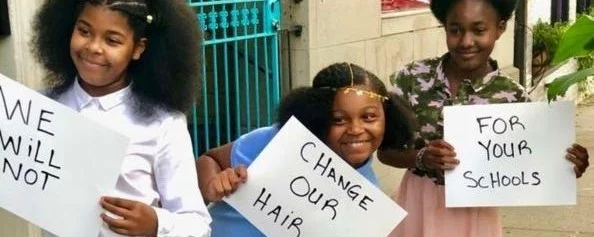
Walking through the hallways of her high school, Fatimah Fair was once stopped dead in her tracks by an administrator. The official’s gaze traveled from the top of her head to her feet, finally settling on her legs. The verdict was delivered with cold finality: her shorts were "too short," and she was warned never to wear them again.
"I felt embarrassed and shaken," Fair recalls. "For the rest of the day, I wondered if her impression of me had changed simply because of the shorts I was wearing."
Fair’s experience is far from an isolated incident. Across the United States, thousands of girls of color are pulled from classrooms, shamed by faculty, and subjected to disciplinary action based on subjective interpretations of dress codes. This is not merely a matter of school spirit or attire; it is a systemic issue of racial and gender bias that disproportionately targets Black girls, effectively pushing them out of the learning environments they have a right to occupy.
The Chronology of a Crisis: From Guidance to Neglect
The struggle for equitable discipline in schools has long been a focal point of educational justice advocates. In December 2016, the Obama Administration released the "Rethink Discipline" guidance—a landmark series of documents designed to address the racial disparities in school discipline. The guidance emphasized that students of color, particularly Black girls, were being suspended and expelled at alarming rates for minor, non-existent, or subjective offenses.
However, the political landscape shifted dramatically in 2018. Under the leadership of then-Secretary of Education Betsy DeVos, the Department of Education revoked the Obama-era guidance. By stripping away these federal protections, the Department effectively signaled that the federal government would no longer prioritize the investigation of discriminatory discipline practices, leaving students of color vulnerable to the whims of local administrative bias.
The decision sent shockwaves through the educational justice community. While the revocation did not legally alter the Civil Rights Act or Title IX, it sent a chilling message: the government was no longer interested in holding school districts accountable for creating safe, inclusive environments. For activists like Fair, this was a profound betrayal. Only months prior, she had co-authored Dress Coded: Black Girls, Bodies, and Bias in D.C. Schools with the National Women’s Law Center. She had met with Department of Education officials, shared her research, and received assurances that they understood the severity of the issue. The subsequent reversal of policy proved those promises hollow.
The Data: A Stark Portrait of Disparity
The statistics surrounding school discipline are as alarming as they are consistent. Black girls are six times more likely to be suspended than their white peers. In certain jurisdictions, such as the District of Columbia, that disparity grows even wider, with Black girls being 20 times more likely to face suspension than their white counterparts.
These numbers are not the result of increased misbehavior. Rather, they are the byproduct of systemic stereotypes that frame the bodies and personalities of Black girls as inherently problematic.
The Sexualization of Black Adolescence
Societal biases often sexualize the physical development of Black girls. Teachers and administrators, operating under a misguided paternalism, often claim they are "protecting" these students by policing their attire. A tank top or exposed shoulders on a Black girl is frequently coded as a distraction or an invitation to unwanted attention, whereas the same attire on a white student is often ignored or treated with a minor admonishment.
The "Angry" Narrative
Beyond attire, Black girls are frequently disciplined for subjective behavioral labels such as "talking back," "being loud," or "having an attitude." These labels tap into the long-standing "angry Black woman" trope, which denies Black girls the grace afforded to their white peers when expressing frustration or assertiveness. This creates a double standard: a white girl speaking up is often seen as "engaged" or "passionate," while a Black girl doing the same is seen as "disruptive" or "insubordinate."
The Victimhood Gap
Perhaps most devastating is the way these biases manifest when Black girls are victims themselves. Research shows that Black girls who report sexual harassment or violence are often treated as perpetrators of conflict rather than victims of abuse. Because they are not perceived as vulnerable, they are denied the support systems necessary to heal and succeed in the classroom.
The Anatomy of Bias: Why Dress Codes Fail
The enforcement of dress codes has become the primary vehicle for this discrimination. These policies are rarely neutral; they are deeply gendered and racialized. When an administrator targets a student for a "dress code violation," they are exercising subjective power over a student’s body.
In Dress Coded, Fair and her colleagues highlighted that these violations serve as a "pushout" mechanism. When a student is sent to the principal’s office, forced to wear a humiliating "loaner" shirt, or sent home, they lose critical instructional time. Over the course of a school year, these frequent interruptions create an academic deficit, contributing to the "school-to-prison pipeline" that disproportionately impacts students of color.
Student-Led Resistance: Turning the Tide
While the Department of Education may have stepped back from its responsibilities, the students themselves have stepped up. The story of Fatimah Fair’s school is one of success born from grassroots organizing.
After being ignored by school administrators, students at Fair’s D.C. high school did not retreat. They drafted an alternative, inclusive dress code that removed subjective language and focused on actual educational needs. When administrators dismissed their proposal, the students organized protests, shared their testimonies publicly, and forced a seat at the table. Their persistence paid off: the school agreed to overhaul its policy, proving that student agency is a powerful antidote to administrative bias.
This movement is not confined to the nation’s capital. As evidenced by the hundreds of students from 14 states—ranging from Florida and Texas to New York and Washington—who have joined this call to action, there is a growing, national network of young activists. These students are demanding a fundamental rethinking of what "discipline" means in a modern, equitable school system.
Implications for the Future of Education
The implications of the current disciplinary landscape are severe. If schools continue to prioritize compliance over student well-being, they will continue to alienate a generation of Black girls.
- Academic Achievement: Persistent disciplinary action acts as a barrier to graduation and college readiness.
- Psychological Impact: Being constantly surveilled and shamed leads to anxiety, decreased self-esteem, and a loss of trust in educational institutions.
- Institutional Trust: When schools prioritize a dress code over a student’s right to learn, they communicate that the institution values aesthetic conformity over intellectual growth.
The "Rethink Discipline" guidance may no longer have federal backing, but it remains a vital document for local school boards and advocates. The responsibility now falls on the community: parents, teachers, and students must hold their local administrations accountable.
A Call to Action
The fight for equitable discipline is far from over. As Fatimah Fair noted, "We believe all students deserve to learn free from discrimination and stereotypes. If [the government] won’t champion that cause, we will."
For school districts, the path forward is clear. It requires moving away from punitive measures and toward restorative justice. It requires replacing subjective, biased dress codes with policies that are neutral and non-discriminatory. Most importantly, it requires listening to the girls who are being disciplined—understanding that their bodies are not a distraction, their voices are not a disruption, and their education is not negotiable.
The systemic change needed is not just about changing the rules of the hallway; it is about changing the culture of the school. It is about recognizing that when we create an environment where Black girls are respected and valued, we create a stronger, more equitable school system for every student. The momentum of the student-led movement proves that the next generation is not waiting for permission to change the status quo—they are already doing it.

 Neng Nana
 Iffa Jayyana