

 Evan Lee Salim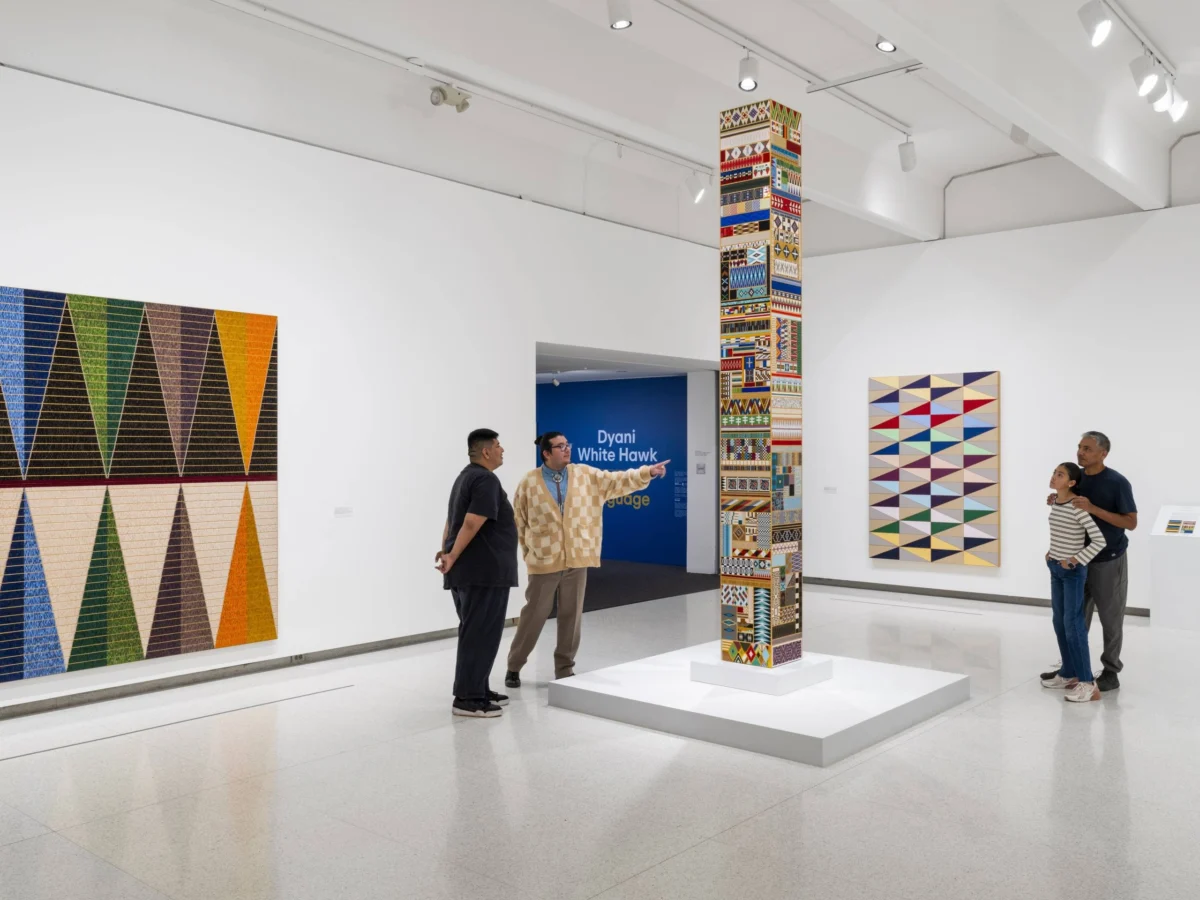
Introduction: A Milestone in Contemporary Indigenous Art
The conclusion of Dyani White Hawk: Love Language at the Walker Art Center this past February marked more than just the end of a highly successful exhibition; it signaled a watershed moment for contemporary Indigenous art in the North American cultural landscape. As a mid-career survey, the exhibition served as a comprehensive examination of White Hawk’s multidisciplinary practice, which weaves together the aesthetic traditions of Lakota abstraction with the formal language of Western modernism.
Lauded by critics as a poignant, radical, and visually arresting experience, the exhibition has been an audience favorite, drawing significant crowds and fostering deep dialogues regarding history, identity, and the resilience of Indigenous cultures. While its physical footprint at the Walker has concluded, the exhibition’s journey is far from over. It is now poised to bring its vital message to a broader international audience as it prepares for its next installment at the Remai Modern in Saskatoon, Saskatchewan, scheduled to open in late April.
The Chronology of an Exhibition
The success of Love Language was not an overnight occurrence but the result of years of meticulous curation and collaborative planning.
- Development and Conceptualization: The exhibition was born from a desire to bridge the gap between Indigenous art practices and the mainstream contemporary canon. White Hawk, a Sicangu Lakota artist, spent years refining a visual vocabulary that honors her heritage while asserting its relevance in the global art world.
- The Walker Art Center Debut: The exhibition opened at the Walker to immediate critical acclaim. It provided a rare, in-depth look at White Hawk’s trajectory, spanning her earlier works to her most recent, large-scale installations. Throughout its residency in Minneapolis, the gallery served as a meeting point for diverse community groups, educators, and art enthusiasts.
- The February Conclusion: By mid-February, as the exhibition drew to a close at the Walker, the consensus among visitors and the arts community was one of profound appreciation. The sheer volume of engagement—both in-person and via digital programming—underscored the appetite for narratives that center Indigenous perspectives.
- The Transition to Remai Modern: Following a rigorous de-installation process, the works are currently in transit to Saskatoon. The move to the Remai Modern is significant, as it places the exhibition within a Canadian context, where the dialogue surrounding Indigenous reconciliation and artistic sovereignty is particularly vibrant.
A Visual and Conceptual Synthesis: Supporting Data and Analysis
To understand the impact of Love Language, one must look at the specific elements that set White Hawk’s work apart. The exhibition showcased her ability to move seamlessly between painting, photography, video, and installation.
The Intersection of Traditions
White Hawk’s work is characterized by its dual commitment to the Lakota tradition of quillwork and beadwork and the minimalist, color-field traditions of Western abstract painting. By placing these forms in conversation, she forces a reconsideration of art history. She posits that the sophistication of Indigenous craft has long been overlooked by an art world that favored European-centric definitions of "high art."
Engagement Metrics and Community Response
While the Walker Art Center has not released granular ticket data, qualitative metrics point to a massive success. Community outreach programs associated with the exhibition saw record attendance. Furthermore, the exhibition served as a catalyst for partnerships with local Indigenous organizations, creating a model for how cultural institutions can responsibly host and highlight Indigenous artists. The narrative of "Love Language" was designed to be accessible yet intellectually rigorous, a balance that allowed it to appeal to casual museum-goers and scholars alike.
Corporate Stewardship: The Role of Thrivent
A central pillar of the exhibition’s success was the support provided by Thrivent. As the lead sponsor, Thrivent’s involvement went beyond mere financial contribution; it reflected a strategic alignment between corporate social responsibility and the elevation of the arts.
Strategic Alignment and Cultural Investment
Thrivent’s commitment to the arts is rooted in the belief that creativity is an essential component of a healthy society. For a financial organization, this investment in Love Language serves as a testament to the power of art to build bridges between disparate sectors of society.
"At Thrivent, we believe the arts have the transformative power to inspire, spark curiosity, and build connection in community," states Teresa Rasmussen, Thrivent CEO and Walker Trustee. This sentiment is not merely corporate rhetoric but is evidenced by the presence of White Hawk’s work within the Thrivent Art Collection. By including Indigenous voices in their corporate collection, Thrivent demonstrates that modern corporate identity should reflect the diverse cultural tapestry of the region.
Official Responses and Curatorial Perspectives
The discourse surrounding Love Language has been elevated by the insights of those closest to the collection. The exhibition serves as a microcosm of how art can act as a catalyst for empathy.
Joanna Lindell, the chief curator of the Thrivent Art Collection, notes, "Dyani’s art invites us to reflect on love, language, and the power of community. The exhibition beautifully demonstrates the power of art to bring people together."
Lindell’s perspective highlights the "Love Language" title, which refers to the reclamation of Indigenous languages and the expression of affection, grief, and endurance. The exhibition effectively uses these themes to move the viewer from a passive observer to an active participant in a larger, ongoing conversation about humanity.
Implications for the Future of Museums
The success of Love Language carries significant implications for how contemporary art museums operate in the 21st century.
The Call for De-Centering
For decades, major museums have been criticized for their Euro-centric biases. The success of White Hawk’s exhibition serves as a blueprint for "de-centering"—a process of prioritizing artists from marginalized backgrounds not as a "diversity initiative," but as a standard for curatorial excellence.
Sustainability and Touring
The seamless transition from the Walker to the Remai Modern highlights the importance of institutional partnerships. By touring major exhibitions, museums can amplify the impact of an artist’s work, allowing for deeper engagement across different geographic regions. This "touring model" is essential for the longevity of contemporary Indigenous art, as it ensures that these works are not just seen by a single local audience, but are integrated into a broader, national dialogue.
The Role of Corporate Sponsorship
The collaboration between the Walker and Thrivent illustrates that corporate support can be a powerful driver of cultural equity. When organizations like Thrivent lend their resources to exhibitions that tackle difficult or complex subjects—such as the legacy of colonialism or the reclamation of identity—they provide the stability that allows curators and artists to take creative risks.
Conclusion: The Language of Legacy
As Dyani White Hawk: Love Language prepares to welcome new audiences in Saskatoon, its legacy in Minneapolis remains solidified. It was an exhibition that demanded attention, invited reflection, and ultimately left the audience transformed.
The exhibition proves that art is not a static object on a wall, but a living, breathing language. It is a dialogue that transcends borders and histories, seeking to connect us through the shared human experiences of love, struggle, and survival. As the art world looks to the future, the success of this mid-career survey provides a clear path forward: one that honors the past, celebrates the present, and builds a foundation for a more inclusive and empathetic future.
Whether through the intricate beadwork of a canvas or the poignant silence of a video installation, Dyani White Hawk has shown that we all share a common language—if we are only willing to listen. The exhibition’s move to Canada is a continuation of this vital conversation, ensuring that the work continues to resonate, challenge, and inspire for years to come.

 Laily UPN
 Lina Hope